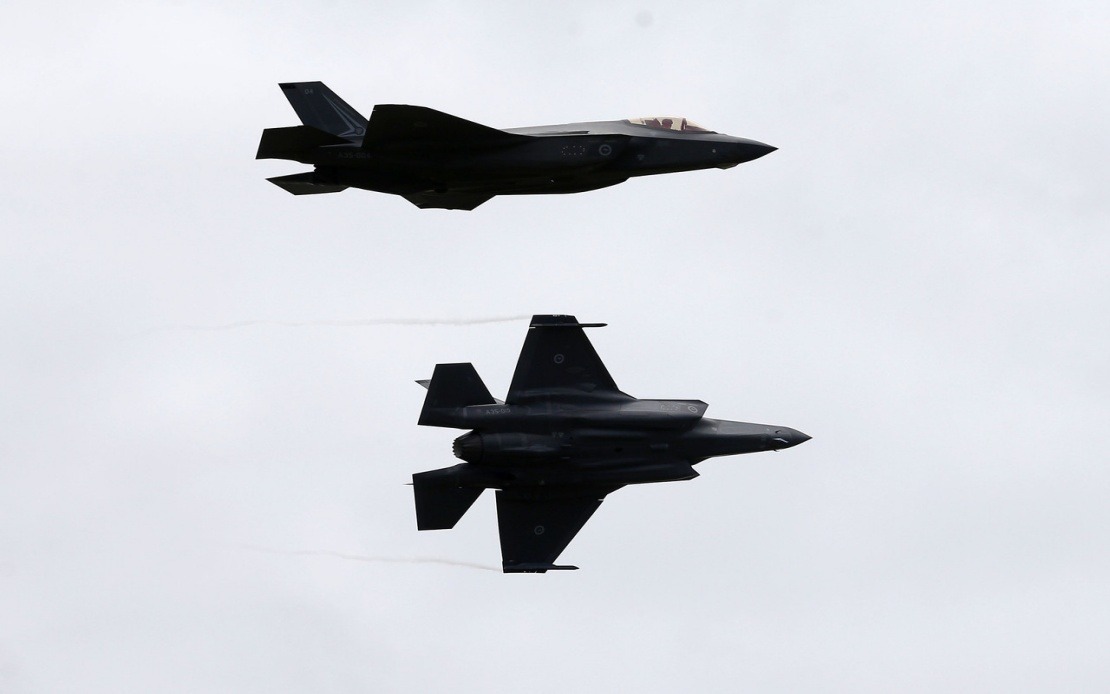
Three major democracies have committed substantial resources to a transformative defence project, signing a £4.6 billion (US$6.1 billion) contract designed to produce a sixth-generation combat aircraft by the mid-2030s. The United Kingdom, Italy and Japan announced the landmark agreement for the Global Combat Air Programme (GCAP), establishing a powerful military-industrial partnership that reflects deepening security cooperation among Western and Indo-Pacific allies amid shifting geopolitical tensions.
The agreement represents a pivotal moment for the GCAP initiative, which emerged from the recognition that existing and near-term fighter platforms would require supplementation with radically advanced capabilities. Rather than each nation pursuing independent development tracks—an economically inefficient and technologically fragmented approach—the three countries determined that pooling expertise and resources would accelerate innovation while distributing costs. The target operational date of 2035 provides a concrete deadline that aligns with strategic planning cycles and projected retirement schedules for current fifth-generation fighters.
The three defence contractors executing this vision form Edgewing, a newly established joint venture created in 2025 specifically to manage the GCAP's complex engineering requirements. Britain's BAE Systems brings unmatched experience in advanced combat aircraft design and production, Italy's Leonardo contributes sophisticated avionics and systems integration capabilities honed through decades of European defence programmes, while Japan Aircraft Industrial Enhancement Co. Ltd. (JAIEC) leverages Japan's technological prowess in advanced materials and digital systems. This tripartite structure ensures that each nation's industrial base remains engaged and develops sovereign technological capacity while benefiting from collaborative breakthroughs.
The newly awarded contract focuses intensively on the design phase, which remains the most technically demanding and strategically consequential stage of any advanced weapons programme. During this period, engineers from all three nations will establish the aircraft's fundamental requirements—determining speed, range, payload capacity, stealth characteristics and sensor capabilities. These baseline specifications will drive all subsequent development and must accurately anticipate the threat environment of the 2030s and beyond, a challenge that demands sophisticated scenario planning and technological foresight.
Rigorous testing protocols form another central pillar of the contracted work. Before committing to full-scale production, the three nations will conduct extensive modelling, simulation and physical testing to validate design assumptions and identify potential deficiencies. This methodical approach, though time-intensive and expensive, substantially reduces the risk of costly modifications discovered only during late development stages or operational deployment. The emphasis on testing reflects lessons learned from previous international defence programmes where inadequate validation created schedule delays and budget overruns.
The envisioned aircraft embodies a conceptual leap beyond today's most advanced fighters. Rather than incremental improvements to fifth-generation platforms, the GCAP fighter represents a fundamentally reimagined approach to air combat capabilities. Developers plan extensive integration of artificial intelligence, complex digital engineering systems and undisclosed breakthrough technologies that will define the platform's operational character. The aircraft will function not as an isolated weapons system but as a networked node within a broader aerospace ecosystem that includes traditional fighters, autonomous systems, and ground-based command and control infrastructure.
For the Royal Air Force specifically, the new fighter will operate alongside existing Typhoons and F-35s rather than replacing them immediately. This layered force structure—combining proven platforms with revolutionary new capabilities—provides operational flexibility while managing the transition to next-generation warfare. The RAF envisions a heterogeneous combat air force where the GCAP fighter handles the most demanding missions requiring maximum technological advantage, while other platforms address less exacting requirements. This approach maximizes the return on investment in each platform type.
The tripartite arrangement carries profound strategic implications beyond mere military-industrial cooperation. The partnership demonstrates that Britain, Italy and Japan share compatible defence philosophies, technological standards and strategic objectives sufficiently aligned to justify a two-decade commitment to joint development. For Japan, participation signals deepening integration with Western defence ecosystems at a time when Tokyo confronts increasingly assertive regional competitors. Italy's involvement underscores its significance within the European and transatlantic defence architecture despite occasional policy divergences with other NATO members. Britain's lead role reflects London's post-Brexit strategy of positioning itself as a globally engaged defence innovator.
The financial structure—with costs jointly funded by the three nations—distributes both the fiscal burden and political risk among partners. Each government can justify the expenditure as an investment in domestic industrial capacity and technological advancement rather than as a unilateral arms purchase. This arrangement proves particularly valuable in periods of fiscal constraint, as defence budgets across Western democracies face competing demands from social programmes and infrastructure investment.
For Malaysia and other Southeast Asian nations, the GCAP programme carries important implications for the regional balance of military capabilities. The introduction of sixth-generation fighters by major powers will further extend technological gaps between advanced and developing militaries, potentially affecting deterrence calculations and the sustainability of regional force balances. Nations without access to cutting-edge fighter technology may face greater incentives to pursue alternative strategic approaches, including strengthened regional cooperation frameworks and asymmetric defence strategies.
The next several years will reveal whether the three-nation partnership can navigate the inherent complexities of international weapons development. Previous multinational defence projects have encountered cultural differences in engineering approaches, divergent operational requirements and domestic political pressures that threatened programme integrity. The GCAP consortium must establish governance structures and decision-making processes robust enough to accommodate legitimate national interests while maintaining technical coherence. Success will establish a template for future multinational defence projects; failure would reinforce scepticism about international military-industrial cooperation.

