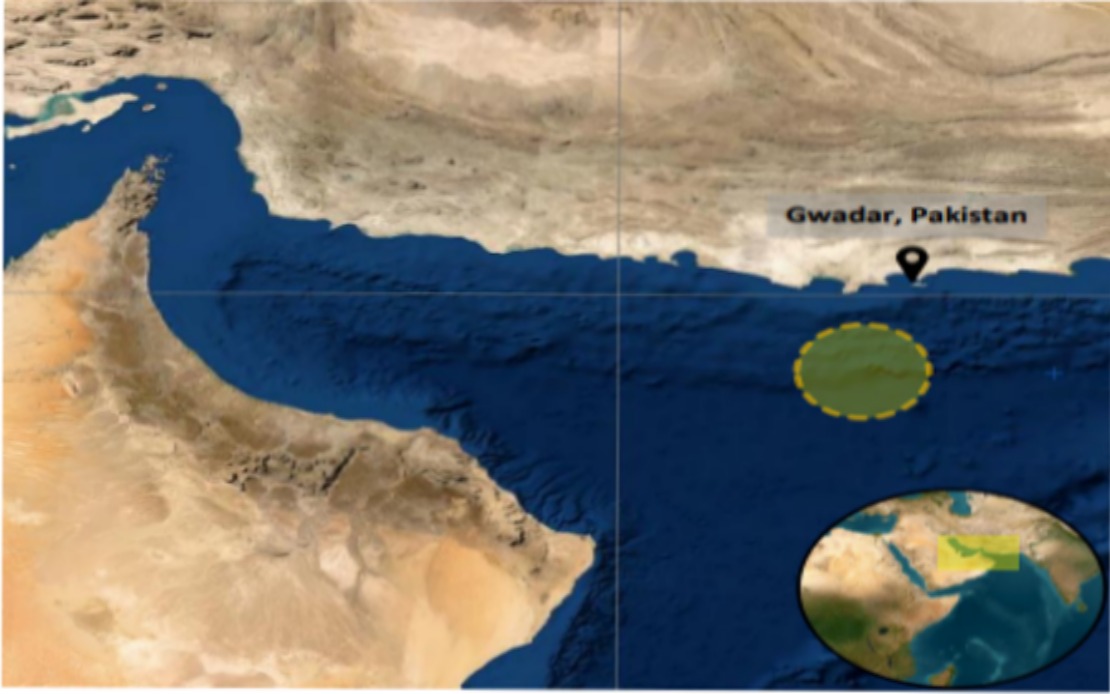
A maritime security incident unfolding in the Gulf of Oman has once again thrust the volatile waters between the Middle East and South Asia into the spotlight. The UK Maritime Trade Operations, an agency responsible for monitoring and reporting on shipping movements and security threats in critical waterways, disclosed on Tuesday that vessels operating in the region had encountered an incident involving a tanker and military forces operating near Gwadar on Pakistan's southwestern coast. The incident represents another flashpoint in an increasingly fraught maritime environment where commercial shipping faces mounting uncertainty.
The UKMTO issued a formal advisory to the international maritime community, counselling vessels transiting the area to exercise heightened caution and remain abreast of the latest security developments. The agency's guidance reflected standard protocol when navigating zones where military activity poses potential risks to commercial operations. Shipping companies and vessel operators were urged to carefully evaluate current maritime security intelligence before entering the operational zone and to maintain vigilant awareness of the changing tactical environment. Such advisories serve as critical early-warning mechanisms that shape routing decisions for hundreds of vessels daily.
While the UKMTO confirmed that relevant authorities were aware of the incident and that investigations were underway, the agency refrained from elaborating on essential details. The identity of the tanker involved, the specific nature of the confrontation, and whether the incident resulted in casualties, injuries, or physical damage to vessels remained undisclosed. This lack of transparency, while sometimes reflecting operational security considerations or ongoing investigative protocols, underscores the opacity that frequently characterises maritime incidents in this strategically vital corridor where commercial, military, and geopolitical interests intersect.
The timing of this incident is far from coincidental. For regional observers and maritime stakeholders across Southeast Asia, the Gulf of Oman serves as a critical chokepoint through which energy supplies and manufactured goods flow to markets throughout Asia. Malaysia, as a major shipping hub and energy consumer, maintains substantial commercial interests in ensuring safe passage through this waterway. Any disruption to maritime traffic patterns ripples through regional supply chains and influences shipping costs for businesses operating across the Association of Southeast Asian Nations.
The episode emerges against a backdrop of escalating tensions between the United States and Iran centred on control of the Strait of Hormuz and broader geopolitical competition in the Persian Gulf region. Recent months have witnessed several military confrontations and provocative manoeuvres between American and Iranian forces, creating an environment where miscalculation carries heightened risks. These confrontations have already prompted insurance premiums for tankers transiting the region to spike and have incentivised some shipping operators to invest in alternative routing, albeit at considerably higher cost and transit time.
For Pakistan, the incident touches upon its sovereignty and security concerns in waters adjacent to its coastline. Gwadar, situated strategically at the mouth of the Persian Gulf, has assumed increasing geopolitical significance as a focal point of China's Belt and Road Initiative investments and as a potential military asset within regional power balances. Any military activity in proximate waters inevitably attracts scrutiny from Islamabad and complicates Pakistan's delicate navigation of regional diplomacy.
The broader implications for Southeast Asian nations extend beyond immediate security considerations. Disruptions to maritime commerce in the Gulf of Oman and Strait of Hormuz directly influence energy prices and freight costs that ultimately affect consumer prices and industrial competitiveness throughout the region. Malaysia's petrochemical sector, shipping industry, and manufacturing base all depend upon reliable and affordable access to imported energy and raw materials transiting these waters.
The UKMTO advisory mechanism itself reflects the fragmented nature of maritime security governance in international waters. When incidents occur in areas beyond any single nation's sovereign control, responsibility for coordination and information dissemination falls to agencies like the UKMTO, which functions essentially as an information clearinghouse operated through London. This system, while necessary, often leaves significant information gaps that complicate risk assessment for commercial operators.
Shipping companies and insurers will scrutinise developments closely, as even unconfirmed reports of incidents can trigger changes in vessel routing, premium adjustments, and decisions about cargo acceptance. The maritime industry operates on extremely thin profit margins, meaning that disruptions cascade rapidly through global supply networks. For Malaysian businesses dependent upon reliable shipping corridors, continued uncertainty in this region represents a genuine commercial headwind.
Governments throughout Southeast Asia have invested diplomatic effort attempting to encourage de-escalation between American and Iranian actors while simultaneously working to maintain freedom of navigation principles that protect their own commercial interests. Malaysia's foreign policy traditionally emphasises non-alignment and peaceful resolution of disputes, positioning it to potentially contribute constructively to regional stabilisation efforts should diplomatic opportunities emerge.
Looking forward, the frequency and severity of incidents in these contested waters will likely determine whether alternative shipping routes become economically viable long-term options or whether the international community moves toward negotiated arrangements guaranteeing merchant vessel safety. The current trajectory suggests neither resolution appears imminent, and maritime stakeholders throughout Asia must prepare for continued volatility and elevated operational costs.
The coming weeks will determine whether this incident represents an isolated occurrence or a harbinger of intensifying confrontations. For now, the maritime community's attention remains fixed on the Gulf of Oman, where the intersection of great power competition, regional ambitions, and commercial necessity continues to generate unpredictability that affects businesses and consumers far beyond the immediate region.

