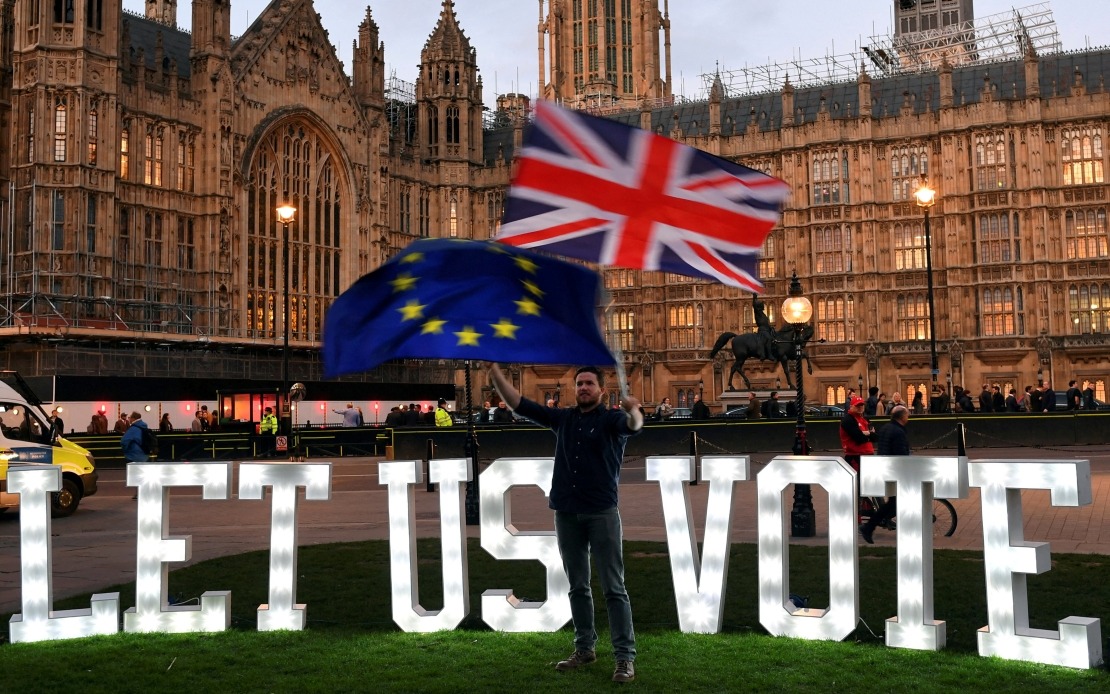
Britain's prospects of reversing its historic break with the European Union appear slim despite anticipated changes in government leadership, according to Richard Balfe, a long-serving Conservative peer in the House of Lords. Speaking to international media, Balfe expressed skepticism that any incoming administration would successfully navigate the complex political and procedural hurdles required to undo nearly a decade of separation from the bloc, describing any such attempt as likely to fail despite potentially being pursued with limited enthusiasm.
The remarks come as the United Kingdom enters a period of political transition. Prime Minister Keir Starmer announced his resignation as leader of the Labour Party earlier this week, though he will remain in the prime ministerial office until party members select his successor. The Labour Party has scheduled the leadership election to commence on July 9, with the process expected to conclude before Parliament reconvenes in September, creating a window of uncertainty regarding the direction of British governance and its international positioning.
Balfe's assessment reflects deeper strategic calculations about Britain's geopolitical alignment in the post-Brexit era. Rather than pivoting back toward continental Europe, he predicted that successive British governments would likely "muddle along" with existing arrangements while increasingly aligning themselves with American strategic interests and policies. This characterisation suggests a government prioritising transatlantic relationships and security partnerships, particularly through NATO and bilateral defence arrangements, over attempting the delicate process of European reintegration.
The commentary gains significance as Britain marks a grim milestone this month: the tenth anniversary of the 2016 Brexit referendum, in which 52 percent of the British electorate voted in favour of leaving the European Union. That decision set in motion a sequence of events that fundamentally reshuffled Britain's political and economic architecture, culminating in the country's formal withdrawal from the bloc on January 31, 2020, after nearly five decades of membership dating back to 1973.
The transition from formal membership to independent status was managed through a carefully structured arrangement. From the 2020 withdrawal until the end of that calendar year, Britain operated under a transition period during which European Union regulations, laws, and standards remained in effect throughout the country and citizens continued travelling under simplified procedures. This temporary arrangement provided businesses and individuals with a grace period to adapt to the coming separation. However, when the transition period concluded on December 31, 2020, a comprehensive trade and cooperation agreement took effect on January 1, 2021, establishing the formal framework governing subsequent British-European economic and political relationships.
The economic consequences of Brexit have proven substantial and measurable. The Financial Times reported that the United Kingdom has experienced a marked diminishment in its status as a global trade hub following the separation, with cross-border commerce experiencing significant friction and complications. Investment flows into British companies have faced increased obstacles, with foreign investors citing regulatory complexity, tariff complications, and heightened administrative burdens as deterrents. These structural disadvantages have contributed to economic headwinds that successive British governments have struggled to fully overcome.
For Malaysian readers and Southeast Asian observers, the British political trajectory carries important implications for regional engagement and partnership strategies. Britain has positioned itself as an Indo-Pacific power through initiatives such as the AUKUS security partnership and expanded naval presence in Asian waters, partly as compensation for reduced European influence. The country's pivot toward American-led alignment, as Balfe suggests, has concrete ramifications for how Britain allocates diplomatic attention, defence resources, and trade priorities across the region. A Britain oriented toward Washington rather than Brussels may prioritise security and military partnerships over traditional economic integrative frameworks.
Moreover, the apparent permanence of Brexit creates new structural realities for international commerce and diplomatic engagement. Malaysia and other ASEAN nations dealing with Britain must now navigate dual frameworks: traditional relationships with the unified European Union on one hand, and Britain's increasingly independent but American-aligned position on the other. This fragmentation of European negotiating power affects everything from trade agreement negotiations to climate commitments and digital regulation standards.
The Starmer resignation and Labour's leadership transition add another layer of uncertainty to these calculations. While Labour was traditionally more enthusiastic about European integration than the Conservative Party, the structural realities of Brexit—the sunk costs of negotiating and implementing new trading relationships, the political capital expended defending the decision, and the practical difficulties of reversing course—appear to constrain what even a sympathetically-inclined government might realistically attempt. Balfe's assessment, coming from within the Conservative establishment itself, suggests that even those who might regret the Brexit decision now view reversing it as politically untenable rather than merely unlikely.
The broader implication of Balfe's remarks is that the world should adjust its expectations about Britain's future positioning. Rather than anticipating a potential British return to European frameworks, international partners should recognise that Britain is charting a path as an independent actor increasingly oriented toward the Anglosphere and American strategic priorities. This shift fundamentally alters the balance of power within Western alliance structures and creates new competitive dynamics in regions like Southeast Asia where Britain seeks expanded engagement. For Malaysia, understanding this British trajectory is essential for calibrating diplomatic strategies and anticipating how partnerships and commercial relationships will evolve in the coming years.