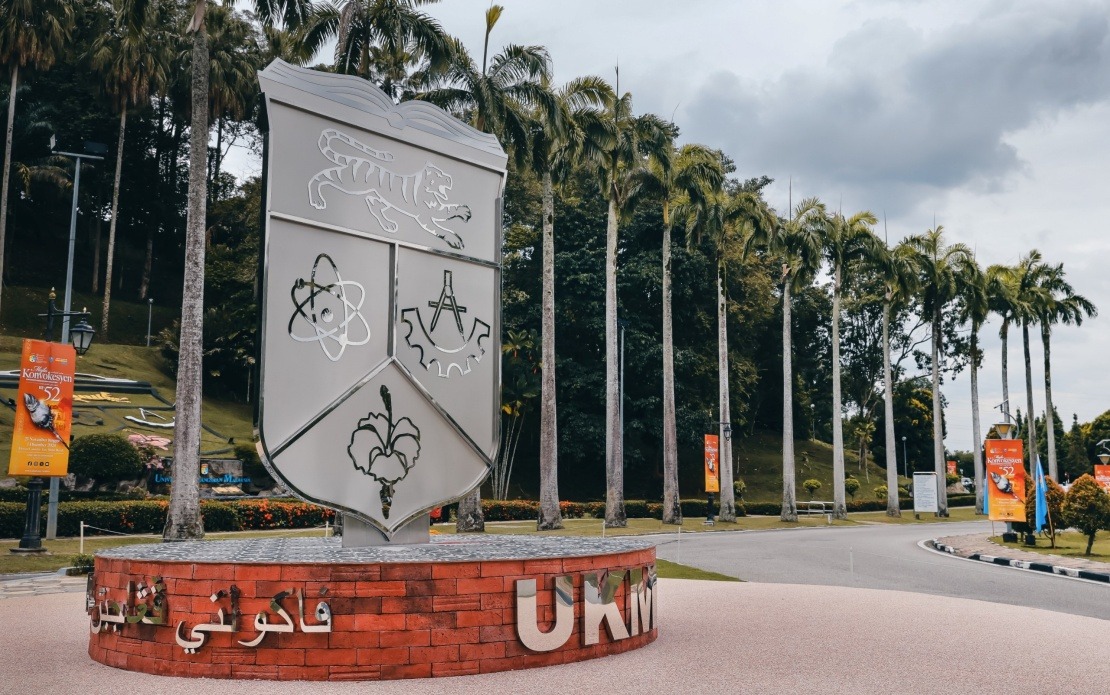
Universiti Kebangsaan Malaysia has moved swiftly to counter a viral social media claim that has circulated online, asserting that allegations regarding the composition of its student body are entirely without factual foundation. The university issued a formal rebuttal on July 4 to address a video making the rounds on social platforms, which alleged that the institution maintains an international-to-local student ratio of five to one—a proportion that would fundamentally alter the character of Malaysia's premier research university.
According to UKM's official statement, the circulating claim represents a substantial misrepresentation of reality. Data compiled by the university's Academic Management Centre and the Centre for Continuing Education and Professional Studies paint a markedly different picture from what the viral video suggests. The institution's total enrolled student population stands at 46,151 individuals, a figure that includes undergraduate and postgraduate students across all academic programmes and modes of study offered by the university.
When isolating the specific category of international undergraduates—those pursuing first-degree qualifications—the numbers become even more modest. UKM reports that merely 3,917 international undergraduates are currently enrolled, a figure that translates to approximately eight per cent of the total student body. This means the actual ratio of international to local students approximates one international student for every twelve domestic peers, a proportion that deviates dramatically from the sensational five-to-one claim that prompted the university's response.
The discrepancy between the alleged and actual ratios underscores broader concerns about the speed with which unverified information circulates through social media networks, particularly when such claims carry implications for national institutions and educational policy. The viral nature of false claims means they can shape public perception and influence opinion before official correction reaches wider audiences. For Malaysian universities competing for reputation and stakeholder confidence, such misinformation poses tangible risks to institutional standing and student recruitment efforts.
UKM has indicated its readiness to pursue legal remedies against parties responsible for disseminating what it characterizes as defamatory content. The institution's statement conveyed considerable seriousness regarding the matter, warning that it would not tolerate continued circulation of false or misleading claims. This escalation reflects the university's determination to protect its reputation and prevent damage to its standing both domestically and internationally, matters of increasing importance as Malaysian institutions vie for prominence within regional and global higher education rankings.
The university has simultaneously reaffirmed its foundational commitment to serving Malaysian students and advancing higher education within the nation. UKM stressed that its mission remains centred on providing educational opportunities to citizens, and that the carefully controlled admission of international students does not diminish prospects for local applicants. This clarification addresses an implicit concern underlying the viral claim—the anxiety that international recruitment might come at the direct expense of domestic student access.
UKM situated its international student admissions within the broader policy framework established by the Ministry of Higher Education. The university characterized the controlled intake of international students as aligned with governmental objectives to strengthen internationalisation of Malaysia's higher education sector. This positioning anchors institutional recruitment strategy within national policy, suggesting that international enrolment serves strategic governmental interests rather than representing a deviation from Malaysia-focused priorities. Such context proves essential for public understanding, as it connects university-level decisions to ministerial directives and national competitiveness considerations.
The institution has additionally appealed to the Malaysian public to exercise discernment regarding information sources. UKM's statement urged readers to obtain information directly from official university communication channels rather than relying upon unverified claims circulating through social media platforms. This appeal reflects growing recognition among institutions that media literacy and source verification represent critical challenges in an environment saturated with rapid information flow and limited capacity for institutional gatekeeping.
The incident exemplifies broader tensions surrounding internationalisation in Malaysian higher education. While government policy encourages foreign student recruitment as a means to enhance institutional reputation and generate revenue, such initiatives occasionally attract public scrutiny rooted in concerns about demographic change, resource allocation, and institutional identity. These tensions play out particularly vividly through social media, where unsubstantiated claims can gain considerable traction before institutional corrections reach equivalent audiences.
For Malaysian universities more broadly, the UKM situation underscores the importance of maintaining transparent communication regarding student demographics and admissions policies. Institutions that provide readily accessible, accurate data regarding their composition and recruitment decisions may better insulate themselves against viral misinformation. The episode also highlights the vulnerability of universities to coordinated or spontaneous campaigns designed to amplify concerns about internationalisation, particularly when claims are framed in ways that resonate with existing anxieties about educational access and resource competition.
The correction of false information represents only the initial step in addressing underlying public concerns. UKM's substantive engagement with the ratio claim provides factual clarity, yet the existence and viral circulation of the false assertion suggests that segments of the public harbour reservations about international student presence that may not be fully resolved through statistical correction alone. Ongoing dialogue between universities and stakeholders regarding the benefits and management of international recruitment may prove necessary to build sustained confidence in institutional internationalisation strategies.

