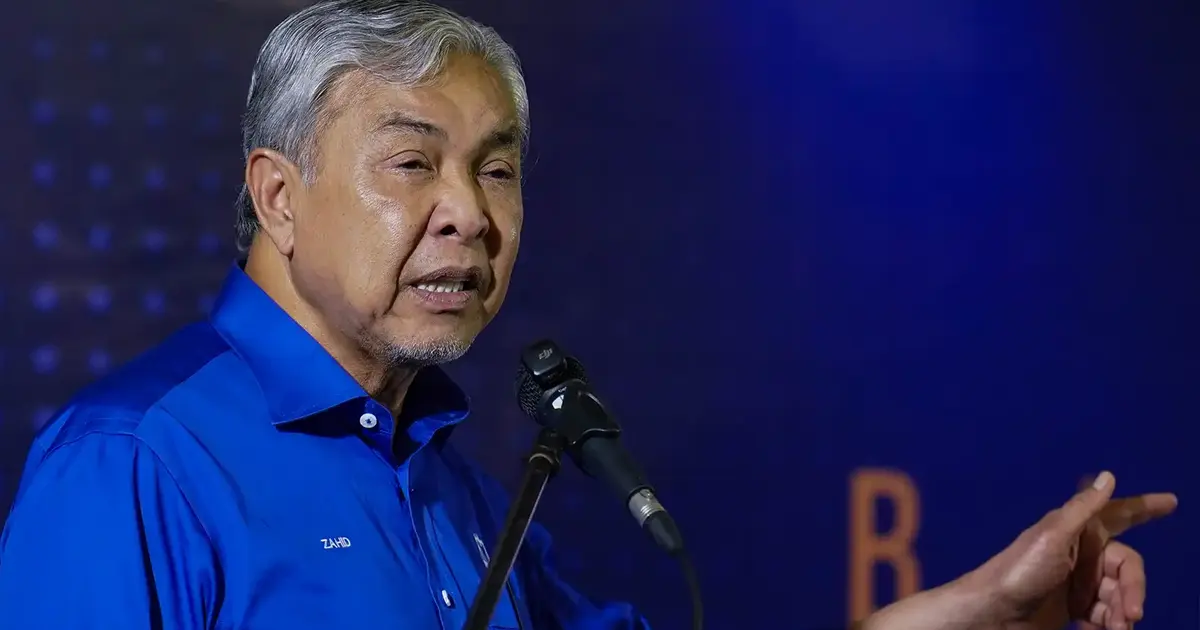
Deputy Umno president Puad Zarkashi has indicated that Umno and PAS may move past their fractured relationship to forge a renewed political partnership, provided both parties' immediate objectives align. Speaking to the political momentum building within Malaysia's Malay-Muslim political sphere, Puad suggested that shared short-term ambitions could provide sufficient common ground for the two organisations to collaborate despite the acrimony that characterised their previous breakdown.
At the centre of Puad's remarks lies the repositioning of Umno president Zahid Hamidi, whose political trajectory has shifted significantly in recent years. The indication that Zahid eyes the prime ministerial post represents a notable development in Umno's power dynamics and succession planning. For Umno to realise such aspirations, the party would require a coalition partner capable of delivering parliamentary support, making the participation of PAS—which commands significant representation in parliament and retains organisational strength across rural constituencies—strategically valuable.
PAS, meanwhile, remains focused on returning to formal government structures after years operating in opposition and as a junior coalition member. The Islamist party's experience in the previous Perikatan Nasional administration exposed both the opportunities and constraints of coalition participation. Their desire to regain government status reflects not merely ideological positioning but practical concerns about resource allocation, ministerial portfolios, and the ability to implement party-specific agendas at the federal level. For PAS, a formal coalition with Umno would represent a significant return to the power structures they dominated during the Barisan Nasional era.
Puad's remarks acknowledge a fundamental reality of Malaysian politics: ideology and historical grievances often yield to pragmatic political mathematics. The previous alliance between Umno and PAS disintegrated amid disputes over leadership, policy direction, and competition for the Malay-Muslim voter base, tensions exacerbated by Zahid's legal challenges and Umno's broader institutional difficulties. Yet Malaysian political coalitions have repeatedly demonstrated resilience and flexibility when incentive structures change. The presence of compelling short-term objectives—a prime ministerial opportunity for Zahid, cabinet positions and policy influence for PAS—creates what both parties might characterise as a window for recalibration.
The broader context for such potential realignment involves the current government's stability and the evolving electoral mathematics heading toward the next general election. Prime Minister Anwar Ibrahim's administration, while enjoying parliamentary support, operates within narrow margins where defections or coalition shifts could fundamentally alter governing capacity. From Umno's perspective, a stronger negotiating position through expanded coalition partnerships would enhance leverage over government policy and the distribution of political spoils. For PAS, participation in government would restore their relevance in federal decision-making after periods of relative marginalisation despite electoral success in state-level contests.
The internal dynamics within both parties also favour such exploration. Within Umno, factions supporting Zahid's advancement would benefit from assembling a credible coalition narrative that positions him as a viable alternative prime ministerial candidate. Within PAS, restoring government participation would satisfy elements within the party leadership who view opposition status as limiting their capacity to advance Islamic governance agendas. The party leadership has consistently articulated the belief that policymaking authority—rather than purely parliamentary representation—enables them to translate electoral support into substantive policy outcomes.
However, significant obstacles would need resolution before such an alliance crystallised into formal arrangement. The ideological differences between Umno's more secular-nationalist orientation and PAS's explicitly Islamic governance platform have historically created friction over policy priorities and resource distribution. Questions surrounding Zahid's legal position and the broader institutional health of Umno would likely feature prominently in any negotiations, with PAS leadership potentially demanding assurances regarding government stability and duration. Trust deficit stemming from previous coalition breakdowns would also necessitate carefully structured agreements addressing specific ministerial allocations, policy commitments, and dispute resolution mechanisms.
From a regional perspective, such developments carry implications for Southeast Asia's political stability and governance patterns. Malaysia's coalition politics directly influence its regional standing and policy orientation on matters spanning economic cooperation, security arrangements, and diplomatic positioning. An Umno-PAS coalition would likely emphasise different policy priorities compared to the current administration, potentially affecting bilateral relations with neighbouring countries and Malaysia's role within regional institutions. The timing of any such alliance relative to general elections would significantly shape Malaysia's political trajectory and electoral outcomes across multiple election cycles.
Puad's public signal regarding the possibility of renewed cooperation appears designed to test political reactions and establish negotiating parameters before formal discussions commence. Such preliminary positioning is standard in Malaysian coalition politics, allowing parties to gauge support from their respective grassroots, parliamentary caucuses, and allied organisations. The statement simultaneously prepares the political ground for potential coalition conversations while maintaining sufficient ambiguity to allow either party to retreat without significant reputational damage should circumstances change.

