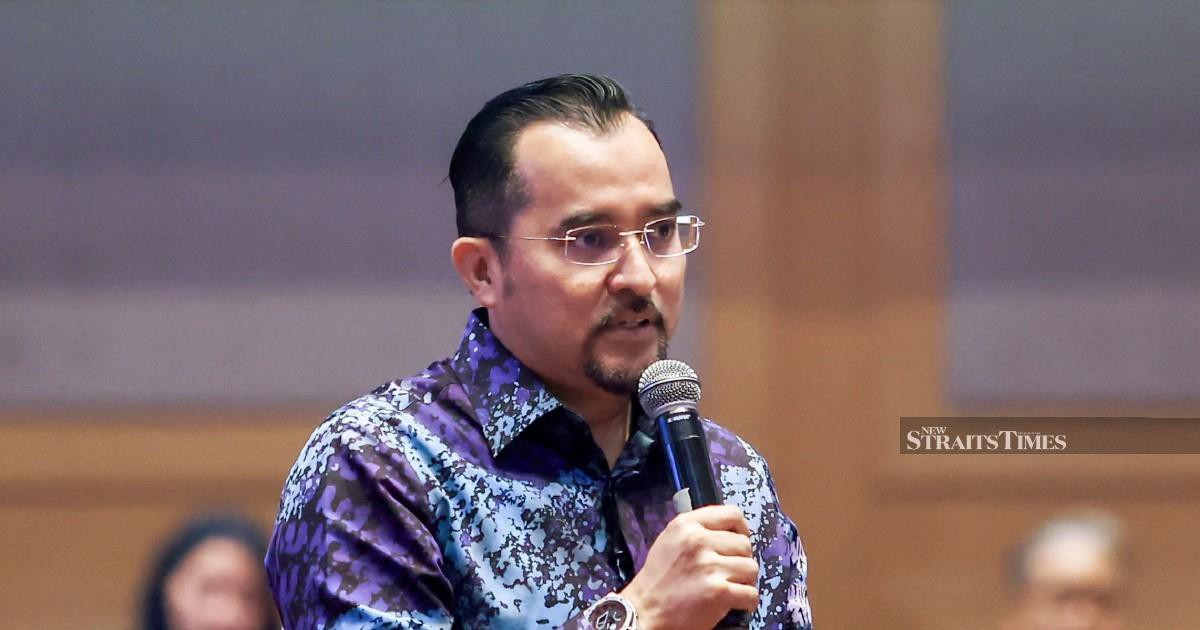
Umno leadership has moved to counter mounting allegations that the party deliberately orchestrated a theatrical performance designed to deflect scrutiny from those implicated in the Lembaga Tabung Haji financial crisis. Datuk Dr Asyraf Wajdi Dusuki, serving as the party's secretary-general, issued an emphatic denial of these claims, signalling a hardening of Umno's defensive posture as the pilgrimage fund's troubles continue to dominate national conversation.
The Tabung Haji saga represents one of Malaysia's most significant institutional crises in recent memory, involving mismanagement allegations, questionable investments, and the loss of funds intended to help ordinary Malaysians perform the hajj pilgrimage. The scandal has become a flashpoint for broader concerns about governance, accountability, and the protection of public institutions that serve vulnerable populations. At the heart of the controversy lies the question of whether political considerations have influenced the pace and scope of investigations into wrongdoing.
Umno's response signals the party's concerns about reputational damage as scrutiny widens into the circumstances surrounding TH's operations during periods when the party held government. The denial from Asyraf Wajdi comes as public and political pressure intensifies regarding the need for comprehensive accountability mechanisms. The party's emphasis on rejecting accusations of stage-managed proceedings suggests awareness of how public perception of institutional protection can undermine confidence in governance structures.
The timing of Umno's statement reflects broader political dynamics within Malaysia's complex post-2018 landscape, where questions about Umno's role in governance continuity have remained contentious. The party's assertion of transparency and commitment to proper procedures carries implications for how Malaysian political institutions manage accountability. By explicitly distancing itself from allegations of orchestrated deflection, Umno appears to be attempting to establish clear boundaries between partisan political interests and institutional responsibility.
For ordinary Malaysians—particularly the millions of pilgrims who depend on TH's services—the integrity of investigations into the fund's mismanagement carries profound significance. The scheme has operated since 1963 as a trusted mechanism for Malaysians to save for and undertake the hajj, one of Islam's five pillars. When institutional integrity becomes compromised, the ripple effects extend far beyond financial metrics, affecting the confidence millions place in collective systems designed for their benefit.
The scandal has also highlighted systemic weaknesses in oversight mechanisms that were supposed to prevent such crises. Questions persist about whether existing regulatory frameworks adequately protect pilgrimage funds and other public assets from mismanagement, political interference, or questionable investment decisions. These institutional shortcomings transcend individual parties and point toward broader governance challenges facing Malaysia's public sector.
Umno's position becomes more complex when considering that senior party figures have held leadership roles within TH's governance structure during critical periods. The party's insistence that it has no involvement in obstructing accountability carries weight only to the extent that investigations proceed with genuine independence and transparency. The political dimension cannot be completely separated from institutional matters when senior political figures have direct connections to the affected organization.
Regional observers have noted how Malaysia's experience with the TH scandal offers cautionary lessons for other Southeast Asian nations managing large public funds. Questions about governance standards, investment oversight, and the protection of institutions serving religious or social purposes resonate across the region, where similar schemes operate in neighbouring countries. Malaysia's handling of TH accountability therefore carries implications extending beyond national borders.
Moving forward, the credibility of any resolution depends fundamentally on whether investigations can proceed insulated from political considerations. Umno's denial of orchestrating a cover-up, while important, requires substantiation through demonstrable institutional independence and transparent processes. The public's trust in governance mechanisms depends on observable commitment to accountability rather than mere assertions of innocence.
The broader narrative surrounding TH remains one of institutional vulnerability meeting political complexity. Whether Malaysia's institutions can navigate this challenge while maintaining genuine independence will shape not only the resolution of this particular scandal but also public confidence in governance frameworks more broadly. The coming months will reveal whether Umno's denials translate into concrete institutional safeguards protecting investigations from political interference, or whether the TH affair becomes another episode illustrating how institutional accountability can become compromised when partisan interests intersect with public trust.

