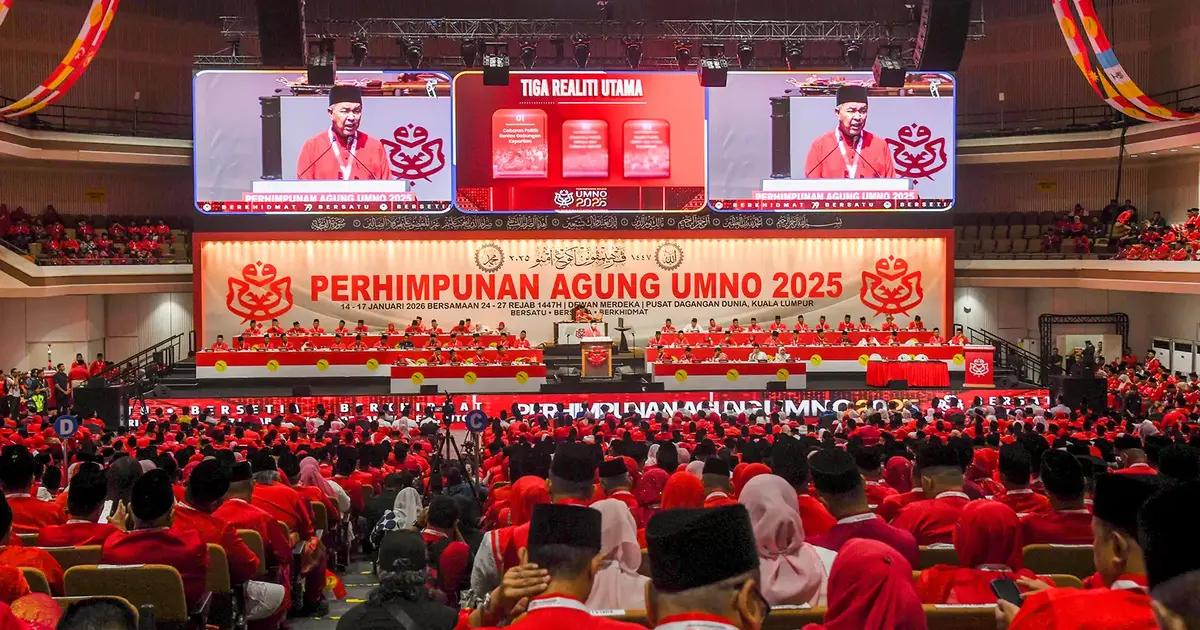
The internal politics of Umno in Negeri Sembilan has been roiled by tensions over the seat distribution announced for the upcoming state elections, with divisional leaders voicing considerable unhappiness about the number of constituencies handed to PN coalition partners. Sources within the party structure indicate that discontent centres on the magnitude of seats ceded to the PN component parties, with particular ire directed at the strategic allocation granted to Wawasan, the recently formed political party that is contesting an election for the first time.
According to party insiders, the core grievance stems from what Umno functionaries regard as an imbalanced arrangement that undervalues the party's historical dominance and organisational strength within the state. The allocation of eleven seats to PN-aligned parties represents a substantial portion of the state assembly's total seats, constraining the number of winnable positions available to Umno candidates who have traditionally formed the backbone of electoral campaigns in the region. This structural disadvantage has prompted considerable murmuring among grassroots organisers and division-level administrators who bear responsibility for mobilising voters and managing election machinery.
The decision to award four seats to Wawasan has crystallised the broader frustration into a specific focal point for criticism. Umno leaders have questioned the rationale behind allocating such a significant block of constituencies to a party making its electoral debut, particularly when Wawasan possesses no established track record, constituency infrastructure, or tested capacity to deliver victory in the states assigned to it. The reasoning appears to centre on Wawasan's role as a stabilising force within the PN coalition, but this strategic calculation has evidently not assuaged concerns at the divisional level where members must defend the arrangement to grassroots supporters.
This discord reflects deeper tensions within Malaysia's coalition politics that frequently emerge during seat-allocation negotiations. The balance between maintaining unity across ideologically and institutionally diverse coalition partners and respecting the historical claims and organisational capabilities of individual parties has long proven contentious. Umno, accustomed to its role as the largest and most established Malay-Muslim political force, often experiences friction when required to accommodate demands from smaller or newer partners seeking to establish themselves through seat allocations that might otherwise go to Umno candidates.
The timing of this discontent carries particular weight for Negeri Sembilan, a state where electoral margins have historically been competitive and where every additional seat carries strategic value. Division leaders understand that seat deficits directly translate into reduced opportunities for party members to contest elections, affecting career progression, political patronage networks, and the practical mechanisms through which local party structures build loyalty and commitment. When divisional activists perceive that seats have been surrendered to partners deemed less capable of winning, the morale impact extends beyond mere electoral mathematics into questions about the party leadership's judgment and commitment to its own members.
Wawasan's position within the PN coalition framework adds complexity to this equation. As a newer entrant designed to appeal to specific demographic segments or to address particular political gaps, the party may have been granted constituencies based on calculations about its potential contribution to overall coalition performance rather than its proven capacity in those specific seats. However, this forward-looking allocation strategy, while rational at the coalition leadership level, sits uneasily with Umno division leaders whose responsibility is to maximise their party's representation in the here and now.
The grievances articulated by Umno's Negeri Sembilan division leadership highlight the persistent challenge of maintaining coalition cohesion when distributing the fruits of electoral participation. For Malaysian political parties operating within coalition frameworks, seat negotiations represent far more than technical exercises—they constitute statements about relative importance, confidence levels, and the internal power dynamics shaping strategic decisions. When divisional leaders conclude that their party's interests have been subordinated to coalition management objectives, they signal concerns that may affect internal party dynamics and the organisational vigour applied to the election campaign.
This situation also demonstrates how Malaysian coalition politics continues to grapple with the fundamental tension between plurality and partnership. Umno's historical position as Malaysia's dominant political force creates expectations about seat allocations that periodically collide with the imperatives of maintaining broader alliances. Each negotiation cycle produces winners and losers within party hierarchies, and the Negeri Sembilan arrangement appears to have produced notable losers among the divisional leadership.
Moving forward, how Umno manages this internal dissatisfaction will likely influence both the vigour of its campaign efforts in Negeri Sembilan and the durability of the broader coalition arrangement. Party leadership will need to navigate between acknowledging grassroots frustration and maintaining commitment to the partnership framework that includes PN components. The resolution of this tension may require clearer communication about the strategic rationale behind seat allocations, or alternatively, additional concessions in other electoral cycles to restore balance and build confidence among division leaders that their party's long-term interests remain central to coalition calculations.

