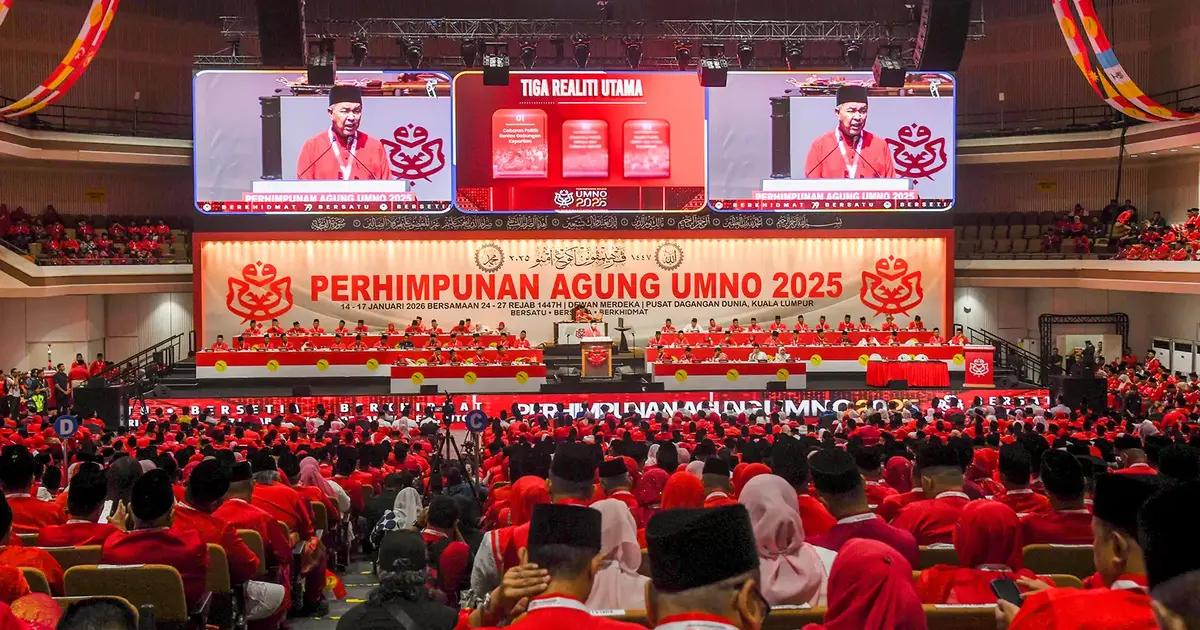
Tensions are simmering within Umno's party machinery over the seat distribution agreement with coalition partner Perikatan Nasional, according to reports emerging from divisional structures across the country. The allocation of eleven parliamentary constituencies to PN has triggered considerable unhappiness among rank-and-file Umno leaders, who view the arrangement as unfavourable to the party that commands the largest parliamentary contingent within the ruling coalition.
The disquiet centres fundamentally on perceptions of disproportionate reward for PN, a newer coalition entity that lacks Umno's decades of political infrastructure and electoral machinery. Division leaders from multiple regions have conveyed their grievances through party channels, questioning the logic behind granting PN such a substantial slice of available seats when Umno, as the dominant coalition partner with significantly greater membership and organisational capacity, continues to shoulder the primary burden of coalition governance.
A particularly acute source of friction involves Wawasan, PN's urban-focused component party, receiving an allocation of four seats despite this being its inaugural general election campaign. The decision to award such a generous initial allocation to an untested entity has struck many Umno grassroots leaders as inequitable, especially when established Umno divisions in competitive constituencies find themselves with limited seat allocations. This disparity between Wawasan's newcomer status and its seat quota has crystallised broader concerns about whether coalition mathematics have been calculated with adequate consideration for the legitimate expectations of Umno's organisational backbone.
The complaints circulating through Umno's divisional network reflect a deeper anxiety about resource allocation and recognition within the ruling coalition. These leaders contend that the seat distribution fails to adequately reflect the relative strengths and contributions of the coalition's constituent parties. Umno's argument rests on demonstrable metrics: membership rolls, electoral track records, and operational capacity all favour Umno substantially over PN and its components, yet the seat distribution appears to many party workers as insufficiently reflective of these realities.
This grassroots discontent arrives at a particularly delicate moment in Malaysia's political trajectory. The coalition arrangement between Umno and PN represents a calculated effort to consolidate centre-right and nationalist political forces into a durable governing structure capable of competing against opposition coalitions. However, the durability of any coalition hinges fundamentally on perceived fairness in resource distribution among partners. When grassroots activists, who constitute the actual campaigning machinery that translates parliamentary seats into victory at the ballot box, harbour resentment about seat allocations, the practical implications cascade downward into morale and operational effectiveness.
The controversy touches on a chronic challenge in Malaysian coalition politics: balancing the formal mathematical representation of parties in coalition agreements against the historical precedent and organisational reality that should inform power-sharing formulae. PN, as a relative newcomer to the ruling coalition architecture, seeks to establish itself as a legitimate co-equal partner deserving substantial representation. Umno, conversely, views itself as the coalition's gravitational centre and the repository of its governing legitimacy. Reconciling these competing narratives within a single coalition framework invariably produces friction at the divisional level, where abstraction yields to concrete questions about which party's flags will fly in local constituencies.
Wawasan's situation exemplifies the broader tension. As an urban-oriented party without prior electoral participation, it brings potentially valuable demographic reach into PN's portfolio, particularly among younger, urbanised voters. Yet from the perspective of entrenched Umno divisional structures, allocating four seats to an untested party seems to prioritise theoretical future performance over demonstrated present contribution. This calculation reflects fundamentally different assumptions about coalition strategy: whether coalitions should reward current strength or invest in future capacity building.
The depth of dissatisfaction among Umno's divisional echelon carries significant implications for campaign machinery. General elections in Malaysia depend substantially on volunteer activism at the constituency level. Division leaders command networks of branch leaders, grassroots operatives, and volunteer campaigners whose enthusiasm and effort directly correlate with electoral success. When these individuals perceive that their party has been shortchanged in coalition negotiations, motivation inevitably declines. This attrition in enthusiasm translates into fewer door-to-door canvasses, fewer telephone contacts, and reduced ground-level mobilisation.
The timing of these grievances also matters. Coalition governments in Malaysia frequently face stability questions, particularly when constituent parties harbour internal resentments about resource distribution. Should discontent among Umno's divisional infrastructure persist and deepen, it could create vulnerability within the coalition structure at a time when unified governance remains strategically important. Political opponents monitor such fissures carefully, and persistent internal friction provides fertile ground for opposition messaging about coalition dysfunction.
Moving forward, Umno's leadership faces pressure to either convince divisional leaders that the coalition arrangement serves the party's long-term strategic interests, or negotiate revisions to seat allocations that better reflect internal equity expectations. The current controversy remains at the complaining stage, but extended resentment among grassroots leaders could eventually manifest as reduced campaign effectiveness, diminished party discipline, or broader coalition instability. Managing these divisional concerns represents an essential element of coalition maintenance that extends well beyond the formal agreements signed by party presidents.
The broader Southeast Asian context suggests that coalition governance in diverse, multi-ethnic democracies perpetually struggles with resource allocation fairness. Malaysian coalitions have historically experienced periodic friction over seat distribution, yet coalition politics remains the operational necessity for governing majorities. How Umno and PN navigate this particular controversy may shape not only the immediate coalition relationship but also serve as a barometer for coalition durability in Malaysian politics more broadly.

