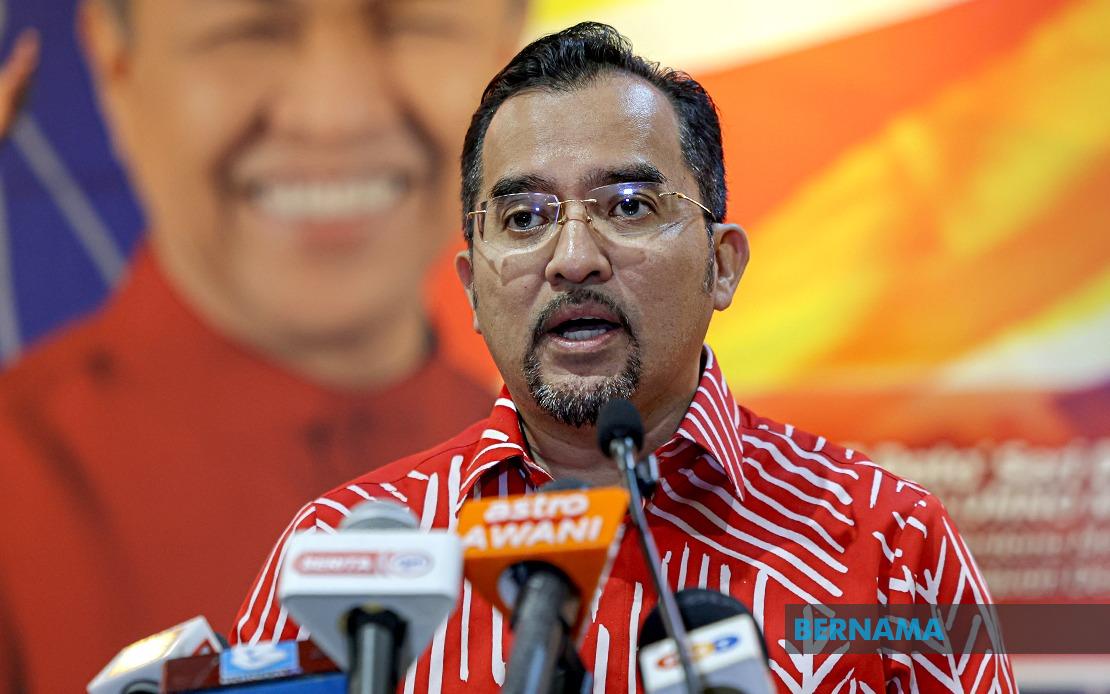
UMNO has formally empowered its state-level leadership to engage in discussions with any political party seeking to establish electoral cooperation for the next general election, according to a resolution passed during the party's Supreme Council meeting in Kuala Lumpur on Wednesday evening. The decision represents a significant shift in how Malaysia's largest Bumiputera-based political party will approach coalition-building, delegating negotiating authority to regional chapters rather than maintaining centralised control from party headquarters.
Datuk Dr Asyraf Wajdi Dusuki, the party's secretary-general, outlined the framework during a press conference following the closed-door meeting held at Menara Dato' Onn in the World Trade Centre. He emphasised that any prospective partnerships must rest on foundations of genuine sincerity and mutual trust, explicitly rejecting transactional approaches that rely on intimidation, ultimatums, or coercive negotiating tactics. This framing suggests UMNO is attempting to distance itself from perceptions of hardball politics whilst maintaining flexibility in coalition formation.
The Supreme Council gathering, which convened at 8.45 pm and was presided over by UMNO president Datuk Seri Dr Ahmad Zahid Hamidi with participation from deputy president Datuk Seri Mohamad Hasan and other senior council members, addressed multiple party matters beyond coalition strategy. The meeting's timing and composition reflect the party's efforts to project stability and unity as it navigates the complex terrain of Malaysian electoral politics heading into the next cycle.
In a symbolic gesture aimed at bridging differences with its traditional Islamist coalition partner, the Supreme Council voted to extend a formal invitation to PAS leadership to attend UMNO's 2026 General Assembly, scheduled for September 9 through 12. This move indicates ongoing efforts to maintain dialogue between the two parties despite periodic tensions and competition for Malay-Muslim voter support. The invitation carries significance beyond mere ceremonial courtesy, representing an olive branch at a time when electoral arithmetic may require renewed cooperation between these major Bumiputera-based organisations.
The party has also organised an extensive programme of events for September 8, the day preceding the General Assembly. These include the 2026 Malay Education Convention, the Malaysian Islamic Scholars Convention, and Laman Wanita Kreatif, suggesting UMNO is positioning itself around three key pillars: education policy, Islamic intellectual discourse, and women's participation in party politics. This thematic clustering reflects the party's attempt to address diverse constituencies and demonstrate policy breadth beyond electoral machinery.
Beyond coalition architecture, the party's leadership also reaffirmed UMNO's commitment to upholding the rule of law and the principle that no individual should face condemnation without proper judicial process. Asyraf Wajdi stressed that UMNO maintains consistent opposition to wrongdoing and misconduct regardless of whether perpetrators are ordinary members or senior party figures, emphasising that all individuals must proceed through formal legal channels and due process. This statement carries particular resonance given UMNO's complex history with governance accountability and past internal controversies involving senior politicians.
The emphasis on legal principles and due process appears designed to address lingering public perceptions about political patronage and selective accountability within Malaysian political structures. By framing UMNO's position around universal application of law rather than partisan protection, party leadership aims to rebuild credibility in governance and institutional integrity. However, observers familiar with Malaysian politics recognise that such statements often reflect aspirational messaging rather than operational reality, particularly when party interests collide with legal obligations.
The decision to decentralise coalition negotiations to state chapters represents a pragmatic recognition of Malaysian federalism's complexity. Different states operate under varying electoral dynamics, demographic compositions, and established political arrangements. Granting state leadership negotiating latitude allows UMNO to pursue tailored strategies suited to local conditions rather than imposing uniform nationwide arrangements that may prove suboptimal in specific contexts. This devolutionary approach could enhance UMNO's flexibility in an increasingly unpredictable political environment.
For Southeast Asian observers, the broader implications concern how Malaysia's dominant Bumiputera party manages electoral competition alongside governance legitimacy. UMNO's evolution from unquestioned electoral hegemony toward coalition dependency reflects transformations in Malaysian society, including greater voter volatility, stronger opposition organisation, and heightened public expectations regarding anti-corruption and institutional transparency. The party's negotiating framework—emphasising trust over coercion—suggests internal recognition that older models of political dominance no longer guarantee electoral success.
The timing of these resolutions, roughly two years before typical election scheduling, reflects UMNO's preparatory approach to coalition engineering. By establishing negotiating parameters early, defining partnership principles, and signalling openness to dialogue with various parties whilst maintaining organisational autonomy, UMNO attempts to position itself as a central but not dominating coalition architect. This stance contrasts with historical periods when UMNO could dictate coalition terms unilaterally.
For Malaysian political stakeholders monitoring this development, the state leadership empowerment holds practical consequences. PAS, PKR, and other potential partners may interpret this move as indicating UMNO's genuine willingness to negotiate substantive policy platforms rather than merely dividing ministerial positions. Conversely, sceptics may view it as rhetorical cover for maintaining UMNO's traditional practice of securing electoral advantages through alliance arrangements with minimal genuine policy integration.
The integration of PAS leadership through formal General Assembly invitation suggests UMNO recognises that Malay-Muslim political consolidation remains essential for electoral success, despite historical tensions and competition between these parties. This reconciliation impulse, combined with devolved negotiating authority, indicates UMNO's sophisticated response to contemporary Malaysian electoral dynamics whilst attempting to modernise its political practice.

