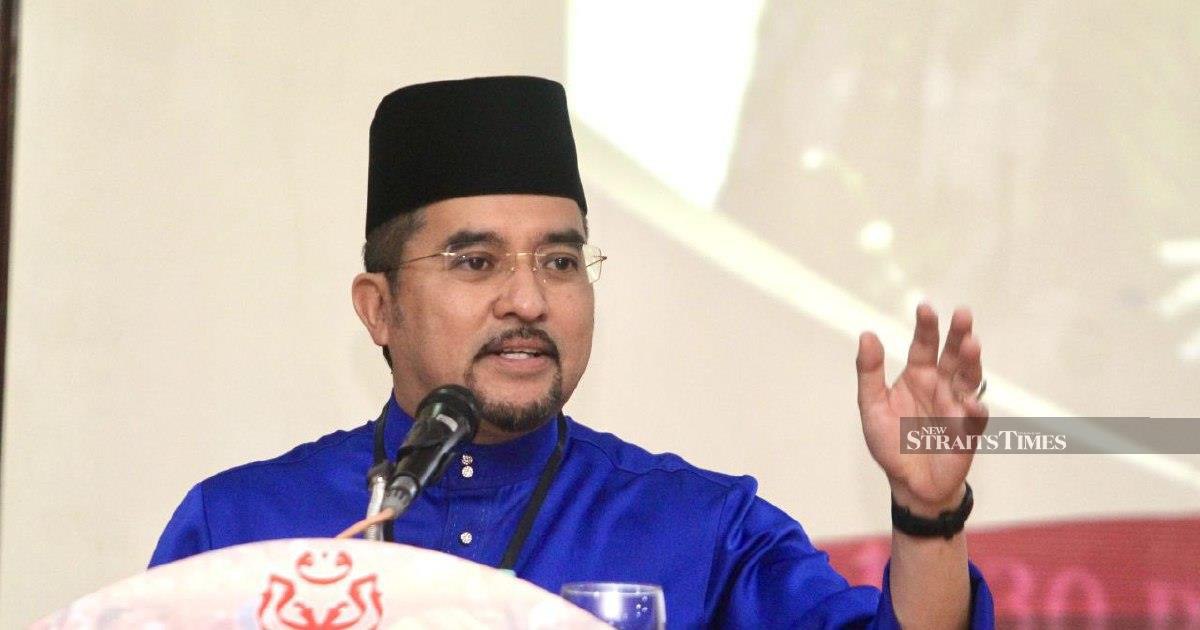
Umno has firmly rejected what it characterises as PKR Youth's attempt to unilaterally dictate terms over seat distribution ahead of the Melaka election, signalling growing tensions within the ruling coalition over how candidacies should be divided. Speaking in Kota Baru, senior Umno figures acknowledged that all coalition members retain the right to voice their preferences and outline their political objectives, but pushed back sharply against the notion that one group could impose its will without consultation or compromise.
The dispute underscores a recurring friction point within Malaysia's coalition politics: the gap between grassroots enthusiasm for electoral gains and the measured approach favoured by established party hierarchies. PKR Youth, as an affiliated branch of the People's Justice Party, represents younger, often more assertive voices within the broader opposition-turned-government alliance. Their recent statements regarding Melaka appear to have crossed what Umno considered acceptable boundaries of internal discussion, moving from private coalition mechanics into public territory where bargaining positions calcify and room for negotiation narrows.
Umno's position reflects a long-standing principle within Malaysia's federal and state coalitions: while individual parties and factions may have legitimate claims on certain constituencies based on voter support, membership strength, or historical performance, the ultimate resolution of such disputes belongs to senior leadership forums rather than junior party wings or public declarations. This hierarchy preserves coalition cohesion by ensuring that agreements reached at the top are not undermined by branch-level grandstanding or media campaigns designed to embarrass negotiating partners.
The Melaka state assembly, with 36 seats distributed across multiple constituencies, represents the kind of prize that triggers predictable coalition tensions. For Umno, Melaka is traditionally viewed as friendly terrain, yet any election there involves multiple coalition partners seeking representation—a formula that guarantees competition over nomination. PKR Youth's interventions suggest frustration that their party's contribution to electoral success may not be adequately reflected in the final slate of candidates, a complaint common to junior partners in any governing arrangement.
Umno's rebuff also carries tactical implications for how the broader coalition manages internal disputes in the approach to potential elections elsewhere. Should the party be seen as capitulating to public pressure from coalition partners' youth wings, it risks setting a precedent that undermines its negotiating position in future seat discussions—whether in Selangor, Johor, or federal territories. By drawing a line now, Umno signals that such matters will be settled through established channels, not through media volleys or public demands framed as representing grassroots sentiment.
The timing of this friction is worth noting. Coalition partners have shown signs of strain in recent months over resource allocation, ministerial appointments, and candidate selection in various elections. The Melaka issue, while specific to one state assembly, may reflect deeper anxieties within PKR about its overall standing within the Pakatan Harapan alliance and its ability to influence outcomes on matters it considers important. Umno's forceful response suggests little appetite for conceding ground simply to ease such anxieties.
For Malaysian voters and observers, the dispute illustrates how coalition governments function behind closed doors. Public solidarity and shared policy platforms mask a constant process of negotiation, compromise, and occasionally frank disagreement over how power and electoral opportunities are distributed. These are not failures of the system but rather inherent features of any multi-party arrangement, particularly one as complex as Malaysia's ruling coalition, which comprises Umno, PKR, the Democratic Action Party, Amanah, and numerous smaller partners.
The resolution of the Melaka seat issue will likely follow a familiar path: private discussions between Umno and PKR leadership, possibly mediated by coalition coordinators, culminating in an agreed allocation that leaves neither party entirely satisfied but both able to present the outcome as a victory to their respective bases. PKR Youth may be asked to moderate its public stance, while Umno may offer modest concessions—additional nominations or high-profile candidacies—to ease tensions and reinforce party unity messaging ahead of campaigning.
The incident also reflects broader Southeast Asian coalition politics, where junior partners often struggle to extract concessions proportional to their perceived contributions, particularly in transitions from opposition to government. PKR's experience in this current cycle—moving from leading the charge against the previous regime to now operating within a governing coalition—creates inherent tensions between its members' ambitions and the realities of power-sharing with more established and larger parties.
Umno's insistence on formal negotiations rather than public pressure tactics ultimately serves the coalition's interests, even if individual partners temporarily chafe under such discipline. Coalition governments across Southeast Asia survive not through perfect satisfaction of all members' demands but through institutional mechanisms that channel grievances into manageable discussions rather than allowing them to spill into the public arena where they become rallying points for opponents. By firmly rejecting PKR Youth's approach, Umno has reinforced the principle that coalition membership entails accepting constraints on unilateral action—a message likely aimed not only at PKR but at all coalition partners watching how Umno responds to such challenges.

