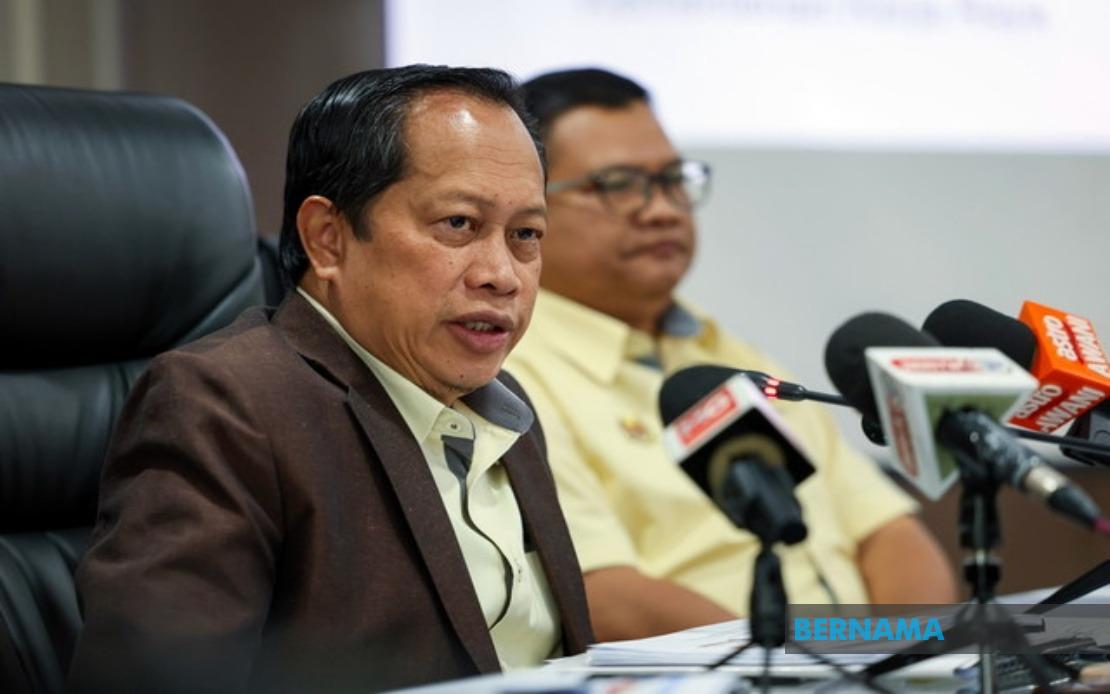
UMNO's Supreme Council will use a scheduled meeting on August 28 to settle the party's political positioning ahead of Melaka's state election, according to senior party figure Datuk Seri Dr Ahmad Maslan. The gathering, to be presided over by party president Datuk Seri Dr Ahmad Zahid Hamidi, will examine whether Barisan Nasional should contest the election independently or forge alliances with rival political blocs to maximise electoral prospects in the state.
Dr Ahmad Maslan, who serves as Deputy Works Minister and sits on UMNO's highest decision-making body, indicated during a media engagement in Melaka that no binding determination has yet been made regarding the party's electoral approach. The deliberations reflect a pattern of competing internal opinions within BN leadership, with various factions exploring different partnership models as the organisation seeks optimal positioning before polls are called.
The backdrop to these discussions remains complex. Current political speculation centres on two potential frameworks: a continuation or deepening of arrangements with Pakatan Harapan, mirroring the federal-level Unity Government configuration, or alternatively a strategic pivot towards collaboration with Perikatan Nasional. These options represent fundamentally different political trajectories for the traditionally dominant BN coalition in Malaysia's second-largest state by economy.
Medial discourse and statements from multiple UMNO figures, particularly those based in Melaka itself, have already ventured into public positioning on coalition possibilities. Such public commentary from party grassroots leadership occasionally pre-empts or constrains formal decisions at the national level, creating pressure on the Supreme Council to formally endorse or redirect emerging consensus. Dr Ahmad Maslan's comments acknowledged this dynamic while cautioning against treating such preliminary discussions as settled party doctrine.
The timing proves significant given that Melaka's current state government mandate expires on December 31. This constitutional deadline creates a window within which elections must be conducted, typically allowing parties a two to three-month preparation period once a decision crystallises. The August 28 meeting thus positions the party's choice to take effect with sufficient lead time for campaign mobilisation, candidate selection, and grassroots activation.
Melaka's current political composition reflects the hybrid arrangements that have characterised Malaysian governance since the 2022 federal election. Barisan Nasional holds 21 of 28 state assembly seats, a commanding majority that would ordinarily allow solo governance. However, the state executive council deliberately incorporates assemblymen from Pakatan Harapan despite PH's minority holding of five seats, essentially implementing the Unity Government architecture at the state tier. Perikatan Nasional controls the remaining two seats, holding minimal leverage in state decision-making despite its growing national presence.
This existing power-sharing model, though administratively workable, carries political complications. Collaborating with rivals in cabinet generates internal pressure within each party, with rank-and-file members questioning why opposition politicians exercise executive authority. For UMNO specifically, sharing the state executive council with PH elements may have satisfied national-level political imperatives following the 2022 election shock, yet local activists frequently agitate for more assertive BN positioning. Similarly, PH members chafe at occupying subordinate positions within a fundamentally BN-led government.
The choice before UMNO's Supreme Council thus involves calculating which approach best serves the party's organisational interests and electoral prospects. A solo BN contest would allow unambiguous messaging and control over all cabinet positions, though it risks alienating PH voters who have grown accustomed to shared governance. A renewed BN-PH arrangement would maintain federal-state alignment and potentially secure PH's passive cooperation in campaigning, yet might depress BN supporters who view such arrangements as unprincipled opportunism. Partnership with PN would signal a fundamental realignment away from the Unity Government framework, appealing to UMNO's traditionalist base but potentially fracturing national coalition arrangements.
Dr Ahmad Maslan's characterisation of the decision-making process emphasised that BN strategy must account for circumstances specific to each state rather than applying uniform national doctrine. This formulation implicitly acknowledges that Melaka's political economy differs from states like Selangor or Johor, where distinct electoral dynamics and local power structures prevail. Melaka's status as a relatively compact state with manageable political networks makes it potentially more controllable than larger territories, possibly justifying different experimental approaches to coalition architecture.
The Deputy Minister's call for party unity around whatever decision emerges from the August 28 deliberations carries practical weight. Previous instances of contested electoral decisions have generated internal friction and occasionally open conflict within UMNO's ranks, with local leaders ignoring or working around national-level directives. By framing party discipline as essential to electoral success, Dr Ahmad Maslan attempted to establish a pre-decision consensus that dissidents would face reputational costs by defying the Supreme Council's ultimate verdict.
For Malaysian observers and political analysts, the Melaka decision carries significance extending beyond the state itself. The choice will effectively test whether the Unity Government framework represents a durable new model for Malaysian politics or remains a temporary expedient specific to federal governance. If UMNO opts for solo contestation in Melaka, it signals confidence that BN can regain voters without PH collaboration and reduced commitment to the national coalition. Conversely, renewed partnership would suggest the Unity arrangement has achieved sufficient entrenchment to warrant replication at the state level even when not strictly necessary for securing majorities.
The broader Southeast Asian context adds another dimension. Malaysia's shift toward power-sharing and coalition building, however imperfect and transactional, contrasts with authoritarian or one-party dominant patterns elsewhere in the region. The mechanics of how Malaysian parties negotiate coalitions, balance internal factions, and reconcile competing electoral strategies carry implications for democratic functionality across a crucial geopolitical zone. Melaka's election will offer a revealing case study in how such negotiations actually unfold when high-stakes electoral contests force abstract political principles into concrete operational choices.

