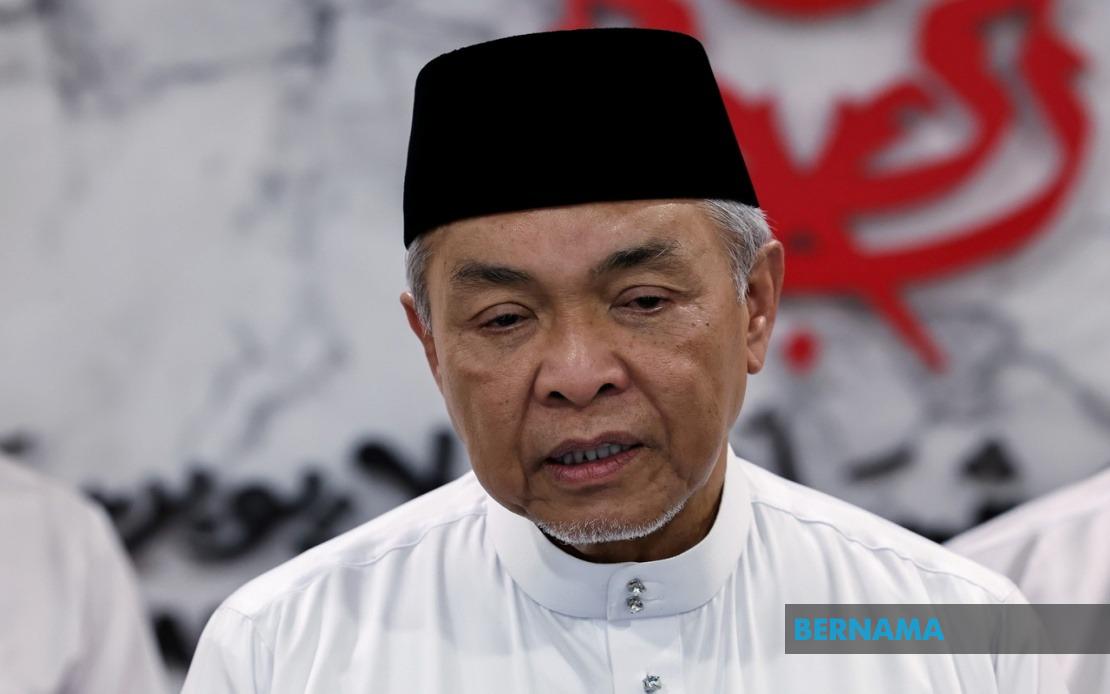
UMNO will commence formal negotiations regarding potential electoral partnerships for the upcoming Melaka state election once the state legislative assembly is formally dissolved, according to party president Datuk Seri Dr Ahmad Zahid Hamidi. The Deputy Prime Minister's statement represents a carefully calibrated positioning ahead of what analysts expect to be a competitive state-level contest. By framing formal talks as contingent on the assembly's dissolution, UMNO appears to be signalling both readiness for collaboration and adherence to constitutional propriety—a critical distinction in Malaysian electoral politics where the timing of legislative dissolution and campaign commencement carries legal and symbolic weight.
Chief Minister Datuk Seri Ab Rauf Yusoh will spearhead these discussions on behalf of the party, Ahmad Zahid confirmed. This delegation of authority to the sitting Chief Minister underscores the localized nature of coalition negotiations in state-level politics, where regional leadership often carries greater legitimacy among grassroots party members and voters than central party apparatus. Yusoh's role as principal negotiator also signals UMNO's intention to maintain continuity in Melaka's governance should coalition arrangements succeed, cementing the Chief Minister's position as the face of UMNO's Melaka strategy.
The party leadership distinguished between informal exploratory discussions already occurring behind the scenes and the formal negotiation process that will follow official dissolution. This distinction carries practical significance: informal talks allow parties to gauge compatibility and test potential arrangements without triggering the regulatory scrutiny and media transparency that formal coalition negotiations attract. Such preliminary soundings are standard practice in Malaysian politics, where sophisticated political operators often conduct months of groundwork before public announcements. By acknowledging this reality while delineating it from formal processes, Ahmad Zahid demonstrated awareness of both political realities and institutional expectations.
The question prompting Ahmad Zahid's response concerned potential cooperation with Perikatan Nasional, the coalition led by the Malaysian Islamic Party that has emerged as a significant political force in recent years. PN's presence in Melaka's political landscape reflects broader shifting alignments in Malaysian politics, where traditional Barisan Nasional dominance has faced increasing pressure from resurgent opposition coalitions. For UMNO, evaluating partnership possibilities with PN represents a calculated exercise in maximizing electoral prospects while managing internal party sensitivities regarding ideological compatibility and resource distribution.
Prior to his public statement, Ahmad Zahid engaged with the entire UMNO Melaka Political Bureau, receiving comprehensive briefings on the party's election readiness. These internal consultations provided the party president with granular intelligence on organizational capacity, candidate viability, and competitive positioning within Melaka constituencies. The Information subsequently escalated to the UMNO Supreme Council, the party's highest decision-making body, ensuring that coalition deliberations occur within formal party structures rather than through ad hoc channels. This hierarchical approach reinforces institutional discipline and prevents rogue negotiations by lower-ranking party officials.
The presentation before the Supreme Council drew on detailed data compiled through UMNO Melaka's dedicated war room—the party's term for its centralized election operations center. War rooms represent modern Malaysian political infrastructure, aggregating voter intelligence, demographic analysis, and competitive assessments to inform strategic decisions. By grounding coalition discussions in empirical data rather than relying on intuition or factional preferences, UMNO's approach reflects professionalization of political campaign management across Malaysian parties. This data-driven methodology should theoretically produce coalition arrangements that optimize electoral outcomes rather than merely accommodating intra-party power dynamics.
The Melaka election assumes significance beyond the state's borders. As Malaysia's smallest peninsula state by population, Melaka serves as a barometer for broader political trends and coalition viability. Recent Malaysian electoral history demonstrates that coalition arrangements function differently at state and federal levels, with some parties cooperating at state elections while maintaining rivalry at the national stage. Melaka's political trajectory will influence calculations regarding similar coalition experiments in other states, making negotiations there consequential for national political strategists across multiple coalitions.
UMNO's careful sequencing of its announcement—commencing formal talks only after assembly dissolution—also reflects lessons from previous Malaysian electoral cycles where premature coalition announcements generated internal party friction or gave opposition parties strategic advantages. By maintaining flexibility until the formal election process begins, UMNO preserves negotiating latitude and retains options should political circumstances shift. This strategic patience characterizes sophisticated political management, particularly for established parties accustomed to navigating complex internal stakeholder interests.
The Deputy Prime Minister's remarks also implicitly acknowledge contemporary Malaysian political reality: no single party automatically commands sufficient electoral strength in Melaka to govern independently. This fragmentation, evident across most Malaysian states, has transformed electoral politics from straightforward majority-seeking exercises into coalition-building exercises. For voters, this dynamic introduces uncertainty regarding final governing arrangements, as outcomes depend both on electoral results and post-election negotiations. UMNO's transparent acknowledgment of this coalition dependency, combined with its structured approach to negotiations, may enhance public confidence in the eventual arrangements, though skepticism regarding backroom deals remains endemic to Malaysian political culture.

