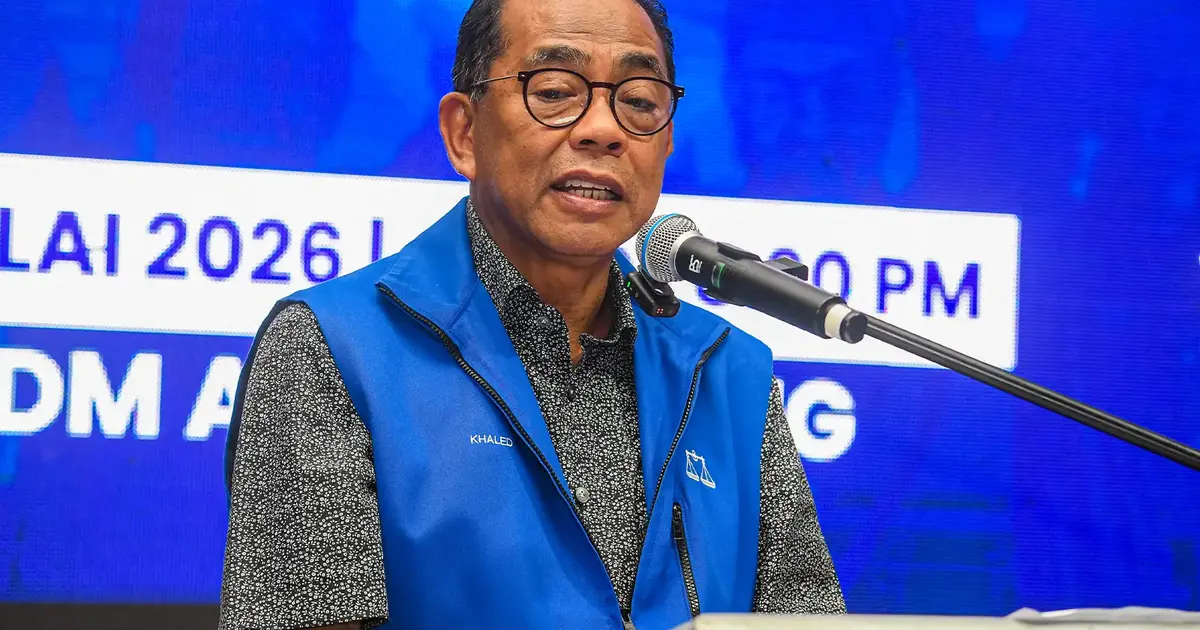
Umno Vice-President Khaled has escalated his party's campaign rhetoric by urging voters in Negeri Sembilan to deliver a decisive blow to Bersatu, replicating the coalition's overwhelming victory in Johor state elections. The appeal reflects growing confidence within Umno's ranks and a deliberate strategy to eliminate Bersatu as a political competitor ahead of the next general election scheduled for 2026. By framing the Negeri Sembilan contest as an opportunity to repeat Johor's success, Khaled has positioned the state elections as a referendum on Bersatu's political viability.
The Johor state elections in 2022 marked a watershed moment for Malaysian politics, with Umno-led Barisan Nasional achieving a commanding 40 of 56 seats and effectively shutting out Bersatu from representation. That outcome fundamentally reshaped the political landscape and accelerated divisions within the Malay-Muslim political establishment. Khaled's invocation of Johor serves as both a rallying cry for party supporters and a warning to fence-sitters that backing Bersatu represents backing a political losing proposition. The comparison underscores Umno's determination to prevent Bersatu from gaining any territorial foothold that might serve as a platform for national relevance.
For Bersatu, the stakes in Negeri Sembilan carry profound implications. The party, which was formed in 2016 and achieved significant electoral success in 2018 before fragmenting after internal power struggles, has found itself increasingly marginalised in recent electoral contests. A comprehensive defeat in Negeri Sembilan would further erode the party's credibility among voters and diminish its negotiating power within any future coalition arrangements. The party's challenge extends beyond simple vote-getting; it must demonstrate organisational capacity and electoral appeal to remain relevant in peninsular Malaysian politics.
The timing of Khaled's statement reflects broader concerns within Umno about consolidating its renewed dominance. Since the 2022 Johor elections, Umno has sought to position itself as the indispensable anchor of Barisan Nasional and the primary protector of Malay-Muslim interests. Allowing Bersatu to secure any significant presence in Negeri Sembilan would complicate that narrative and potentially split the Malay vote in ways that benefit opposition parties. Khaled's mobilisation strategy therefore aims to present Negeri Sembilan voters with a binary choice: unity under Umno's leadership or division and political irrelevance.
For Malaysian voters, particularly those in Negeri Sembilan, Khaled's appeal introduces important questions about political consolidation and diversity. While Umno argues that concentration of Malay-Muslim voting power strengthens negotiating capacity at the national level, critics contend that eliminating political alternatives reduces voter choice and weakens internal party democracy. The tension between these perspectives has defined Malaysian politics for decades and continues to shape electoral dynamics in each state contest.
Bersatu's political trajectory illustrates the precarious position of newer entrants to Malaysian politics. The party emerged from the 2018 upheaval with substantial momentum, leading a coalition that defeated the long-ruling Barisan Nasional. However, internal conflicts, particularly disputes involving former Prime Minister Mahathir Mohamad, created fissures that opposing parties have systematically exploited. The party has struggled to develop an independent political identity separate from its founding figures and has found itself increasingly vulnerable to claims that it represents factional interests rather than broader constituencies.
Regionally, the Negeri Sembilan contest carries implications for Southeast Asian political trends more broadly. Malaysia's electoral system and coalition dynamics have historically served as a model and reference point for other democracies in the region. The emerging pattern of dominant parties using electoral dominance to consolidate power and exclude rivals reflects broader global trends toward majoritarian politics. Yet Malaysia's multi-ethnic, multi-religious composition means that entirely eliminating political alternatives carries distinct risks for long-term social cohesion.
Umno's strategy also reflects confidence that its anti-Bersatu message will resonate across different voter segments. The party has positioned itself as the guarantor of stability and effective governance, qualities it argues are threatened by political fragmentation. This argument carries particular weight in state contests, where voters can directly observe government performance in areas like local development, service delivery, and fiscal management. Negeri Sembilan's economic dependence on manufacturing and services makes such performance-based appeals especially relevant to voters evaluating competing parties.
The dynamics in Negeri Sembilan will provide valuable indicators for national political trends ahead of the 2026 general election. Should Umno achieve a decisive victory comparable to Johor, it would suggest that the consolidation of Malay-Muslim voting behind Umno remains a powerful electoral force. Conversely, any unexpectedly strong Bersatu showing would signal that the party retains organisational capacity and voter appeal despite recent setbacks. Intermediate results showing competitive contests in specific constituencies would suggest that Malaysian politics has entered a more fragmented phase.
Khaled's public campaign illustrates how state elections in Malaysia function as dress rehearsals for national contests. Party strategists use these races to test messaging, identify emerging voter concerns, and assess organisational capacity. The willingness of senior Umno figures like Khaled to invest political capital in Negeri Sembilan underscores the state's importance as a battleground where larger political trajectories are contested and clarified. The outcome will help shape not only Negeri Sembilan's government but also the broader political environment within which the 2026 general election will be fought.

