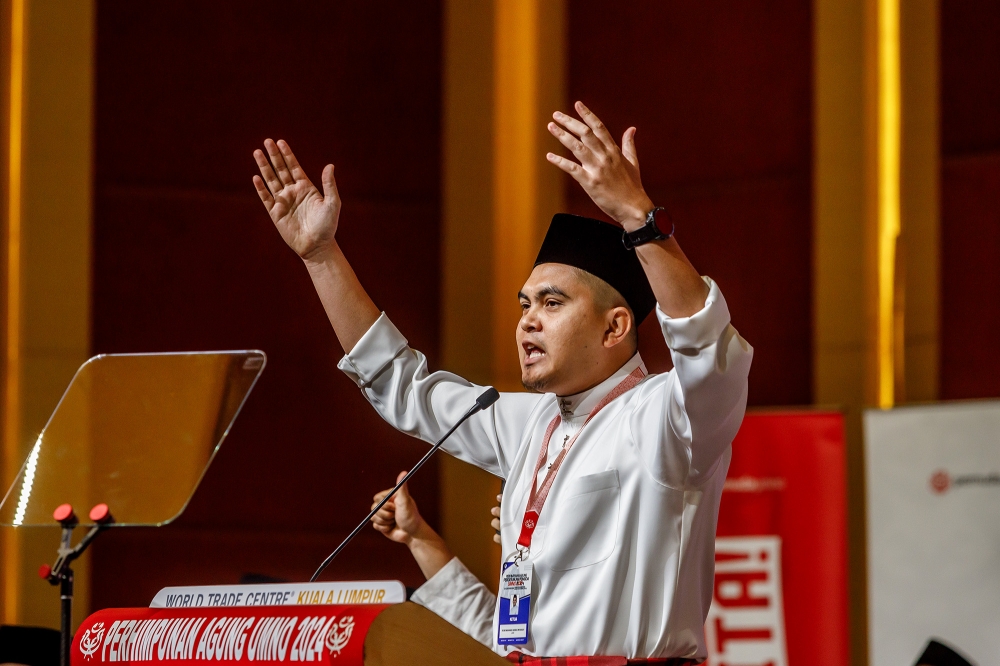
Umno Youth chief Datuk Dr Akmal Saleh has escalated the debate surrounding Malaysia's governing coalitions by questioning the double standards applied to Barisan Nasional, asking why Pakatan Harapan has not similarly faced calls to relinquish its government role based on electoral alliances. The challenge strikes at a fundamental tension within Malaysian politics: the coexistence of campaign partnerships with governing arrangements, and whether parties should be held to uniform accountability standards across these distinct phases.
The crux of Akmal Saleh's argument rests on examining how political coalitions form and reform according to electoral cycles and parliamentary mathematics. Umno, as the dominant party within Barisan Nasional, has found itself in the uncomfortable position of defending its coalition partnerships while fielding criticism from rival blocs. The youth leader's intervention suggests growing frustration within party circles at what Umno strategists perceive as selective scrutiny applied unevenly across the political spectrum.
Pakatan Harapan's composition and decision-making structures have evolved considerably since the 2018 election, when the coalition achieved a historic breakthrough by ending BN's 60-year rule. The grouping has since undergone various transformations, with parties entering and exiting the coalition at different junctures. These shifts have occasionally created awkward positioning for PH leaders when defending governance choices against accusations of political expedience or abandoning electoral commitments. The Umno Youth chief's challenge invites closer examination of whether PH members have maintained consistent positions regarding coalition politics across their time both in opposition and government.
From a structural perspective, Malaysian political coalitions operate under complex pressures that demand flexibility. Parliamentary arithmetic often necessitates unexpected alliances, ministerial appointments that satisfy multiple parties, and policy compromises that accommodate diverse ideological bases. No coalition in recent memory has navigated this landscape without making decisions that could be characterized as departures from strict electoral promises. Understanding this reality contextualizes both Barisan Nasional's current positioning and Pakatan Harapan's trajectory through multiple government formations.
The generational dimension of this debate carries particular weight. Umno Youth, as a party structure focused on younger members and future leadership, often adopts more confrontational rhetorical stances than the main party apparatus. Akmal Saleh's challenge reflects a broader youth movement frustration with what younger party activists perceive as unfair treatment in media narratives and political discourse. This intergenerational dynamic within Umno shapes how the party frames its defense against coalition criticism.
For Malaysian voters and observers of coalition politics, this exchange illuminates fundamental questions about accountability and political consistency. When parties campaign under one banner but govern through different arrangements, how should citizens evaluate their credibility? Should the standards for measuring political integrity differ between ruling and opposition coalitions, or does fairness demand uniform benchmarks? These questions resonate beyond the immediate context of BN versus PH, potentially influencing how voters assess future coalition proposals and campaign promises.
The timing of Akmal Saleh's intervention matters significantly within the broader political calendar. As Malaysia approaches successive electoral cycles, discussions about coalition permanence and flexibility become increasingly relevant to party strategy and voter messaging. Both Barisan Nasional and Pakatan Harapan must consider how their current governance arrangements and coalition partners will be perceived during future campaign periods. The youth chief's challenge forces these calculations into sharper focus.
Regional implications extend beyond Malaysia's domestic politics. Southeast Asian observers of Malaysian political developments frequently note how coalition management and party accountability shape democratic institutions across the region. The way established coalitions respond to accusations of inconsistency or flexibility in their alliances provides precedent for emerging democracies and younger political systems navigating similar coalition dynamics. Malaysia's approach to these questions therefore carries weight within a broader regional context.
The underlying substantive issue—whether governing coalitions should be held to election-time partnership commitments—reveals deeper tensions within democratic systems that rely on coalition politics. Most parliamentary democracies worldwide acknowledge that campaigning coalitions and governing coalitions need not remain identical, particularly when no single party commands a majority. Yet the expectation that parties maintain electoral consistency creates genuine constraints on political flexibility and governance efficacy.
For Pakatan Harapan's leadership, responding to Akmal Saleh's challenge requires careful navigation. The coalition benefits from moral authority gained through its 2018 electoral breakthrough and subsequent governance record, yet its own coalition composition has shifted since that mandate. Distinguishing between legitimate governing adaptation and arbitrary coalition reconfiguration becomes crucial to maintaining voter credibility. The party must articulate why its coalition changes served national interests rather than narrow partisan advantage.
Barisan Nasional's position as the focus of coalition criticism also reflects broader patterns in Malaysian politics following 2018. The unexpected electoral loss shifted narrative frameworks significantly; opposition coalitions frequently escape the scrutiny that opposition media and civil society apply to ruling arrangements. Understanding whether this differential treatment reflects legitimate concerns about incumbent accountability or represents bias in the political discourse itself remains contested among analysts and commentators.
Moving forward, both coalitions must recognize that Malaysian voters increasingly scrutinize coalition consistency and political flexibility. Electoral outcomes increasingly depend on whether voters perceive governing arrangements as reflecting genuine voter mandates or representing backroom dealmaking that contravenes campaign principles. Akmal Saleh's challenge, while framed as an attack on Pakatan Harapan, ultimately highlights pressures affecting all major Malaysian political coalitions as they attempt to balance electoral promises with governing realities.

