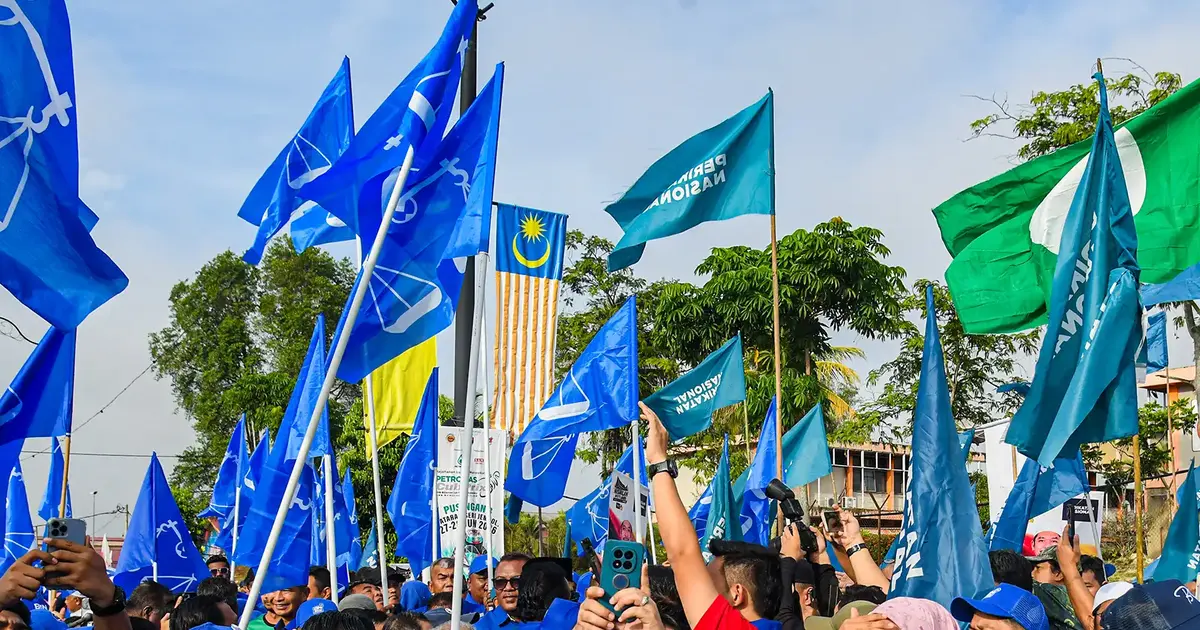
The United Malays National Organization's drive to restore its once-dominant position in Malaysian politics is creating mounting tension within its coalition partnership with Perikatan Nasional, according to political observers who see the alliance coming under serious strain. The two blocs, which have governed together since 2022, face a critical test as Umno signals intentions to contest in states where its coalition partner has built strongholds in recent electoral cycles.
Umno, the oldest and historically most powerful component of Barisan Nasional, is unlikely to find accommodation from Perikatan Nasional in three northern states where Umno holds no parliamentary representation. In Terengganu, Kedah, and Perlis, Perikatan Nasional has established itself as the dominant political force, winning multiple seats and controlling state administrations. Political analysts suggest that Perikatan Nasional leadership would be reluctant to voluntarily cede ground in these territories, where the coalition has invested considerable political capital and voter trust. The situation in Kelantan presents a different but equally challenging dynamic, with Umno holding only two parliamentary seats in a state where Perikatan Nasional controls the government and maintains substantial electoral appeal.
This territorial disagreement reflects deeper anxieties within the coalition about the distribution of power and influence as Malaysia approaches its next general election. For Umno, particularly after losses in 2018 and 2022, the push for electoral recovery has become existentially important to the party's narrative and organizational morale. Senior Umno figures have privately expressed determination to restore the party's parliamentary representation and state-level influence, viewing such gains as essential to revitalizing the organization's standing among its core Malay-Muslim voter base. However, this aggressive posture collides directly with Perikatan Nasional's own consolidation efforts in states where the coalition has only recently established political dominance.
Analysts point out that the tension reflects a fundamental incompatibility in the coalition partners' strategic priorities. While Barisan Nasional generally seeks to recapture ground lost to opposition parties in recent elections, Perikatan Nasional's relatively recent ascendancy in these northern states makes any compromise on seat allocation deeply unpopular among its grassroots members and elected representatives. The coalition leadership lacks any established mechanism for resolving such disputes, having formed the partnership primarily as a defensive measure against opposition advances rather than as a carefully structured long-term alliance with clearly defined territorial arrangements.
The implications for Malaysian federalism and governance are substantial. A fractured coalition could result in either party contesting the same constituencies, splitting the Malay-Muslim vote and gifting seats to opposition candidates in crucial swing regions. Alternatively, a breakdown in the alliance could lead to realignment scenarios that fundamentally alter the country's political landscape. The potential for intra-coalition conflict is particularly acute in states with mixed ethnic compositions where both parties claim historical or contemporary legitimacy as representatives of Bumiputera interests.
Observers also note that Umno's ambitions must contend with Perikatan Nasional's own institutional development and legitimacy as a governing coalition. Since 2022, Perikatan Nasional has moved beyond being merely an opposition force, acquiring ministerial appointments, federal funds, and administrative experience. The coalition's leadership has incentives to prove that it represents a viable alternative power center within Malaysian politics, not merely a junior partner subordinate to Umno's historical supremacy. This transformation makes it increasingly unlikely that Perikatan Nasional leaders will voluntarily accept a secondary role or limited territorial scope.
The negotiations between the two coalitions will test the flexibility and pragmatism of senior leadership on both sides. Some political observers suggest that compromise arrangements—such as power-sharing agreements at state level, reserved positions in federal administration, or negotiations on contested constituencies—might be possible if leadership demonstrates sufficient creativity. However, such arrangements would require extraordinary trust and institutional maturity that these coalitions, formed relatively recently and often under duress, may not yet possess.
For Malaysian voters and civil society, the unresolved territorial tensions within the ruling coalition represent a potential source of instability. Coalition breakdowns or open conflict between partners can create governance challenges, policy inconsistencies, and complications for federal-state coordination in crucial areas like development and service delivery. The question of whether Umno and Perikatan Nasional can navigate their competing aspirations while maintaining effective joint governance remains one of the most consequential uncertainties in Malaysian politics heading toward the next election cycle.
The broader significance of this coalition strain extends beyond electoral mathematics to touch fundamental questions about whether Malaysian political formations can evolve from zero-sum competitions into genuinely cooperative arrangements that balance competing interests. The test case of Umno and Perikatan Nasional—two organizations with fundamentally different historical narratives and contemporary power bases—will likely shape perceptions about the viability of coalition governance as Malaysia's political system becomes increasingly fragmented and multipolar.

