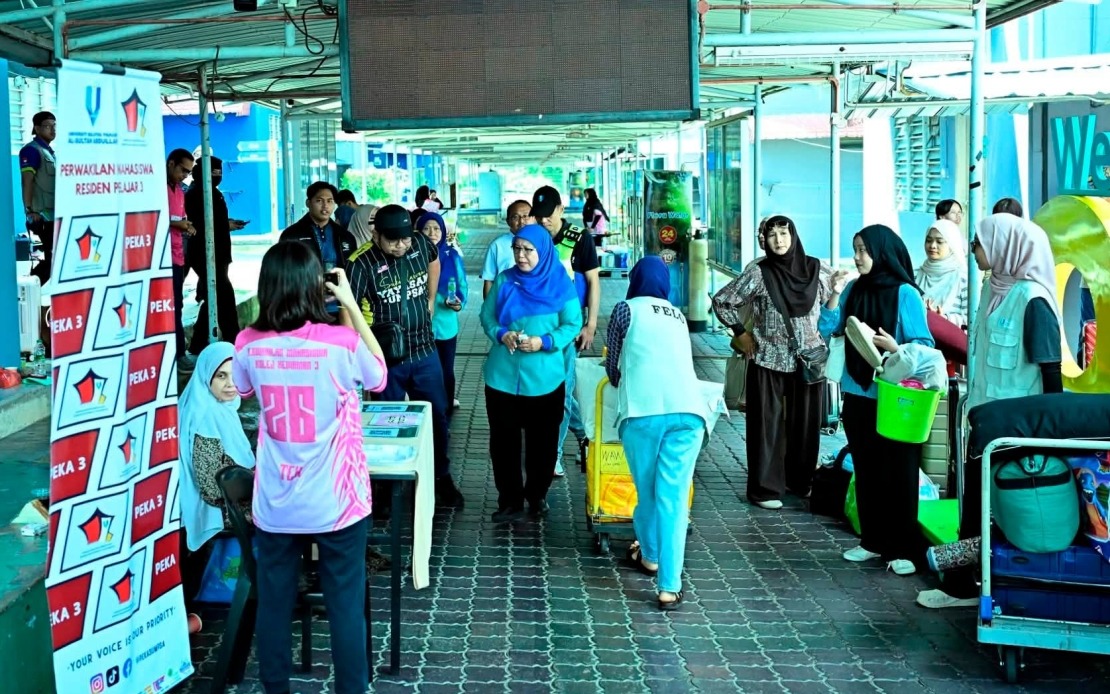
Universiti Malaysia Pahang Al-Sultan Abdullah (UMPSA) has underscored its dedication to removing financial barriers that prevent economically disadvantaged students from pursuing tertiary education. Vice-Chancellor Prof Dr Yatimah Alias made the declaration during the institution's student registration period, emphasising that accessibility to quality higher education remains a cornerstone of the university's mission regardless of applicants' financial circumstances.
The commitment manifests through a multifaceted support system designed to sustain disadvantaged learners throughout their academic journey. Beyond merely admitting such students, UMPSA has implemented comprehensive assistance programmes spanning financial grants, tailored academic mentoring, and supplementary developmental initiatives. This layered approach acknowledges that financial hardship often compounds other educational challenges, requiring institutions to provide integrated rather than fragmented support mechanisms.
During the registration process, UMPSA distributed scholarships to twenty students, with packages encompassing full tuition fee coverage alongside monthly living allowances. For recipients of such scholarships, the financial burden that would otherwise necessitate part-time employment or family sacrifice is substantially alleviated, allowing them to concentrate fully on studies. The monthly component proves particularly significant in the Malaysian context, where accommodation, transport, and meals represent substantial expenses for students relocating to university towns like Kuantan.
Complementing the scholarship scheme, UMPSA Foundation deployed additional emergency assistance through an Early Education Incentive programme awarding RM1,000 to students experiencing acute financial need. This mechanism acknowledges that even enrolled students may face unexpected expenses—medical emergencies, family crises, or essential equipment purchases—that threaten academic continuation without intervention. The initiative reflects institutional recognition that poverty-related interruptions often occur unpredictably.
The registration session itself yielded notable enrolment figures, with 1,045 new Diploma students commencing the 2026/2027 academic year. This intake represents UMPSA's highest intake since the institution's establishment, signalling either expanding institutional capacity, growing regional demand for tertiary qualifications, or increased accessibility of pathway programmes. The Diploma level proves particularly important for Malaysian students from modest backgrounds, as it offers more affordable entry points and workplace-relevant credentials compared to traditional degree pathways.
Prof Dr Yatimah's personal engagement during registration—spending dedicated time with incoming students—carries symbolic weight beyond administrative routine. Such visible leadership involvement communicates institutional priority regarding student welfare and suggests that support commitment extends beyond rhetorical commitment to operational practice. In Malaysian higher education contexts, where hierarchical structures often distance senior leadership from student concerns, such accessible engagement fosters institutional trust.
The emphasis on equal educational opportunity carries particular resonance in Malaysia's socioeconomic landscape. Despite national wealth, significant portions of the population remain economically marginalised, with rural and low-income urban households substantially underrepresented in higher education. Universities addressing this gap contribute to broader nation-building objectives, expanding the talent pool available to employers and reducing human capital wastage.
UMPSA's geographical location in Pahang positions it as an important access point for students from the state's interior districts and smaller towns where alternative tertiary institutions remain limited. Transport costs alone present formidable barriers for such cohorts; institutional commitment to financial support directly removes obstacles preventing geographical mobility in pursuit of qualifications. This regional dimension adds significance beyond individual beneficiary impact.
The university's integrated approach—combining substantial scholarships, monthly stipends, and crisis-response funds—suggests sophisticated understanding that disadvantaged students' needs vary considerably. Some face absolute poverty requiring comprehensive sponsorship, while others navigate intermittent shortfalls. A flexible assistance architecture accommodating such variation proves more effective than rigid, one-size-fits-all schemes.
Malaysian policymakers have increasingly emphasised equity in higher education access as essential to meeting workforce demands and sustaining competitive positioning. Universities that effectively remove financial barriers to capable but disadvantaged students strengthen national human capital development. UMPSA's initiatives align educational practice with policy objectives, demonstrating how institutional commitment translates disadvantage-reduction aspirations into concrete programmes.
Looking forward, the expansion evident in registration numbers combined with enhanced support mechanisms suggests UMPSA anticipates sustained demand from disadvantaged cohorts. This trajectory requires institutional capacity planning beyond enrolment logistics—adequate counselling services, remedial academic support, and living allowance adequacy require systematic monitoring and periodic adjustment. The initial commitment proves sustainable only through ongoing resource allocation and programme evaluation.

