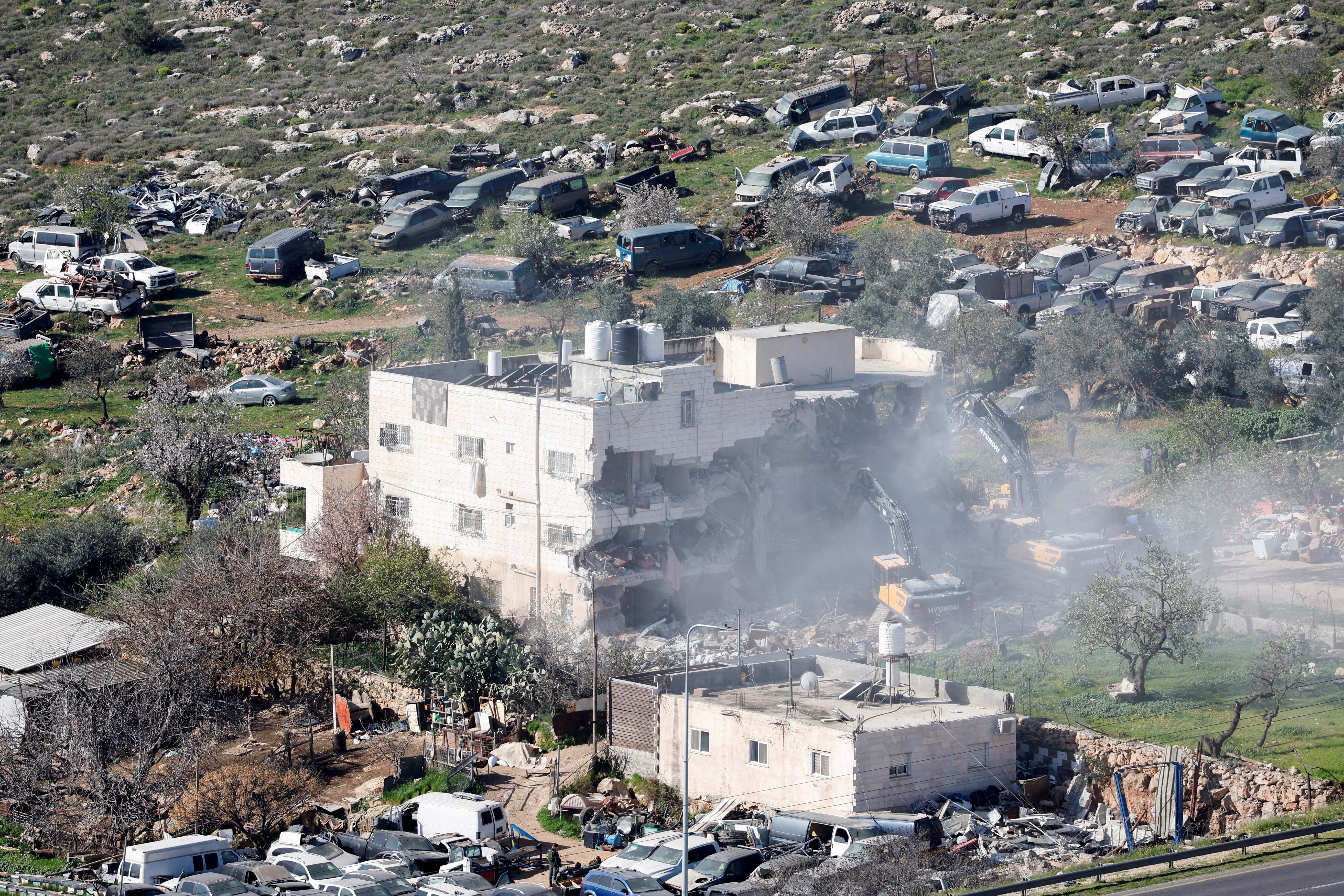
The United Nations has escalated its criticism of Israeli settlement expansion in the occupied West Bank, with Secretary-General Antonio Guterres publicly expressing deep concern about the establishment of new illegal outposts. Speaking through his spokesperson Stephane Dujarric at a regular press briefing on Wednesday, Guterres drew particular attention to developments involving the E1 settlement, which represents one of the most strategically significant expansion plans in the contested territory.
The E1 settlement's implications extend far beyond the immediate geographic area of construction. According to UN officials, the development would effectively rupture the territorial continuity of the West Bank by severing the connection between its northern and southern regions. This fragmentation would create a physical and administrative barrier that would fundamentally alter the geography of Palestinian-controlled territory, making coordinated governance and economic activity substantially more difficult across the region.
Guterres's intervention reflects growing international concern that such settlement activities directly undermine the feasibility of establishing a functioning independent Palestinian state. The UN chief's statement framed the issue not merely as a violation of international law, but as a direct existential threat to the two-state solution—the internationally backed framework that envisions a separate Palestinian nation living alongside Israel within defined borders. For Southeast Asian nations monitoring Middle Eastern developments, this raises questions about the viability of the diplomatic model that has underpinned peace efforts for decades.
The territorial integrity of the occupied Palestinian territory has become increasingly compromised through incremental expansion and settlement construction. Each new outpost or expansion effectively reduces the contiguous land available for Palestinian self-governance and economic development. The fragmentation created by these settlements means that Palestinian communities become isolated from one another, complicating everything from trade to education to healthcare provision. This reality has significant implications for understanding why Palestinian leadership has grown increasingly skeptical of land-based compromise solutions.
Guterres's call for Israeli restraint explicitly referenced compliance with relevant United Nations resolutions, emphasizing the international legal framework that has governed this dispute for decades. The Secretary-General also invoked the advisory opinion issued by the International Court of Justice in July 2024, which carried considerable symbolic weight in global legal circles. This advisory opinion represented a significant development in how the international legal system approaches the Israeli-Palestinian conflict, with the court determining that Israel's continued occupation of Palestinian territory constituted an unlawful presence.
The International Court of Justice's July 2024 advisory opinion carried wide-ranging implications that went beyond mere condemnation. The court determined that Israel bore an obligation to terminate its presence in the occupied territory as expeditiously as possible. Furthermore, the court mandated that Israel must immediately halt all new settlement construction activities, remove all settlers from occupied territories, and provide compensation for damages inflicted through its actions. This comprehensive legal assessment represented one of the most forceful international court pronouncements on the occupation in recent years.
For regional observers, the contradiction between international legal determinations and continued ground-level expansion raises questions about enforcement mechanisms and the credibility of global institutions. When the highest international court issues clear directives regarding illegal occupation and settlement activity, yet such activities accelerate rather than diminish, it signals fundamental challenges to the international legal order. This pattern carries implications beyond the Israeli-Palestinian context, potentially affecting how other regional disputes are resolved and whether international law maintains meaningful consequence.
The E1 settlement specifically warrants attention because its geographic location makes it strategically distinct from other outposts. Positioned between Israeli settlements and the Dead Sea, E1's development would create a territorial wedge that would make it nearly impossible to maintain viable Palestinian territorial contiguity. This has prompted unusually direct language from the UN, which typically employs more measured diplomatic language on Israeli-Palestinian disputes. The urgency reflected in Guterres's statement suggests that UN leadership views this particular development as crossing a threshold in terms of threat to the negotiated peace framework.
For Malaysia and other Southeast Asian nations invested in international law and multilateral institutions, these developments raise questions about the utility of advisory opinions and UN resolutions when they remain unheeded. The Association of Southeast Asian Nations has historically maintained careful neutrality on Middle Eastern disputes, yet the erosion of international legal norms in this context potentially affects the framework that smaller nations rely upon for security and dispute resolution. Precedents established in handling the Palestinian question could influence how international law is applied to other territorial disputes in Asia and beyond.
The diplomatic communication from the UN chief represents an attempt to activate international pressure without resorting to formal enforcement mechanisms that might escalate tensions further. By naming specific settlements like E1 and explicitly referencing international court decisions, the UN is attempting to mobilize multilateral consensus that might constrain Israeli decision-making. However, the gap between such statements and actual policy changes remains wide, reflecting the limited leverage available to international institutions when dealing with parties that reject their authority.
The fundamental challenge facing international efforts to constrain settlement expansion lies in distinguishing between incremental expansion of existing settlements and the establishment of entirely new outposts. The terminology matters diplomatically because it affects how different political actors frame their positions domestically and internationally. Israeli officials may characterize some activities as routine administration of existing settlements, while international observers view them as illegal expansion. This semantic disagreement often obscures the underlying reality that the territorial footprint controlled by Israeli settlers continues to expand year after year.
Guterres's statement carries particular weight because it positions settlement expansion as directly incompatible with the two-state framework that even many Israeli policymakers nominally endorse. By framing E1 and similar developments as existential threats to this framework, the UN chief is attempting to convince Israeli leadership that continued expansion ultimately undermines Israeli interests in achieving a negotiated settlement. Whether such arguments prove persuasive to decision-makers in Jerusalem remains uncertain, but the explicit framing represents a shift toward more pointed criticism of specific settlement plans rather than general condemnations of settlement policy.

