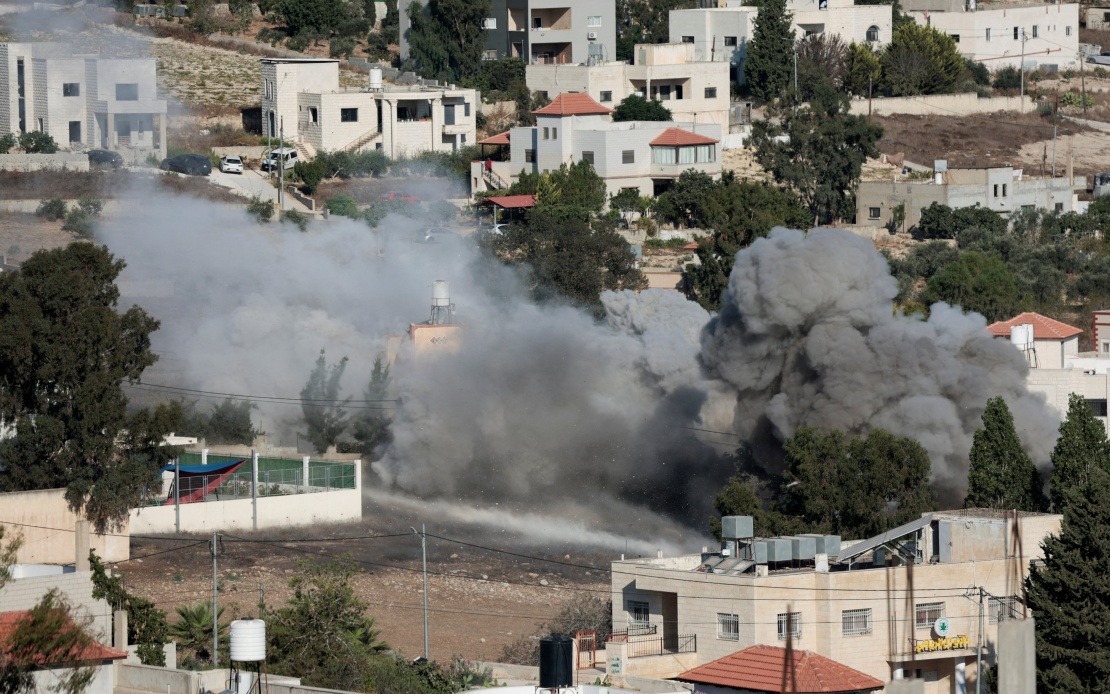
The United Nations Human Rights Office operating in the Occupied Palestinian Territory has issued a stark assessment of conditions for Palestinians living under settler pressure, characterizing the frequency and intensity of attacks as reaching levels that can no longer be tolerated. The office's findings, released on Thursday, paint a picture of systematic harassment that extends beyond sporadic incidents to encompass coordinated campaigns of intimidation targeting entire communities.
The UN body has specifically called upon Israeli authorities to take concrete action by removing settlers engaged in violence, preventing further unlawful land seizures, and halting the expansion of Israeli colonies throughout the territory. This demand reflects a recognition that existing legal frameworks have failed to protect vulnerable Palestinian populations from what the UN describes as criminal conduct undertaken with either active support or deliberate indifference from the occupying power.
A particularly illuminating case study emerged from near Qusra, south of Nablus, where an Israeli colonial outpost was established in November 2025. Following this establishment, settlers began systematically taking control of land adjacent to the village, a process accompanied by an intensification of attacks against nearby Palestinians. The nature of these assaults has been comprehensive, encompassing everything from sudden incursions into homes to deliberate damage to property, theft of belongings, and destruction through arson, with even religious sites such as a local mosque coming under attack.
The most severe documented incident underscores the precarious position of Palestinians in disputed areas. In July of last year, settlers from an outpost in the Ras al-Ain sector cut off water and electricity supplies to three Palestinian homes, effectively isolating the families within. This initial tactic escalated dramatically when, on 9 August, the same settlers sealed all entry and exit points by closing gates and erecting barriers, trapping approximately fifteen people—including at least two children—inside their residences without access to basic utilities or the ability to leave for any purpose.
The confinement triggered a humanitarian crisis on a small scale, yet one revealing of broader patterns. The imprisoned families reportedly sought intervention from Israeli military forces positioned at the site, but these troops declined to act, effectively permitting the siege to continue. Compounding the isolation, Israeli forces subsequently prevented paramedics, humanitarian activists, and journalists from accessing the properties, effectively cutting off external witnesses and aid. This combination of civilian settler aggression and military non-intervention or facilitation represents a fundamental breakdown in the occupying authority's responsibility to maintain order and protect residents.
While Israeli soldiers removed the physical barriers erected by settlers on 12 August, they did not remove the settlers themselves, who maintained their encirclement of the homes. This partial action, taken after three days of severe confinement, appears insufficient to restore normal conditions for the affected families, who remained surrounded by the same individuals who had orchestrated their imprisonment. The episode illustrates a pattern wherein military intervention occurs selectively, often after damage has been inflicted rather than as prevention.
From a legal perspective, the UN Human Rights Office has anchored its analysis in the International Court of Justice's established position that all Israeli colonies constitute illegal settlements under international law. This framework obligates Israel to cease all colonial expansion activities, withdraw all settlers from the territory, and end what the UN characterizes as its unlawful occupation of the West Bank. For Malaysian and other Southeast Asian observers familiar with principles of territorial sovereignty and self-determination, the parallels to disputes over maritime boundaries and contested territories lend particular resonance to these arguments about occupation and displacement.
Beyond legal pronouncements, the UN office has emphasized Israel's immediate obligations under international humanitarian law. These include active prevention of settler violence, thorough investigation of incidents when they occur, and meaningful accountability mechanisms that impose penalties proportional to violations. The emphasis on investigation and prosecution represents an implicit acknowledgment that impunity has prevailed, with settlers committing acts they calculate will go unpunished, particularly when military forces remain passive observers.
The three families in Qusra face what the UN characterizes as imminent risk of forced displacement, with time described as running out for these households. The stated objective of the settler campaign—to make conditions sufficiently intolerable that Palestinians voluntarily abandon their homes and land—reflects a strategy of what some analysts term "voluntary departure under duress." This approach aims to achieve territorial expansion without formal expulsion orders, thereby creating legal ambiguity about whether displacement occurred through coercion or voluntary choice.
The broader context for these incidents involves the governance vacuum that has developed in certain areas of the West Bank where Palestinian Authority control remains limited and Israeli military presence varies. Settlers operating in such zones calculate that the probability of serious consequences remains low, incentivizing further incursions and violence. This dynamic differs substantially from areas where either Palestinian civil authority or Israeli military control is consistently exercised.
For regional stakeholders including Malaysia, which maintains strong advocacy positions on Palestinian rights within international forums, these developments present both documentation of ongoing grievances and questions about effective remedies. The gap between UN findings and international enforcement mechanisms remains a persistent challenge, with legal declarations from bodies like the International Court of Justice lacking direct enforcement power without compliance from member states.
The documentation of these incidents also contributes to an expanding record of what human rights organizations characterize as systematic patterns rather than isolated incidents. Each documented case adds weight to arguments that what occurs represents deliberate policy rather than individual settler misconduct, a distinction with profound implications for attributing responsibility and determining appropriate international responses. As such episodes accumulate, pressure mounts on the international community to move beyond statement and condemnation toward mechanisms with genuine enforcement capacity.

