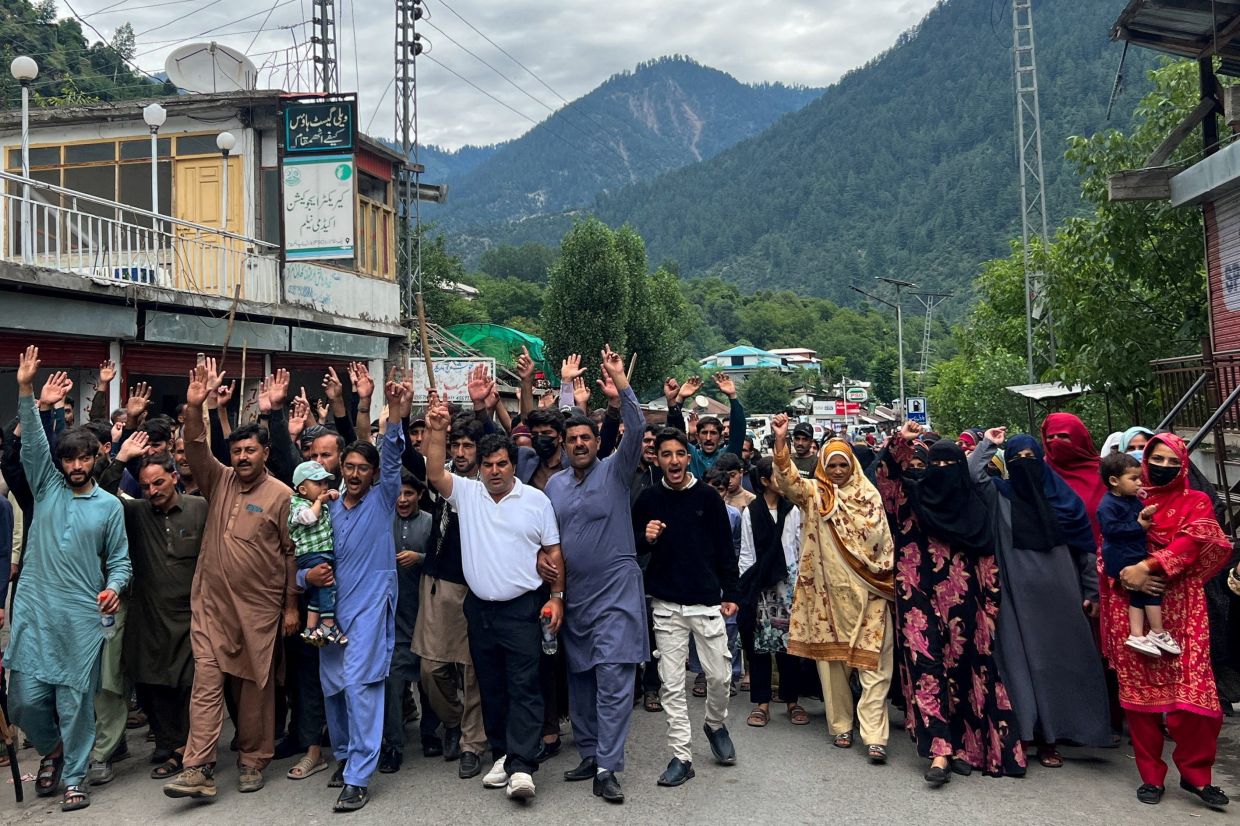
The United Nations Human Rights Office has issued a forceful call for independent investigations into reports of dozens of fatalities in Pakistan-administered Kashmir, where mounting civil unrest has preceded legislative assembly elections scheduled for July 27. UN High Commissioner for Human Rights Volker Turk made the appeal through his spokesman Jeremy Laurence in Geneva on Friday, underscoring the international body's alarm at the scale and nature of the violence gripping the strategically sensitive region.
The deaths occurring since June have claimed both protest participants and security personnel, creating a volatile situation that threatens the legitimacy of the upcoming electoral process. Laurence emphasised that Turk is seeking prompt, comprehensive and unbiased inquiries that would examine the circumstances surrounding all fatalities, whether among civilians demonstrating for reform or among law enforcement officials responding to the unrest. This multilayered demand reflects the UN's concern that violence from multiple quarters requires transparent accountability mechanisms rather than selective investigations favoring either authorities or protest movements.
At the heart of the upheaval stands the Joint Awami Action Committee (JAAC), an anti-government coalition mobilising popular discontent over economic hardship and governance failures. The movement has persisted with large-scale demonstrations despite being formally proscribed under anti-terrorism legislation just one month prior, signaling the depth of popular grievance and the determination of activists to challenge restrictions on political expression. Pakistani authorities justified the ban by citing threats to public order and national security, but the JAAC has framed its activities as legitimate civil advocacy rather than extremist conduct.
Historical precedent suggests similar cycles of unrest have marked the region's troubled recent past. The Himalayan territory experienced severe civil strife in September of the previous year, when violent confrontations between police forces and JAAC-led demonstrations resulted in nine confirmed deaths. That episode demonstrated both the capacity of security forces to respond with lethal force and the willingness of protesters to maintain pressure despite such risks, establishing a pattern that has now intensified. The escalation evident this summer indicates that underlying tensions have festered rather than been resolved through dialogue or policy reform.
The territorial status of Kashmir itself continues to fuel the militarised and sensitive political environment characterising the region. Both India and Pakistan assert sovereignty over the entirety of Muslim-majority Kashmir, yet the disputed territory has remained partitioned between the two nations since their emergence as independent states following British decolonisation. This unresolved territorial claim and the history of military confrontations between New Delhi and Islamabad have rendered Kashmir exceptionally sensitive to Pakistan's military and civilian leadership, who perceive the region through a lens of national security rather than ordinary civil administration. Consequently, protests and disorder in Pakistani-administered Kashmir trigger disproportionate security responses and restrictions on civil liberties.
Among the UN's specific concerns are the recent detention of prominent JAAC leadership figures without, according to the international body, adequate legal safeguards. The Human Rights Office has characterised the criminalisation of the civil society organisation and the stringent limitations imposed on public gatherings as serious transgressions against fundamental rights. Detainees require assured access to qualified legal counsel and regular family contact, while all individuals must receive guarantee of fair trial procedures and full due process protections. These concerns echo longstanding international human rights frameworks and suggest that Pakistan's security apparatus may be overreaching in its counterinsurgency approach.
Digital restrictions further compound the civil liberties crisis unfolding across Pakistani-administered Kashmir. Authorities have imposed widespread internet shutdowns ostensibly to prevent coordination of further unrest, yet the UN contends such measures disproportionately curtail freedom of expression and access to information at precisely the moment when public discourse becomes most vital. Blanket internet restrictions prevent citizens from communicating with family members outside the region, accessing independent news sources, or articulating their grievances to broader audiences. Laurence made explicit appeal for authorities to restore full connectivity, arguing that transparency and information access represent essential components of any genuine resolution process.
The UN's advocacy reflects its conviction that meaningful political settlement requires inclusive dialogue addressing the substantive grievances driving popular mobilisation. Rather than treating JAAC demonstrations as security problems amenable solely to force, Turk has advocated for substantive engagement on economic conditions, governance accountability, and institutional responsiveness to constituent demands. This framing suggests that the upcoming elections, unless accompanied by institutional reforms and good-faith engagement with reform movements, risk becoming merely ceremonial exercises rather than mechanisms for genuine democratic accountability. For Malaysian observers of regional politics, the Kashmir situation illustrates how heavy-handed security responses to civil unrest can entrench cycles of resistance rather than containing dissent.
The intersection of electoral timing and civil unrest creates particular urgency around these UN demands. Conducting elections while dozens lie dead and prominent opposition figures face detention raises fundamental questions about the freedom and fairness of the democratic exercise. International observers will scrutinise whether the electoral commission ensures adequate security for voters and candidates while protecting fundamental rights. Pakistan's international standing increasingly depends on demonstrating that its democratic institutions, particularly in sensitive regions like Kashmir, can function while respecting civil liberties and human dignity standards.
For Southeast Asian policymakers and observers, the Kashmir situation offers instructive parallels to challenges of managing civil unrest in regions with security sensitivities or ethnic tensions. The temptation to prioritise order over expression, and to weaponise anti-terrorism legislation against political opposition, presents recurring governance dilemmas across the region. Malaysia's own experience with internal security concerns, coupled with its multiethnic and multi-religious composition, suggests recognition of the dangers posed by unchecked security force authority and the importance of maintaining robust civil society space even during periods of heightened tension.

