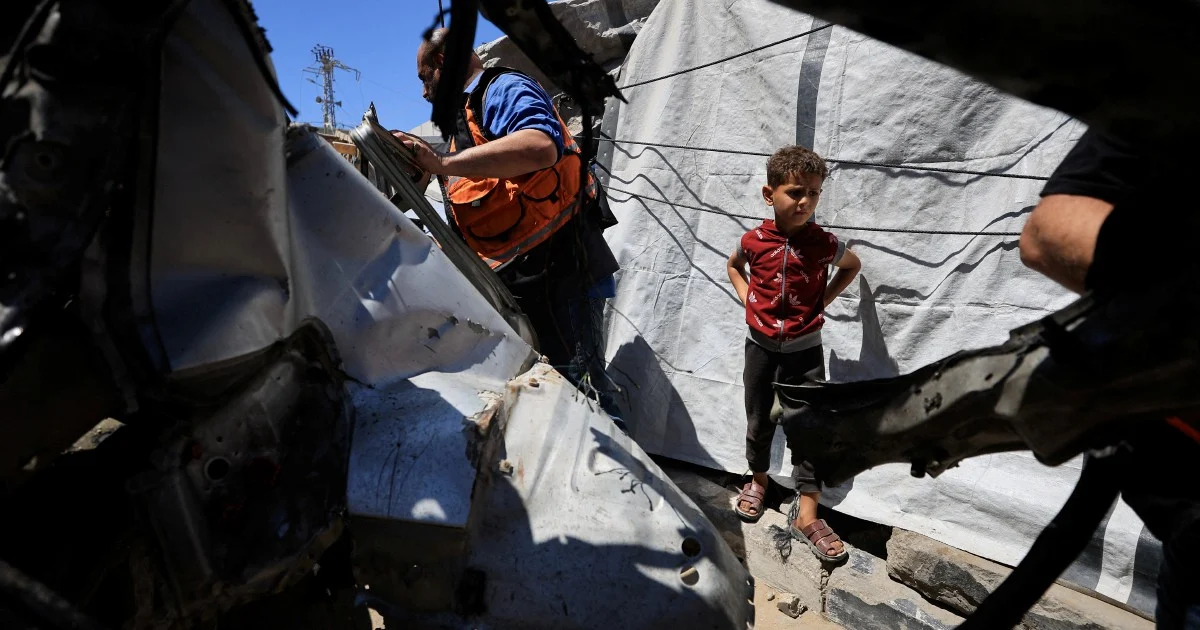
United Nations investigators have issued a damning assessment accusing Israel of deliberate targeting of Palestinian children as part of what they characterise as an ongoing genocide in Gaza. The allegation, detailed in a report released on Tuesday from Geneva, represents one of the most serious charges levelled against Israeli military operations in the territory. The accusation immediately drew sharp rebuke from Israeli officials, who disputed the investigators' findings and the framing of events in the Palestinian enclave.
The UN probe centres on examining whether actions by Israeli forces constitute genocide under international law—a legal threshold that requires proving intent to destroy a group in whole or in part. Investigators have identified the targeting of children as particularly significant in building their case, suggesting this pattern reflects systemic rather than incidental harm. The focus on child casualties carries particular weight in genocide investigations, as international courts have previously recognised attacks on children as indicative of genocidal intent, since they represent the future generation of a population.
For Malaysia and other Southeast Asian nations with significant Palestinian diaspora communities and historical advocacy for Palestinian rights at international forums, the report adds another layer to ongoing diplomatic tensions. Malaysian officials have consistently supported Palestinian causes in multilateral settings, and this latest UN finding will likely influence regional discourse on the Israel-Gaza conflict. The country's Muslim-majority population has expressed strong sympathy for Palestinian civilians, particularly as casualty figures continue to mount in the territory.
The investigation undertaken by UN bodies reflects the international community's sustained scrutiny of Gaza operations, even as diplomatic channels remain fractured. The report emerges amid continuing humanitarian crises within Gaza, where civilian infrastructure has been extensively damaged and population displacement has reached crisis levels. The investigators' methodology involved examining documented incidents, analysing military tactics and strategy, and assessing whether patterns of harm suggest deliberate rather than accidental targeting.
Israel's response to the accusations underscores the deep polarisation surrounding the conflict. Israeli representatives have maintained that their military operations comply with international humanitarian law and that civilian casualties result from Hamas's practice of embedding military infrastructure within residential areas. This fundamental disagreement over facts and interpretations has prevented consensus among the international community on whether genocide is occurring, with nations divided along geopolitical and ideological lines.
The question of genocide in Gaza has become a fault line at the International Court of Justice, where South Africa filed a case accusing Israel of genocide, and more broadly across the United Nations system. While some nations have vocally supported investigations into potential war crimes and crimes against humanity, others have resisted characterising Israeli actions through a genocide framework, arguing this terminology exceeds what the evidence supports. The UN investigators' latest report attempts to navigate this contested terrain by presenting specific allegations tied to child targeting as evidence of genocidal patterns.
From a Southeast Asian perspective, the allegations against Israel present ongoing dilemmas for regional diplomacy. ASEAN nations, while maintaining official positions supporting Palestinian self-determination, have generally avoided the most combative language regarding Israeli operations. However, individual member states, particularly those with larger Muslim populations or stronger anti-colonial traditions, have occasionally departed from this cautious approach. The UN report provides fresh ammunition for those advocating stronger international pressure on Israel, potentially shaping debate within regional forums.
The humanitarian dimensions of the investigation extend beyond legal classifications. If systematic targeting of children has occurred, the psychological and developmental trauma inflicted on survivors represents an intergenerational crisis. Palestinian medical personnel in Gaza have documented cases of acute trauma among child survivors, raising questions about how communities can rebuild when young populations bear such wounds. This dimension of the conflict rarely receives attention in high-level diplomatic discourse but shapes ground-level humanitarian realities.
The UN inquiry's emphasis on deliberate targeting introduces important distinctions between different types of civilian harm. International humanitarian law permits military operations that cause incidental civilian casualties if they target legitimate military objectives and if harm is not excessive relative to anticipated military advantage. However, if investigations prove children were targeted specifically because of their identity rather than proximity to military objectives, this crosses into territory that even states generally aligned with Israel find difficult to defend. The investigators appear to be arguing they have discovered evidence of this distinction.
Moving forward, the report's reception will depend heavily on which UN bodies and member states choose to champion or suppress its findings. Unlike International Court of Justice proceedings, UN investigative reports carry primarily moral and political weight rather than binding legal force. Their impact depends on whether powerful nations choose to amplify the accusations, whether human rights organisations incorporate findings into advocacy campaigns, and whether media outlets give sustained attention to the allegations. For Malaysian observers and policymakers, the report offers documentation that will likely inform ongoing statements and positions regarding the conflict.
The targeting accusations also intersect with broader questions about the proportionality of Israel's response to the October 2023 attacks that triggered the Gaza conflict. Even observers sympathetic to Israel's security concerns have questioned whether the scale of operations, particularly in densely populated civilian areas, comports with principles of distinction and proportionality under international law. The UN report's focus on children adds specificity to these general concerns, potentially making the case more compelling to international audiences than abstract proportionality arguments.
As the conflict continues with no clear resolution on the horizon, the documentation of alleged patterns—including those targeting children—becomes increasingly significant. Whether such findings ultimately influence international legal proceedings or diplomatic efforts remains uncertain, but they contribute to a historical record that will shape how this conflict is understood and adjudicated in years to come. For Malaysia and regional stakeholders, engaging with these investigative findings requires balancing principled positions on Palestinian rights with measured analysis of evidence and allegations.