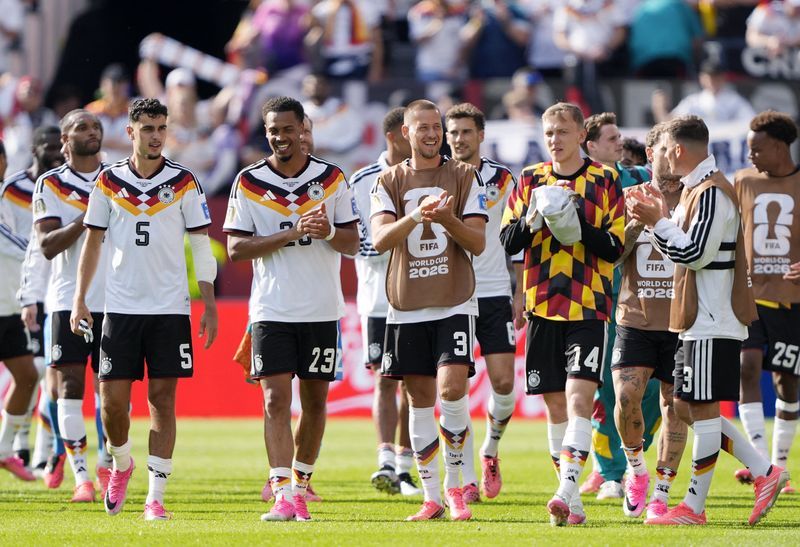
Germany's passage to the World Cup knockout stage became reality on Saturday when substitute Deniz Undav provided a masterclass in clinical finishing, netting twice to engineer a dramatic 2-1 comeback against Ivory Coast in Toronto. The result marks the Germans' first advancement beyond the group phase in a decade, restoring some lustre to a programme that has undergone substantial reconstruction since their 2014 triumph.
The match unfolded as a pulsating affair in front of more than 100,000 supporters, many of German heritage, at a packed Toronto venue that created a charged atmosphere throughout. Ivory Coast struck first when Franck Kessie capitalised on a rebound in the first half, following an assist chain initiated by Yan Diomande's aggressive left-side push and Amad Diallo's initial shot. This breakthrough extended an impressive streak for the West Africans, who have now scored in seven consecutive World Cup matches—their best-ever run at the tournament.
Germany dominated possession and created numerous opportunities throughout the opening period, registering eight attempts on goal without reward. The frustration intensified when referee decisions went against them on two separate occasions. In the 25th minute, midfielder Aleksandar Pavlovic appeared to have opened the scoring from a short corner delivery, only for the official to rule that he had fouled goalkeeper Yahia Fofana during the play. The decision prompted visible frustration from Pavlovic and drew audible disapproval from the predominantly German crowd.
The second disallowed goal came after Jamal Musiala's efforts culminated in a German goal, yet the referee determined that contact between Musiala and Odilon Kossounou in the build-up constituted a foul, negating the strike. Despite these setbacks, Julian Nagelsmann's team maintained tactical discipline and continued probing through intricate passing combinations that characterised their approach play throughout the encounter.
Undav's introduction from the bench transformed Germany's attacking potency in the second half. The versatile forward, who has accumulated an impressive tally of nine goals across his previous eight appearances, levelled proceedings in the 68th minute with a composed volley that demonstrated excellent technique. His second goal arrived shortly thereafter when he received the ball on the turn, swivelled with precision, and fired a shot past Fofana that left the goalkeeper helpless.
Ivory Coast mounted a late defensive push and created a genuine opportunity when Simon Adingra manoeuvred into a dangerous position but failed to get a clear shot away before Germany's counter-attack materialised. Nathaniel Brown's subsequent low effort was repelled by Fofana's reflex block, preventing any dramatic late twist.
The victory places Germany atop Group E with six points, securing their progression to the last 32 with one fixture remaining. Ivory Coast remain on three points after two matches, with their final group-stage encounter against Curacao scheduled for Philadelphia. Germany will complete their group stage campaign against Ecuador in New Jersey on Thursday, while Ecuador and Curacao meet later Saturday in Kansas City to determine the final standings in this competitive section.
From a broader perspective, Germany's advancement signals the stabilisation of their team following the tumultuous early exits and rebuilding phase of recent years. Manager Nagelsmann has overseen a squad transition that has restored attacking fluidity and tactical adaptability, qualities that were temporarily questioned during their disappointing group-stage elimination at the previous tournament. The display against Ivory Coast, despite the frustrations with officiating, demonstrated the capacity for resilience and clinical execution when opportunities eventually materialise—essential attributes for deep tournament runs.
For Southeast Asian observers, the contest illustrated how attacking football from Ivory Coast, characterised by dynamic movement and direct transition play, can pose threats to traditionally possession-dominant European sides, yet technical precision and substitution strategy ultimately proved decisive. Germany's reliance on bench strength and tactical flexibility reflects modern tournament football's evolving demands, where squad depth and timely interventions determine outcomes in finely balanced encounters.