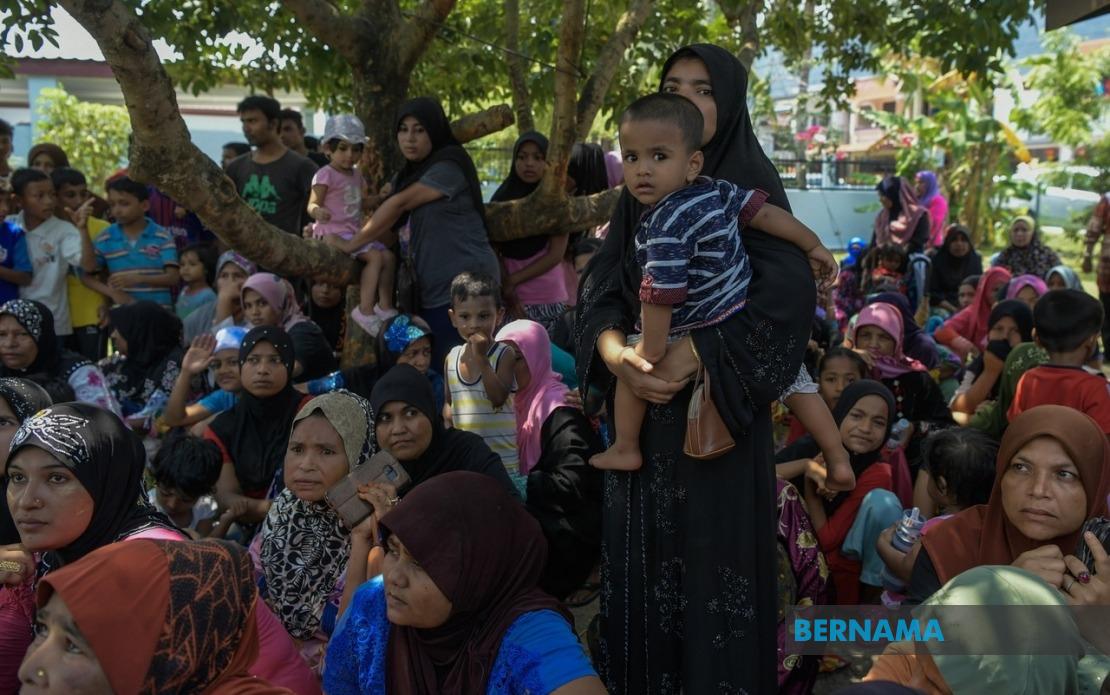
The Malaysian government has moved to dispel widespread misunderstandings about the legal status of United Nations High Commissioner for Refugees (UNHCR) documentation, with Economy Minister Datuk Akmal Nasrullah Mohd Nasir issuing a direct clarification that such cards carry no exemption from national laws. Speaking during a briefing on economic matters, Akmal Nasrullah underscored that possession of UNHCR identification does not elevate individuals above Malaysia's legal framework, and those suspected of criminal conduct will face investigation and prosecution like any other person on Malaysian soil.
The minister's statement came in response to mounting public anxiety regarding how refugees and asylum seekers are documented and monitored within the country. His remarks addressed a critical gap in public understanding that has fuelled concerns about potential vulnerabilities in Malaysia's law enforcement capacity and community safety. By clarifying the distinction between UNHCR documentation and citizenship status, the government sought to reinforce that no international humanitarian credential supersedes domestic legal authority or creates protected status against Malaysian courts and enforcement agencies.
The clarification took on heightened significance given Malaysia's experience with irregular migration, trafficking networks, and document fraud. The Home Ministry presented the matter during a National Economic Action Council (MTEN) session chaired by Prime Minister Datuk Seri Anwar Ibrahim, signalling that refugee management has become part of the government's broader economic and security strategy. Public concerns have intensified following cases involving human trafficking syndicates and questions about the effectiveness of current systems in preventing misuse of documentation by criminal elements.
To address these vulnerabilities, the Home Ministry through its Immigration Department is implementing the Refugee Registration Document (DPP) Programme, a comprehensive registration framework that incorporates biometric data collection, thorough vetting procedures, and operational controls. This system aims to create verifiable identification while simultaneously enabling authorities to track movements and identify risks within refugee populations. The programme represents an effort to balance Malaysia's international humanitarian obligations with domestic security requirements—a tension that has become increasingly apparent as irregular migration flows have grown across Southeast Asia.
Enforcement operations are being substantially expanded under the new framework. Akmal Nasrullah indicated that integrated law enforcement initiatives targeting smuggling operations, human trafficking networks, fraudulent documentation, and clandestine border crossings would be intensified across multiple agencies. These operations are intended to dismantle the criminal infrastructure that facilitates irregular migration and exploits vulnerable populations, while simultaneously protecting Malaysian communities from security risks associated with inadequately screened entrants.
Technological modernization forms a cornerstone of the enhanced approach. Data analytics platforms and monitoring systems are being deployed to identify patterns, assess risk levels, and guide enforcement operations toward high-priority targets. This shift towards intelligence-led enforcement reflects international best practices in migration management and demonstrates Malaysia's recognition that traditional manual processes cannot keep pace with the scale and sophistication of contemporary human smuggling networks operating throughout the region.
The financial commitment reflects the seriousness with which authorities view the challenge. RM1.2 billion has been allocated across multiple government bodies for projects spanning border infrastructure, security enhancements, and operational capabilities. This substantial investment indicates that border management and refugee control are no longer peripheral concerns but have become central to national security planning and resource allocation decisions. The funds address both physical infrastructure improvements and the human and technical resources necessary for effective implementation.
Parallel to these initiatives, the Malaysian Border Control and Protection Agency is being strengthened with expanded operational scope and expedited deployment timelines. This agency consolidation reflects efforts to reduce administrative fragmentation and create unified command structures for border operations. By streamlining decision-making and eliminating jurisdictional ambiguities, Malaysian authorities aim to create a more responsive and agile enforcement apparatus capable of addressing emerging migration challenges with greater effectiveness.
The government's multifaceted approach acknowledges that refugee management intersects with broader national concerns. Beyond security and law enforcement dimensions, the MTEN meeting also addressed food security vulnerabilities and the manufacturing sector's resilience against global supply chain disruptions. This integration signals that irregular migration, labour trafficking, and document fraud have become understood as components of larger economic and strategic challenges facing the nation, rather than isolated humanitarian concerns.
For Malaysia's diverse stakeholder communities, the clarification offers reassurance that legal frameworks remain supreme and that international humanitarian considerations do not create jurisdictional gaps. For legitimate refugees and asylum seekers, the message emphasizes that compliance with registration requirements and lawful conduct provides the foundation for remaining within Malaysian territory. For employers and civil society organizations, it reinforces that engagement with refugee populations must occur within established legal parameters, with no categorical exemptions or special status accorded to any group.
The policy stance reflects Malaysia's positioning within Southeast Asia's migration landscape, where countries including Thailand, Indonesia, and Bangladesh shoulder disproportionate refugee burdens while managing sovereignty concerns and domestic security imperatives. Malaysia's approach—clarifying legal boundaries while investing substantially in registration and enforcement infrastructure—represents an attempt to chart a middle course between international humanitarian obligations and the legitimate security and social concerns of host communities.
Moving forward, the effectiveness of these measures will depend on sustained implementation, interagency coordination, and adequate resourcing of frontline enforcement personnel. The government's explicit acknowledgment that UNHCR documentation confers no immunity indicates recognition that previous communications may have created confusion, and that clarity itself constitutes a form of enforcement, establishing unambiguous expectations for all populations within Malaysian jurisdiction.

