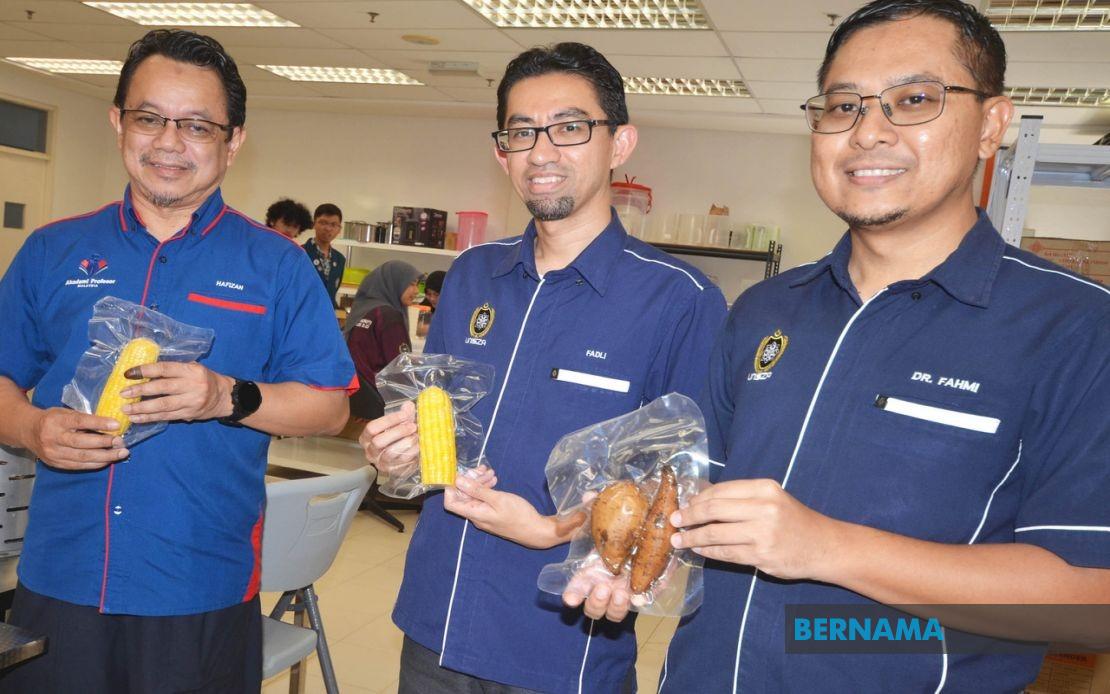
Universiti Sultan Zainal Abidin (UniSZA) has launched an ambitious programme to address a persistent challenge facing agricultural communities in Terengganu: the inability to convert raw farm output into marketable products that command fair prices. The Dapur Komuniti (Community Kitchen) initiative, operating alongside a Sustainable Community Farm at the university's Besut campus, represents a strategic response to the economic pressures bearing down on smallholder farmers in the region who find themselves squeezed between limited market access and powerful intermediaries.
According to Prof Dr Hafizan Juahir, the faculty dean overseeing the project, the kitchen functions simultaneously as a research and development centre and a commercial processing hub. The facility's primary objective is to manufacture value-added products capable of extending the shelf life of perishable agricultural goods for periods exceeding one year, thereby fundamentally altering the commercial calculus for farmers who traditionally face rapid deterioration and waste of their harvests. This technological capability transforms what would otherwise be written off as loss into inventory with genuine market potential.
The underlying problem UniSZA identified through its research reveals systemic inefficiencies within Terengganu's agricultural supply chain. Farmers in Besut confront formidable obstacles: constrained access to direct consumer markets, dependence on middlemen who capture the bulk of retail margins, and insufficient familiarity with digital commerce platforms that could bypass traditional distribution channels. These structural disadvantages manifest clearly in commodity pricing. Sweet potatoes, a significant Besut crop, previously commanded prices below RM2 per kilogramme at farm gate, yet the identical produce sold for substantially higher amounts in Kuantan and major urban centres. This disparity reflects not quality variation but rather logistical friction and information asymmetries that systematically disadvantage producers.
The Community Kitchen directly counters this problem through product innovation and value creation. The initiative has already produced pickled Terengganu Sweet Melon, a processed product derived from lower-grade melons unsuitable for fresh market sale. By converting this otherwise-wasted fruit into a shelf-stable delicacy, the programme simultaneously accomplishes dual objectives: it eliminates agricultural waste while establishing fresh revenue channels for farmers. What previously represented a total loss now generates income, albeit at lower volumes than fresh sales but with dramatically improved margins and reliability.
Beyond product development, UniSZA has embedded skills transfer as a central programme component. The kitchen provides hands-on training in food processing techniques to local residents, particularly farmers seeking to diversify their income-generating capacities. This training equips participants with practical competencies to independently transform agricultural produce into value-added offerings, reducing their dependence on university facilities and enabling cottage-industry development within farming communities. The scaling potential of this approach could fundamentally reshape agricultural economics across Terengganu's rural regions.
Recognising that credentialing enhances employability and commercial viability, UniSZA is negotiating with the Department of Skills Development to establish the Community Kitchen as an accredited training centre for the Malaysian Skills Certificate (SKM) in food processing. This partnership would enable participating university students to simultaneously pursue undergraduate degrees whilst accumulating industry-recognised Level 3 qualifications in food production. Graduates would enter the workforce with dual credentials combining theoretical knowledge and practical certification, a combination that substantially improves employment outcomes and entrepreneurial capacity.
The initiative's potential audience extends considerably beyond conventional farming communities. Prof Dr Hafizan indicated that Malaysian Armed Forces veterans represent a significant prospective beneficiary group. Military personnel transitioning to civilian employment frequently encounter challenges translating service experience into marketable civilian skills. The Community Kitchen's accredited training programme offers these individuals pathways toward skills-based self-employment and income generation, addressing a persistent policy concern regarding successful veteran integration into post-service economic life. This dimension potentially transforms a farming-focused initiative into a broader social inclusion and economic security programme.
For Malaysian policymakers and development planners, UniSZA's model demonstrates how university infrastructure and research capacity can be deployed to address stubborn agricultural sector challenges. Rather than viewing academic institutions primarily as credentialing bodies, the approach leverages university technical expertise, laboratory facilities, and trained personnel as direct interventions within rural economic systems. This integration of knowledge production with community economic development represents an alternative development paradigm gaining traction across Southeast Asia, particularly as rural regions confront the dual pressures of climate volatility and young-population migration to urban centres.
The Besut initiative also reflects broader recognition within Malaysian development discourse that agricultural productivity alone proves insufficient for farmer prosperity. Middleman displacement and price realisation require capacity at the production end to capture value through processing and branding. By establishing processing capability within the farming community itself, UniSZA's approach prevents value leakage to distant corporate processors and urban distribution networks. This retention of value within agricultural communities addresses inequality dynamics inherent in conventional agribusiness supply chains that systematically concentrate profits among downstream actors while suppressing farm-level incomes.
Regionally, the Terengganu model carries implications for other Southeast Asian farming communities grappling with similar structural disadvantages. Oversupply, geographic isolation, and market access constraints affect agricultural producers across rural Indonesia, the Philippines, and Laos. University-anchored processing centres coupled with skills training and digital marketing support could become replicable development interventions throughout the region, providing templates for knowledge institutions to contribute to rural prosperity beyond their traditional educational missions.
As UniSZA consolidates the Dapur Komuniti's operations and pursues formal SKM accreditation, outcomes will warrant close observation from development practitioners and policymakers. Success metrics should encompass not merely product volume or processing capacity but rather direct farmer income impacts, employment generation, and skill acquisition among marginalised populations. The initiative's ultimate significance will depend on whether it successfully catalyses broader agricultural value-chain transformation within Terengganu and whether it demonstrates sufficient scalability to influence rural development policy across Malaysia and Southeast Asia.

