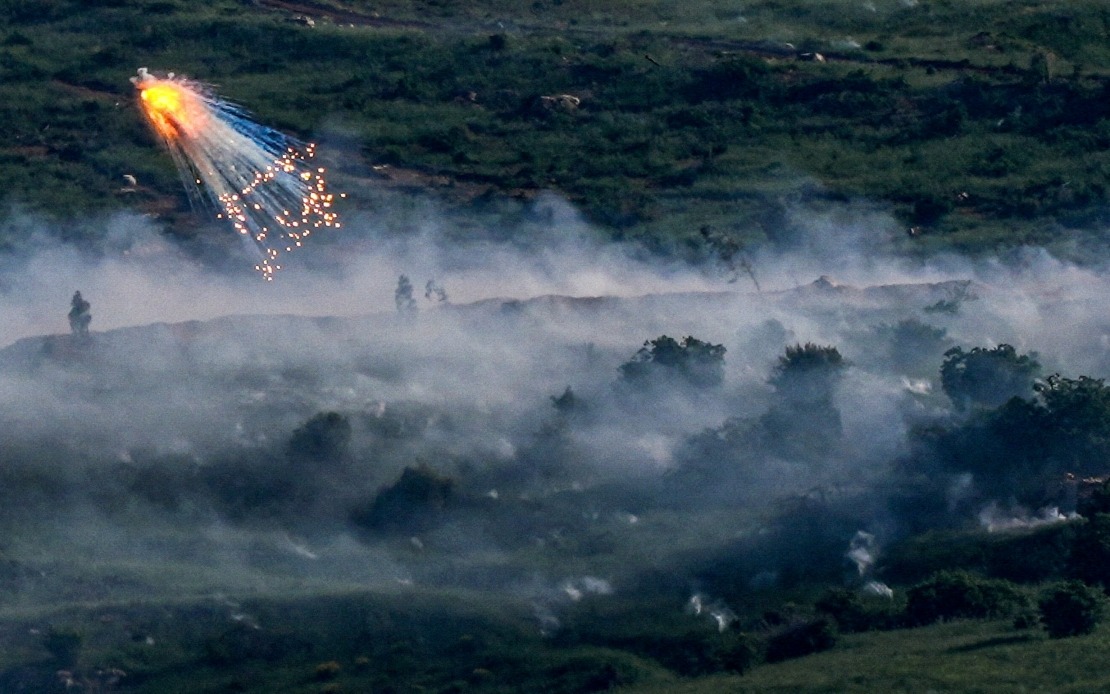
The United States has issued formal travel advisories cautioning its nationals against visiting Lebanon and the northern regions of Israel, citing the volatile security landscape engulfing the West Asian region. The warnings, issued simultaneously by American diplomatic missions in Beirut and Jerusalem on Saturday, underscore deepening concerns about the potential for rapid deterioration in an already fragile geopolitical environment where conventional diplomatic channels have been tested by recurring military confrontations.
In its statement from Beirut, the US Embassy characterised the current situation as presenting "high tensions" coupled with a security environment that remains "complex with the potential for unforeseen escalation." This language reflects official anxiety about the unpredictability of the region, where security incidents can spiral quickly beyond initial control. The embassy's cautionary tone indicates that routine precautions may prove insufficient in the face of the existing instability, prompting the need for more stringent travel restrictions to protect American citizens from potential danger.
The Jerusalem mission issued parallel guidance, instructing Americans to avoid travel to Gaza, the northern portions of Israel, and areas adjacent to the Egyptian border with the singular exception of the Taba crossing point. Furthermore, the advisory urged citizens to reconsider all travel plans to and through West Asia more broadly, signalling that concerns extend beyond specific flashpoints to encompass the wider region. This broader geographical scope reflects calculations that instability in one location can quickly generate consequences across neighbouring territories and international travel corridors.
The timing of these warnings coincides with an escalating pattern of military exchanges between the United States and Iran, complicating efforts to achieve regional stabilisation. Despite a Pakistan-brokered memorandum of understanding agreed upon in June with the stated objective of terminating direct military confrontation and establishing a durable framework for peace, the two powers have continued to engage in retaliatory actions and provocative military posturing. This disconnect between formal diplomatic agreements and persistent on-the-ground conflict dynamics illustrates the limitations of written accords when underlying strategic competition remains unresolved.
For Malaysian travellers and businesses with interests in the affected regions, these developments carry significant practical implications. The American travel advisory typically influences decisions by other Western nations, which often adopt parallel warnings or heightened alert levels. Malaysian citizens planning travel to Lebanon or Israel should monitor updates from their own government's foreign ministry and consider postponing non-essential visits, as the withdrawal of American diplomatic resources or the closure of consular services could leave Malaysian nationals without immediate recourse during emergencies.
The Lebanese economy, already fragile from years of political dysfunction and financial crisis, faces additional headwinds from renewed security concerns that deter foreign visitors and investors. Tourism represents a vital component of Lebanon's recovery prospects, making this travel advisory a particularly damaging development for a nation seeking to rebuild international confidence in its stability. Lebanese businesses dependent on international clientele may experience further revenue contraction as global travellers heed warnings from their home governments.
For Israel, the restriction on visitors to northern regions reflects serious military concerns rather than a blanket security failure affecting the entire country. The northern border region has witnessed periodic escalations, most notably involving Hezbollah militia operations launched from Lebanese territory. The specific geographic limitation in the advisory suggests that American officials assess that southern and central Israel maintain acceptable security conditions for tourism and business activities, though even these areas remain subject to the broader "reconsider" guidance for West Asia.
The persistence of US-Iran tensions despite the June memorandum raises questions about the agreement's efficacy and implementation mechanisms. Pakistan's role as mediator indicates ongoing multilateral efforts to de-escalate, yet the continued military exchanges suggest that political leaderships on both sides face domestic pressures or strategic incentives that override commitments to peaceful resolution. For the broader region, including Southeast Asia's stake in Middle Eastern stability affecting energy supplies and shipping routes, this pattern of pledges followed by violations creates an unreliable security environment.
Malaysian official visitors and business delegations should consult with the Foreign Ministry before proceeding with planned activities in the region. Several Malaysian companies maintain operations in Lebanon and Israel, and their personnel require updated guidance on security protocols and evacuation procedures. The advisory effectively elevates the risk calculus for any Malaysian entity contemplating expansion or significant investment in these markets during the current period of heightened uncertainty.
Regional airlines and hospitality sectors throughout West Asia may experience demand disruption as travellers from multiple countries implement similar caution. This cascading effect demonstrates how security concerns concentrated in one area can generate economic consequences across broader geographical markets. The advisory's emphasis on the potential for "unforeseen escalation" suggests that American intelligence assessments indicate scenarios that could rapidly transform the current elevated tension into active armed conflict.
The distinction between the outright "do not travel" instruction for Lebanon and Gaza versus the more cautionary "reconsider" language for broader West Asia reflects nuanced American risk assessment. Lebanon faces particular concern due to its proximity to active conflict zones and the operational presence of militia groups with demonstrated willingness to engage in cross-border hostilities. Gaza's inclusion in the no-travel list reflects continuing instability from the ongoing Israeli-Palestinian conflict, where civilian populations remain vulnerable to sudden escalations.
Asian governments and regional organisations should view these American warnings as signals of deteriorating security trajectories rather than temporary fluctuations. The repeated nature of such advisories over recent months suggests that the underlying drivers of regional tension—unresolved strategic competition, proxy conflicts, and armed non-state actors—show few signs of meaningful resolution. For Malaysia and other ASEAN nations, the implications extend to energy security concerns, maritime safety in adjacent waters, and the broader international system's capacity to manage major power competition without allowing it to destabilise critical regions.

