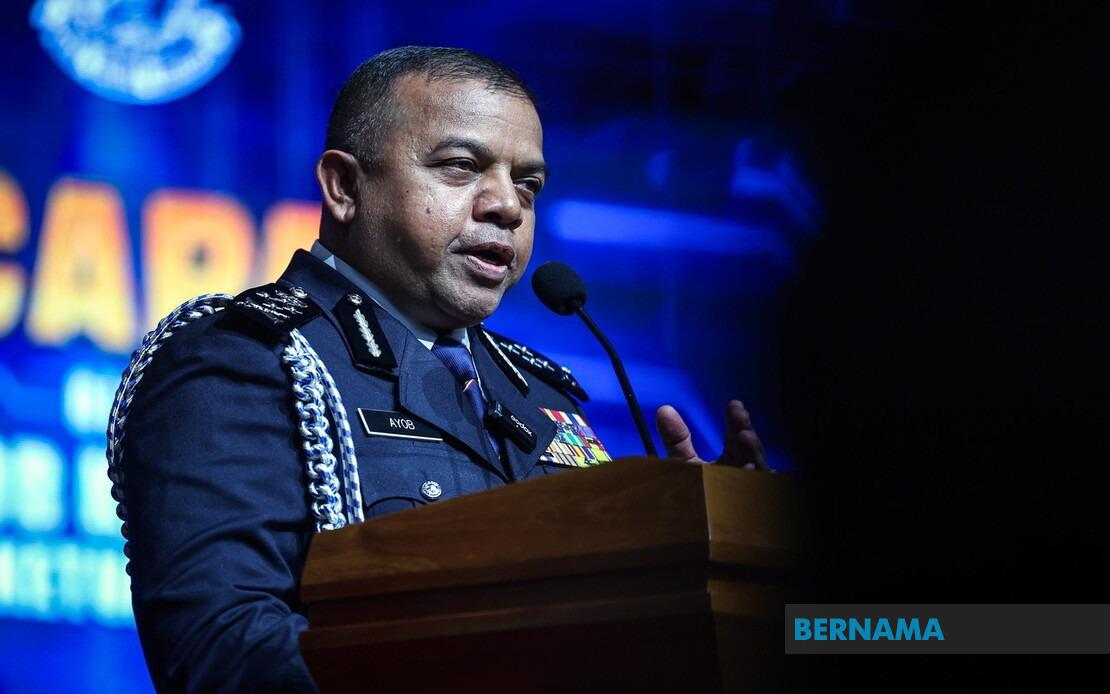
Tan Sri Ayob Khan Mydin Pitchay, the outgoing Deputy Inspector-General of Police, used his farewell address to drive home a stark reminder about the values that should anchor the Royal Malaysia Police. Speaking during the official handover ceremony at the Police Training Centre (PULAPOL) here on July 26, he challenged every serving officer to become a custodian of the force's reputation and moral standing, framing integrity not as an aspirational ideal but as a foundational duty.
The retiring officer's message came as Datuk Seri Ibrahim Darus, the Bukit Aman Special Branch Director, formally assumed the role of Acting Deputy Inspector-General of Police. Inspector-General of Police Tan Sri Mohd Khalid Ismail was present to oversee the ceremonial transition, marking the official end of Ayob Khan's nearly 35-year career within the constabulary. This transition represents a significant moment in institutional leadership, with experienced command passing to a successor who will shape policing priorities in the months ahead.
Ayob Khan's central exhortation struck at a tension that has long troubled institutional life within Malaysia's law enforcement community. He implored officers not to weaponize their positions for personal enrichment, not to compromise their professional standing for financial gain, and crucially, not to leverage state authority to subjugate vulnerable populations. The underlying thrust—that every badge represents a compact between the wearer and the public—invokes a conception of policing that transcends the transactional and enters the domain of civic trust. By grounding his appeal in the sacrifices of predecessors, Ayob Khan positioned ethical conduct as a debt owed to those who built the institution through hardship and sometimes through loss of life.
Particulary striking was his articulation of integrity as a matter of private conscience rather than public performance. He urged officers to internalize ethical principles precisely when accountability mechanisms are absent, when supervisors remain unaware, and when institutional oversight cannot reach. This distinction—between behaving correctly because one is watched versus behaving correctly because it is right—cuts to the heart of governance challenges across Southeast Asia. In jurisdictions where institutional accountability remains fragile, personal moral fortitude becomes a critical bulwark against corruption and abuse. Ayob Khan's invocation of religious accountability, noting that divine observation transcends human oversight, reflects a deliberate effort to anchor ethical behavior in frameworks that exist beyond the state apparatus.
The retiring deputy inspector-general drew on his own professional arc to illustrate the personal toll that service demands. Born in Kota Setar, Kedah, he acknowledged the sacrifices inherent in law enforcement—family time forgone, chronic workplace stress endured, and efforts sometimes rendered invisible or unrecognized by institutional hierarchies. Yet rather than allowing these grievances to justify shortcuts or ethical compromise, he reframed them as part of a larger commitment to principled conduct. His observation that sincere service, though unappreciated in human terms, accumulates value in spiritual accounting, offers an alternative motivational framework for officers who might otherwise become cynical or corrupted by systemic ingratitude.
Ayob Khan's career trajectory itself carries instructive weight. He navigated sensitive assignments including Counter-Terrorism operations within the Special Branch, served as Johor Police Chief during a period of significant public-order challenges, headed the Narcotics Crime Investigation Department when drug enforcement was intensifying, and directed the Bukit Aman Criminal Investigation Department before his 2023 appointment to the deputy inspector-general position. This progression through specialized and high-stakes portfolios means his farewell message carries credibility built on lived experience within the force's most demanding roles.
The timing of this address carries broader significance for Malaysian policing. Public confidence in law enforcement institutions has faced periodic strain from high-profile corruption scandals, allegations of excessive force, and perceptions that rank-and-file officers sometimes operate without adequate oversight. While institutional reforms take time to implement and outcomes remain uncertain, the moral leadership offered by outgoing senior commanders can establish cultural expectations that influence organizational behavior. Ayob Khan's insistence that officers resist both financial temptation and the abuse of authority speaks to recurring concerns within Malaysian civil society.
The transition to Ibrahim Darus as Acting Deputy Inspector-General introduces questions about continuity and change in institutional priorities. While the handover ceremony itself serves as a formal acknowledgment of the succession, the substantive question of whether incoming leadership will sustain, strengthen, or reorient Ayob Khan's emphasis on ethical institutional culture remains open. Nevertheless, the public articulation of these values by a departing high-ranking officer creates a marker against which future performance can be measured—a form of soft institutional accountability.
For Malaysia's policing future, Ayob Khan's parting words illuminate a tension inherent in institution-building within diverse, rapidly changing societies. Formal rules, oversight mechanisms, and accountability structures matter, but they cannot substitute for the internalized ethical convictions of individual officers who hold considerable discretionary power. His farewell message essentially argues that the police force's dignity depends less on external scrutiny and more on each officer's private resolution to do what is right when circumstances allow them to do otherwise. In a region where institutional trust remains fragile and governance capacity uneven, such moral clarity from departing leaders offers both inspiration and implicit challenge to their successors.

