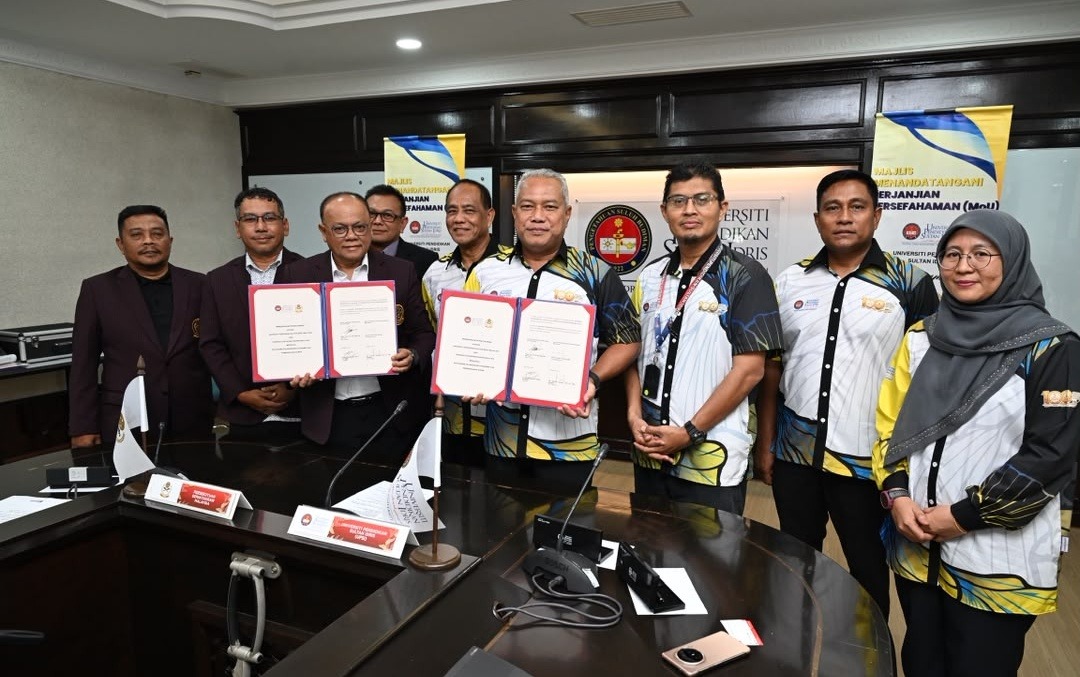
In a significant move to strengthen Malaysia's sepak takraw programme, Universiti Pendidikan Sultan Idris (UPSI) has formalised a three-year strategic partnership with the Malaysian Sepaktakraw Federation (PSM) aimed at nurturing both the academic and athletic development of the nation's sporting talent. The Memorandum of Understanding, signed at the Chancellery Building in Sultan Abdul Jalil Shah Campus in Tanjong Malim, represents a systematic approach to integrating competitive sport with higher education—an increasingly important consideration as Malaysian sports seek to balance international competitiveness with athlete welfare.
The collaboration addresses a persistent challenge facing national sports federations: enabling athletes to pursue elite-level competition while maintaining educational progress. Under the agreement, UPSI commits to enrolling sepak takraw athletes from PSM at various study levels, provided they meet academic entry requirements. Critically, the university will offer scheduling flexibility that allows athletes to balance classroom obligations with the demanding training and competition calendars required of national representatives. This accommodation reflects recognition that elite athletes cannot simply compartmentalise their sporting and academic lives—success in either domain requires time investment that would render rigid university timetables incompatible with athletic development.
UPSI Vice-Chancellor Prof Datuk Dr Md Amin Md Taff characterised the partnership not as ceremonial but as a foundation for concrete initiatives. The university pledges to transfer technical expertise across multiple dimensions of the sport: coaching methodology, officiating standards, sports science applications, and technological innovations relevant to sepak takraw performance. This intellectual capital—accumulated through UPSI's established sports education programmes—becomes available to PSM and its athletes, potentially accelerating improvements in player performance and the development pipeline for future coaches and officials.
The agreement's scope extends beyond immediate athlete support to institutional infrastructure development. Both parties envisage establishing a dedicated national training centre for sepak takraw, a facility that would serve as a centralised hub for talent identification, skill development, and scientific monitoring of athlete progress. Such facilities have proven instrumental in other Southeast Asian sports programmes, enabling consistent, high-standard training environments and facilitating data-driven coaching decisions. For Malaysia, where sepak takraw has deep cultural roots but faces resource constraints compared to larger sports, a university-hosted facility could provide sustainable, year-round operations without depending entirely on federation funding cycles.
The partnership opens formal education pathways for athletes currently in development systems including Malaysian Sports Schools and State Sports Schools. This pipeline integration is strategically important: young athletes identified through these institutions now have a clearer trajectory toward university education rather than facing the typical choice between continuing sport or pursuing tertiary qualifications. Such pathways are increasingly recognised as essential for athlete retention and long-term career security, particularly as professional opportunities in sepak takraw remain limited compared to global sports like football or badminton.
PSM Vice-President Tengku Zaihan Che Ku Abdul Rahman emphasised that combining the federation's technical experience with UPSI's sports science capabilities should accelerate development across multiple roles: elite players, coaching personnel, and technical officials. This horizontal approach—rather than focusing solely on athlete performance—reflects mature sports governance thinking. Officials and coaches require ongoing education; a university partnership enables systematic training and certification pathways that elevate standard-setting across the sport. Better-trained officials, for instance, directly improve competition integrity and athlete safety.
The MoU's three-year term with extension provisions through mutual agreement suggests both parties expect the partnership to prove sufficiently valuable to warrant continuation. This timeframe permits substantive outcomes: cohorts of athletes could complete undergraduate degrees; a training centre could move from planning to operational status; research initiatives in sepak takraw sports science could yield publications and applied improvements. The agreement explicitly contemplates a more detailed Memorandum of Agreement emerging from this initial framework, indicating that implementation details will be negotiated based on early collaboration experience.
For Malaysian higher education more broadly, this partnership offers a potential template. Universities possess underutilised capacity in sports facilities, coaching expertise, and sports science research that national federations desperately need. Yet formalised collaboration between these institutions remains uncommon. The UPSI-PSM model demonstrates that structured partnerships can channel university resources toward national sporting development while maintaining academic integrity—athletes meet the same entry standards as other students, and educational outcomes remain primary rather than secondary to athletic performance.
Regionally, Malaysia's approach contrasts with varying models of athlete-education integration across Southeast Asia. Some countries prioritise military-style sports schools; others embed athletes within civilian universities; still others rely on club-based development. The UPSI-PSM approach represents a conscious choice to embed sepak takraw athlete development within the higher education ecosystem, betting that academic exposure, proximity to research capabilities, and integration with diverse peer cohorts ultimately produces more well-rounded, resilient athletes capable of succeeding beyond their sporting careers.
Sepak takraw itself faces an interesting moment in Malaysian sports consciousness. The traditional sport commands cultural respect and some enthusiast communities, yet lacks the mass participation base and commercial ecosystem of badminton or football. International competition remains relatively limited compared to Olympic sports. A university partnership potentially addresses this: it legitimises sepak takraw as a discipline worthy of serious institutional support; it creates visible pathways for young players; and it facilitates the kind of scientific approach—performance analytics, biomechanics research, sports psychology support—that modern athletes increasingly expect. Success in this partnership could influence how other traditional Malaysian sports approach university collaboration and athlete development strategy.
The agreement's emphasis on research and technical development suggests both parties recognise that Malaysia's sepak takraw competitive advantage depends not on raw participation numbers but on technical sophistication and professional athlete management. UPSI's research capacity in sports science—kinesiology, coaching theory, equipment technology—can be directed toward sepak takraw-specific applications. This research orientation distinguishes the partnership from purely facility-sharing arrangements and positions it to generate intellectual contributions to the sport globally, not merely to consume international best practices.
Looking forward, the critical measure of success will be tangible outcomes: athletes completing degrees, a functioning training centre delivering measurable performance improvements, published research advancing sepak takraw knowledge, and evidence of knowledge transfer to the broader federation membership. The MoU's language suggests serious intent from leadership, but execution remains the test. If UPSI and PSM succeed in translating this agreement into functioning systems, they may indeed establish a replicable model that other Malaysian sports federations and universities could adapt, fundamentally reshaping how the nation supports athlete development across multiple disciplines.

