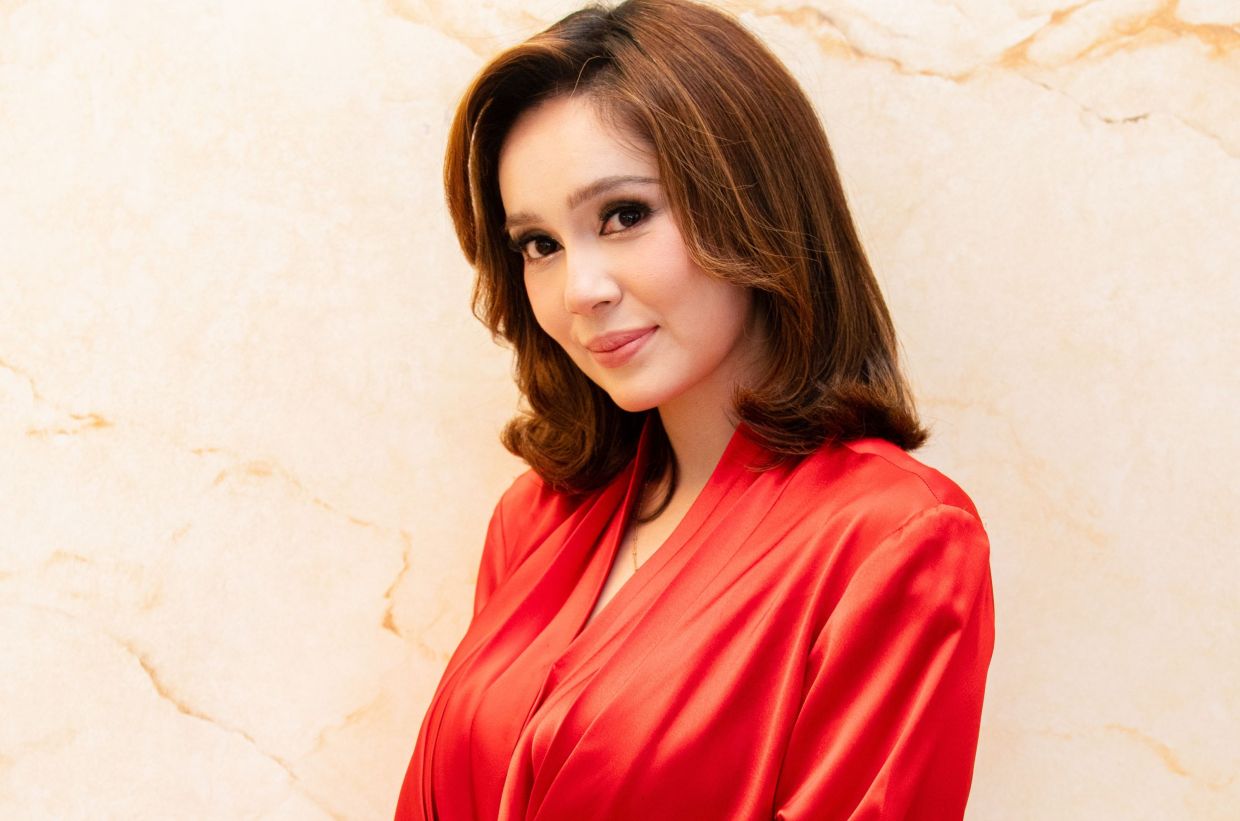
Actress Uqasha Senrose has moved past the noise surrounding her co-star Aliff Aziz's personal difficulties to focus on delivering a compelling performance in their new television series. When she learned that Aliff would be her leading man in the 12-episode drama centring on a polygamous marriage, Uqasha was determined not to let external circumstances derail their working relationship. Her pragmatic stance reflects a maturity born from navigating her own recent life upheaval, an experience that has reshaped her understanding of judgment, forgiveness, and professional boundaries.
Aliff Aziz became entangled in a public scandal in March 2024 when he was arrested for khalwat—a charge related to being alone with a woman who was not his wife under circumstances deemed inappropriate under Islamic law in Malaysia. The incident set off a cascade of personal consequences that culminated in his divorce from Malaysian singer-actress Bella Astillah, with whom he shares two children. The situation dominated entertainment headlines and invited widespread speculation about his character and future viability in the industry.
Uqasha's response to the controversy demonstrates a conscientious separation between an individual's personal failings and their professional capabilities. When asked about her decision to work alongside Aliff despite the scandal, she articulated a philosophy grounded in humility and self-awareness. "Who am I to judge someone else's personal life? I'm a sinner too and I've made mistakes too," she remarked, acknowledging that none of us operate from a position of moral superiority. This perspective offers a counterpoint to the often unforgiving environment of Malaysian entertainment, where public figures frequently face career consequences for private indiscretions.
During the production process, Aliff demonstrated an unwavering commitment to professionalism that vindicated Uqasha's willingness to extend trust. He arrived punctually, completed his assigned scenes competently, and maintained appropriate workplace boundaries. Uqasha noted that she never once experienced hesitation or anxiety about their on-set interactions, and she deliberately avoided engaging in any form of ostracism or professional rejection. Her rationale was straightforward: just as she values her own right to earn a living and pursue her career, she recognises the same necessity in others regardless of their personal circumstances. "I don't believe in rejecting someone's rezeki," she said, using the Islamic concept of providential sustenance and livelihood to frame her decision as one rooted in compassion rather than mere convenience.
The timing of this collaboration carries particular resonance given Uqasha's own marital ordeal. She initiated divorce proceedings against actor Kamal Adli in October 2025, with their separation becoming official in January 2026. Throughout their relationship, which produced a daughter, Uqasha alleged that Kamal engaged in domestic abuse—allegations he contested. The experience positioned her in a vulnerable state during filming, yet she channelled that vulnerability into her craft rather than allowing it to poison her professional relationships or taint her judgment of others navigating relationship breakdown.
The new series itself explores complex relational dynamics through the lens of a polygamous household involving three principal characters: Adli (played by Aliff), Azura (portrayed by Uqasha), and Nikita (played by Elisya Sandha). The premise demands nuanced portrayals of characters caught in emotionally fraught circumstances. Uqasha made a deliberate artistic choice not to collapse her own experiences into her character's journey. She recognised that conflating her recent divorce with Azura's fictional struggles would result in a reductive, autobiographical performance rather than a fully realised characterisation. Instead, Uqasha treated Azura as a distinct entity with her own narrative trajectory, emotional logic, and dramatic arc—a methodological approach that allowed her to inhabit the role authentically rather than merely projecting personal grievance.
The physical and emotional demands of the role proved substantial despite her professional detachment. Azura navigates intense psychological terrain throughout the series, experiencing moments of profound anguish that required Uqasha to summon genuine tears repeatedly. Beyond dialogue, she endured physical staging including scenes in which her character is struck and forcibly moved, adding visceral dimensions to the character's suffering. Yet Uqasha found that immersing herself in Azura's fictional pain offered unexpected catharsis. She described moments when she viscerally connected with her character's despair—particularly scenes depicting Azura attempting to rebuild after past failures, only to encounter fresh obstacles and betrayals.
What distinguishes the series from conventional melodrama is its refusal to engage in moral absolutism. The narrative architecture resists categorising characters as fundamentally virtuous or irredeemably corrupt. Individuals who initially project kindness may harbour concealed cruelty, whilst those whose actions seem harsh frequently possess understandable motivations rooted in genuine suffering or self-protection. This moral complexity mirrors the real world more faithfully than simplified narratives of good versus evil, and it provided Uqasha with meaningful material to explore.
In her current life phase, Uqasha has recalibrated her priorities away from romantic partnership and toward personal agency and maternal responsibility. She consciously invests her energy in career development and nurturing her daughter, recognising that motherhood carries obligations transcending her individual desires or emotional comfort. She reflects that each hardship—from professional setbacks to marital dissolution—has contributed to her personal development and emotional sophistication. The challenges she has weathered have taught her resilience, discernment, and the capacity to maintain professional boundaries even when personally wounded. Her evolution demonstrates that individuals can simultaneously acknowledge their own struggles whilst extending grace to others navigating similar darkness.

