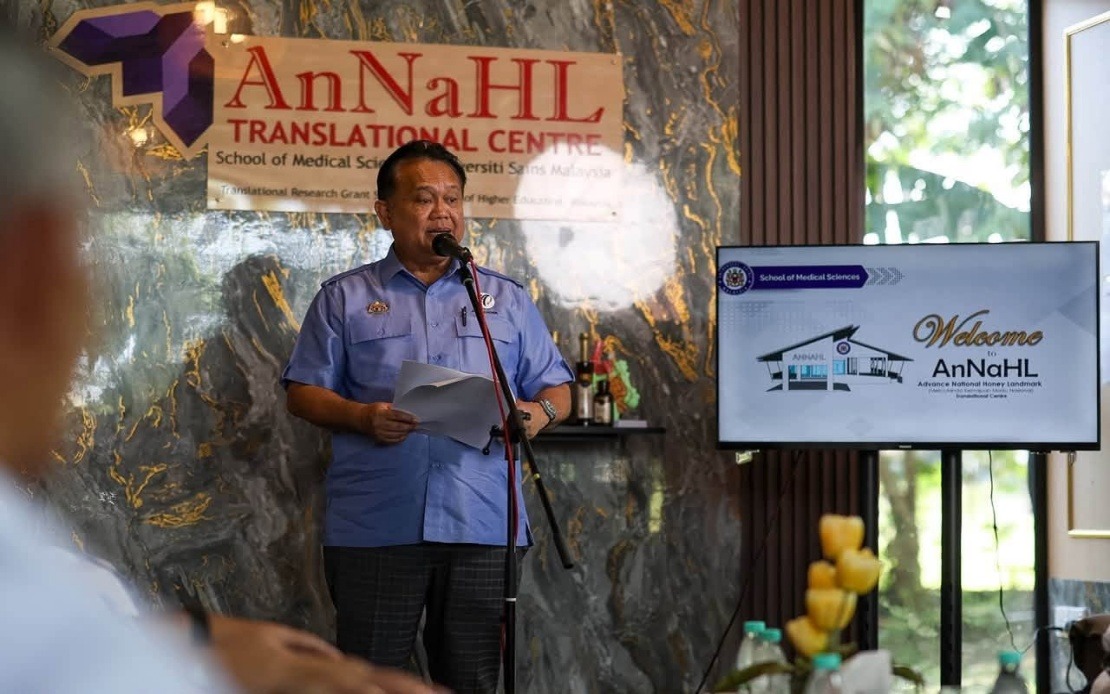
The Upper Rajang Development Agency (URDA) is embarking on an ambitious strategy to reshape the economic landscape of Sarawak's interior regions by positioning innovation and technology as the engines of rural prosperity. During a recent delegation visit to Universiti Sains Malaysia's Advanced National Honey Landmark (AnNaHL) Translational Centre in Kelantan, URDA leadership articulated a vision that moves decisively away from extractive, commodity-dependent models toward sophisticated, knowledge-intensive economic activities capable of generating sustainable livelihoods for rural communities.
According to Datuk Seri Alexander Nanta Linggi, URDA chairman and Member of Parliament for Kapit, the traditional approach to rural development—one centred on harvesting and selling raw materials with minimal processing—has reached its limitations. Nanta underscored that twenty-first century rural prosperity demands a fundamental reorientation toward value creation, wherein communities possess both the technological capacity and market intelligence to move up the supply chain. This shift represents a recognition that competitive advantage in global and regional markets flows increasingly to producers who control processing, branding, and distribution rather than those supplying undifferentiated bulk commodities.
The agency's strategic pivot rests on deepening institutional partnerships that span three critical domains: higher education, government development authorities, and grassroots community structures. By integrating these actors, URDA aims to create ecosystems wherein academic research directly addresses local economic challenges, government resources flow toward scalable solutions, and community members gain the skills and confidence to implement innovations within their own contexts. This tripartite approach reflects growing recognition across Southeast Asia that rural transformation requires more than infrastructure investment or credit access; it demands knowledge transfer and capacity building embedded within supportive institutional networks.
Evidence supporting this strategy emerges from URDA's High Impact Community Projects (HICP), which have yielded measurable results in participating communities. Participating households have increased their average incomes by more than 25 per cent through structured interventions combining training, technology adoption, and improved market linkages. These outcomes suggest that when communities receive coordinated support spanning research, skills development, and market access, economic mobility becomes attainable even in remote regions where geographical isolation and limited infrastructure have historically constrained opportunities.
Universities occupy a pivotal position within this framework, though their role extends beyond conventional research dissemination. Nanta characterised tertiary institutions not merely as generators of academic knowledge but as strategic economic development partners whose research capabilities must align with pressing community needs. When university researchers engage directly with rural producers, government implementers, and market realities, the outcomes transcend theoretical contributions and instead yield practical innovations with immediate commercial application. This orientation reflects global best practices in translational research, wherein the lab-to-market transition occurs efficiently because all stakeholders collaborate from the outset.
The visit to AnNaHL exemplifies this collaborative model in action. The centre operates as a specialised facility for processing, marketing, training, and product development centred on stingless bee cultivation and honey production—a sub-sector with considerable potential across Malaysia's tropical regions. Stingless bee farming requires minimal land, produces high-value products commanding premium prices in domestic and international markets, and aligns well with the economic aspirations and environmental conditions of rural Sarawak. By institutionalising knowledge and infrastructure at a dedicated translational centre, URDA and its partners ensure that interested communities need not navigate technological barriers in isolation.
For Malaysian policymakers and development practitioners, URDA's approach offers instructive lessons applicable across rural Malaysia. The strategy acknowledges that simple infrastructure provision or credit expansion, while necessary, proves insufficient without accompanying human capital development and institutional support. Rural entrepreneurs require not only financial resources but also technical knowledge, quality assurance expertise, market information, and networks connecting them to buyers and larger value chains. Universities possess these capabilities but traditionally lack mechanisms for systematically deploying them in service of rural economic development.
The regional context further illuminates URDA's initiatives. Sarawak's interior regions contain substantial populations whose economic options remain constrained despite Malaysia's overall development progress. Agricultural diversification toward high-value crops and products offers a pathway toward income growth without requiring wholesale industrial transformation or rural-to-urban migration. Stingless bee farming, specialty agriculture, handicraft production, and other knowledge-intensive rural activities flourish when communities receive appropriate training and market connections. URDA's emphasis on building community capacity through knowledge and skills transfer addresses this challenge directly.
The collaboration between URDA and the Regional Corridor Development Authority (RECODA) further amplifies development potential by combining regional economic expertise with local ground knowledge. These agencies collectively administer resources, coordinate between government tiers, and maintain ongoing engagement with communities across extensive territories. By aligning their strategies toward innovation-led rural development, they create coherent frameworks wherein research, infrastructure, training, and market linkages reinforce one another rather than operating in isolation.
Moving forward, URDA has identified several locations within the Kapit parliamentary constituency for implementation of high-impact community projects, with stingless bee cultivation featuring prominently among selected initiatives. This focused geographical approach allows for intensive support, monitoring, and troubleshooting rather than diffuse efforts spread across areas lacking sufficient institutional capacity. Success in early demonstration sites builds political support, attracts additional investment, and generates knowledge applicable across similar communities facing comparable challenges.
The sustainability of URDA's initiative ultimately depends on creating conditions wherein rural communities internalise innovations and manage economic activities independently. This requires not merely transferring technology but fostering entrepreneurial capabilities, business discipline, and collaborative structures enabling small-scale producers to achieve economies of scale through collective action. Universities and development agencies provide essential catalytic support, yet long-term prosperity emerges when communities themselves become custodians of their economic development trajectories.
For Malaysian regions beyond Sarawak's interior—from Peninsular Malaysia's agricultural areas to Sabah's coastal communities—URDA's framework demonstrates a replicable model for rural economic transformation. By positioning innovation, education, and institutional collaboration as development cornerstones, rural Malaysia can transition toward more resilient, prosperous economies generating sustainable livelihoods for communities currently facing limited opportunities. This vision requires sustained commitment, adequate resourcing, and genuine partnership between government, academia, and rural citizens themselves.

