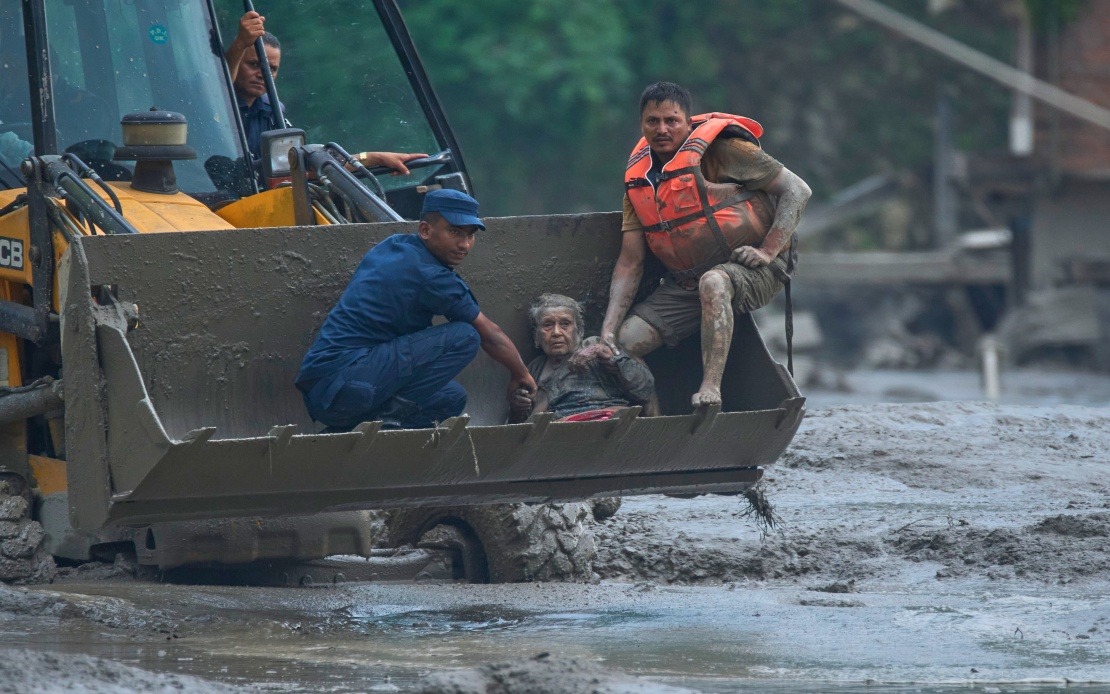
Nepal faces a humanitarian crisis of significant proportions following catastrophic flash floods and mudslides that struck regions bordering China, prompting immediate pledges of international support from the United States and Canada. Both nations have confirmed that citizens are among those unaccounted for in the disaster, which has already claimed at least 160 lives and left over 680 people missing across affected areas. The scale of destruction extends far beyond human casualties, with critical infrastructure severely damaged and entire communities cut off from essential services.
US Secretary of State Marco Rubio announced Washington's readiness to mobilise humanitarian assistance to support Nepal's government response efforts. Through a statement posted on X, Rubio conveyed American solidarity with the Nepali population, describing the national response as one of unified concern and prayer for those affected by the tragedy. This commitment reflects the longstanding diplomatic relationship between the two nations and the United States' broader engagement in South Asian humanitarian crises. The Trump administration's rapid public response signals the importance placed on bilateral relations with Nepal and the broader regional stability concerns in the Himalayan region.
Canada's Prime Minister Mark Carney characterised the disaster as "absolutely devastating" and emphasised his government's commitment to providing support to Nepal during this emergency period. Through his own social media statement, Carney acknowledged the emotional toll on Canadian families, noting those who have lost loved ones and those anxiously waiting for information about missing relatives. This compassionate framing reflects Canada's humanitarian diplomacy approach and its recognition of the personal dimensions of international disasters affecting its citizens abroad.
According to Nepalese authorities, at least 47 Americans and 24 Canadians are among those currently missing, though both nations have noted they have not independently verified these figures. The discrepancy between official Nepali counts and independent confirmation underscores the challenging communications environment following such disasters, where accurate information gathering becomes difficult amid ongoing rescue and recovery operations. This verification gap is typical in large-scale disasters affecting remote or mountainous regions where damage to telecommunications infrastructure complicates real-time reporting.
The physical devastation wrought by the floods and mudslides has crippled Nepal's infrastructure across multiple critical sectors. Nepalese government assessments indicate that thirteen hydropower projects sustained significant damage, a particularly concerning development for a nation that relies substantially on hydroelectric generation for its energy needs. Additionally, approximately forty kilometres of road networks have been destroyed, severely hampering access to affected communities and complicating rescue and relief distribution efforts.
Beyond energy infrastructure, the disaster has swept away roughly two hundred trucks and nineteen bridges, creating severe logistical bottlenecks for humanitarian response operations. These losses represent not merely physical infrastructure but also the economic lifelines connecting rural communities to markets and services. The destruction of transport infrastructure in Nepal's mountainous terrain is particularly consequential, as these routes often represent the only reliable connections to remote settlements.
For Malaysian policymakers and regional observers, Nepal's disaster underscores the vulnerability of South Asian nations to climate-related extreme weather events. The Himalayan region's complex geography, combined with increasingly unpredictable monsoon patterns, creates heightened risk for catastrophic flooding in Nepal and neighboring countries. Malaysia, as a Southeast Asian nation with significant exposure to similar hydrological risks, may benefit from examining Nepal's emergency response protocols and international coordination mechanisms during such crises.
The swift diplomatic response from Washington and Ottawa also highlights how countries with significant diaspora populations in affected regions mobilise international mechanisms during emergencies. This pattern of rapid engagement through both bilateral channels and humanitarian organisations has implications for how ASEAN nations might expect support during comparable disasters, given the region's comparable vulnerability to extreme weather events.
The broader context of climate vulnerability in the Himalayan region suggests that responses to Nepal's disaster will likely extend beyond immediate emergency relief toward longer-term infrastructure resilience planning. International assistance frameworks are increasingly incorporating climate adaptation components, recognising that reconstruction presents opportunities to build back better with improved disaster-resistant infrastructure. For Nepal, such engagement with developed nations could yield valuable technical expertise and financial resources for sustainable recovery.
The coordination between United States and Canadian responses, while independently articulated, reflects a shared commitment to multilateral humanitarian engagement in South Asia. This parallel mobilisation of support through established diplomatic channels demonstrates how Western nations typically approach crisis response in the region, often working through existing development partnerships and embassy networks. Nepal's engagement with these international partnerships will be crucial in scaling relief operations to match the scale of destruction across the country's affected zones.

