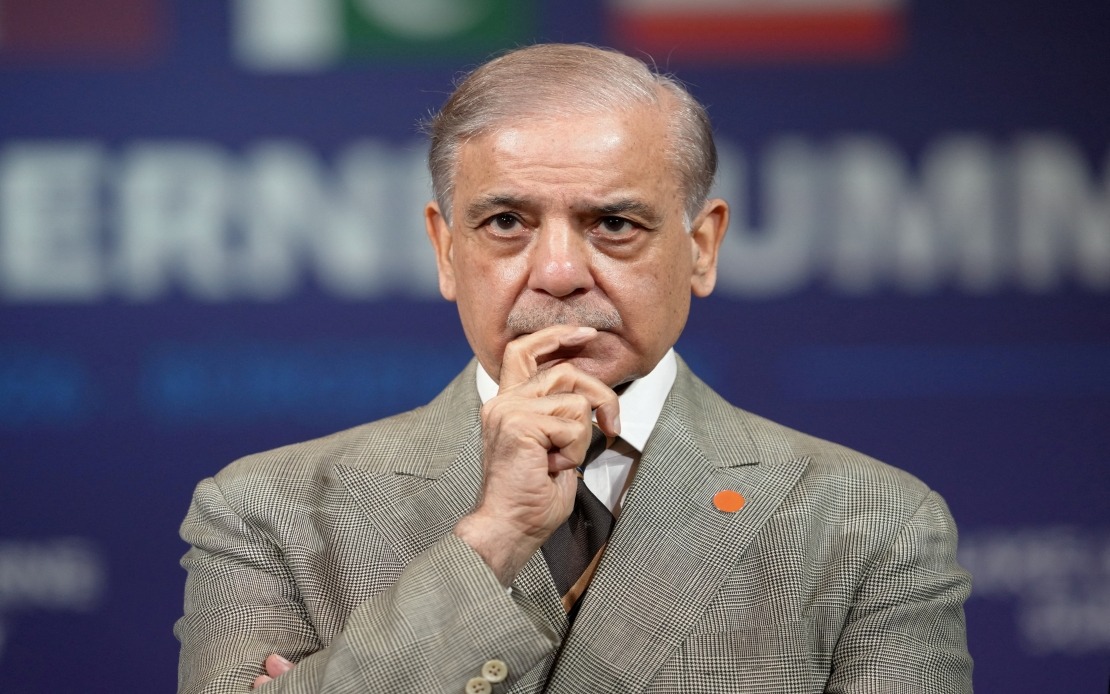
Pakistan's Prime Minister Shehbaz Sharif revealed on Tuesday that the United States and Iran have committed to resuming substantive negotiations within a 60-day window, during which both nations will address critical issues including nuclear capability, ballistic missile development, and the unfreezing of Iranian financial assets. Speaking to lawmakers in the National Assembly in Karachi, Sharif expressed optimism that the framework agreed upon in recent Swiss discussions could crystallise into a permanent accord that might reshape regional security dynamics and ease decades of bilateral tension.
The statement comes shortly after Tehran and Washington concluded talks in Burgenstock, Switzerland, where both delegations moved beyond preliminary discussions to establish concrete mechanisms for advancing negotiations. These Swiss negotiations, which concluded early Monday, operated under the supervision of two key mediators—Pakistan and Qatar—underscoring the region's diplomatic stakes in achieving a settlement. The two countries had previously signed the Islamabad Memorandum of Understanding on June 17, with Pakistan formally joining as a mediating party, signalling Islamabad's strategic interest in stabilising US-Iran relations and reducing tensions that have periodically threatened regional stability.
Sharif told the National Assembly that the forthcoming talks would specifically focus on three interconnected domains that have historically complicated US-Iran relations. The nuclear issue remains central to any agreement, reflecting long-standing international concerns about Iran's atomic programme and its potential military applications. Simultaneously, the negotiations must address Iran's ballistic missile capabilities, which Washington views as integral to broader regional security concerns. The question of frozen Iranian assets—funds locked outside Iran's borders due to international sanctions—represents a tangible economic dimension that could incentivise Tehran's compliance with any final agreement.
The Pakistan Prime Minister struck a hopeful note, suggesting that the Islamabad MoU, initially a symbolic gesture, could transform into a durable, legally binding treaty within the 60-day negotiation period. This optimism reflects a belief that both sides have genuine motivation to reach settlement, though historical precedent offers reasons for caution. Previous attempts at reconciliation between Washington and Tehran have foundered on implementation disputes, verification mechanisms, and mutual accusations of bad faith. The compressed timeframe of two months implies that negotiators are under considerable pressure to produce results, which could either accelerate progress or, conversely, force compromises that neither side views as satisfactory.
However, Iran's Foreign Ministry swiftly complicated the narrative, with spokesman Esmaeil Baghaei issuing categorical statements that directly contradicted or qualified elements of Sharif's characterisation. Tehran asserted that ballistic missile capabilities were never formally included in the Switzerland discussions, suggesting that any future talks on missiles would constitute an expansion of the current agenda rather than a continuation of agreed-upon parameters. This clarification implies that while both parties may have found common ground on nuclear issues, the missile question remains contentious and potentially divisive, capable of derailing negotiations if the US insists upon inclusion.
More provocatively, Iran's Foreign Ministry announced that Tehran would not permit International Atomic Energy Agency inspectors access to nuclear facilities that were targeted during recent military strikes attributed to Israel and the United States. This stance signals Iran's determination to maintain operational secrecy at sensitive installations and reflects deep mistrust of external verification mechanisms. For Washington and international nuclear watchdogs, such restrictions pose fundamental obstacles to confidence-building measures that typically underpin arms control agreements. The IAEA's capacity to conduct inspections and verify compliance is considered essential by Western powers, making Iran's refusal to grant full access a potential deal-breaker in the eyes of American negotiators.
The divergence between Pakistan's portrayal of progress and Iran's defensive statements highlights the fragile consensus achieved in Switzerland. While both nations may have agreed to continue talking and to explore compromise on certain issues, substantial disagreements remain unresolved regarding the scope and nature of verification, the treatment of existing military infrastructure, and the sequencing of concessions. Pakistani diplomacy, which has positioned Islamabad as an indispensable neutral intermediary, evidently aims to maintain momentum and encourage both sides toward final settlement, yet the statement from Tehran suggests significant work remains before genuine accord emerges.
For Malaysia and Southeast Asia, the ramifications of US-Iran rapprochement extend beyond bilateral dynamics between Washington and Tehran. Reduced US-Iran hostility could decrease military tensions in the Middle East and adjacent maritime zones, potentially stabilising shipping routes and energy supplies upon which ASEAN economies depend. Conversely, if negotiations collapse, the resulting frustration might prompt either side toward confrontational posturing that could destabilise global oil markets and complicate regional security architecture. Southeast Asian nations, many of which maintain economic and diplomatic ties with both the US and Iran, have vested interest in seeing a negotiated resolution that reduces the risk of escalatory cycles.
The 60-day window represents a critical test of whether both sides genuinely prioritise diplomatic resolution over continued confrontation. Pakistan's mediation, combined with Qatar's involvement, suggests that Muslim-majority nations see themselves as uniquely positioned to bridge Western and Iranian perspectives. Yet the cautious language employed by both Sharif and Iranian officials, coupled with Tehran's immediate clarifications regarding missile discussions and IAEA access, underscores how treacherous this negotiating terrain remains. Previous attempts at US-Iran reconciliation have repeatedly foundered at technical implementation stages, even after initial political breakthroughs, making optimism premature at this juncture.
Sharp observers note that the Islamabad MoU remains largely a symbolic commitment to dialogue rather than a substantive agreement addressing the core disagreements between Washington and Tehran. Transforming this understanding into a permanent accord requires navigating minefields of verification, sequencing of sanctions relief, and monitoring mechanisms. The next 60 days will determine whether diplomatic channels genuinely represent a pathway toward normalization or merely postpone inevitable confrontation. For regional security and global energy stability, the stakes of these negotiations extend far beyond bilateral relations, touching fundamental questions about how great powers manage irreconcilable strategic interests.

