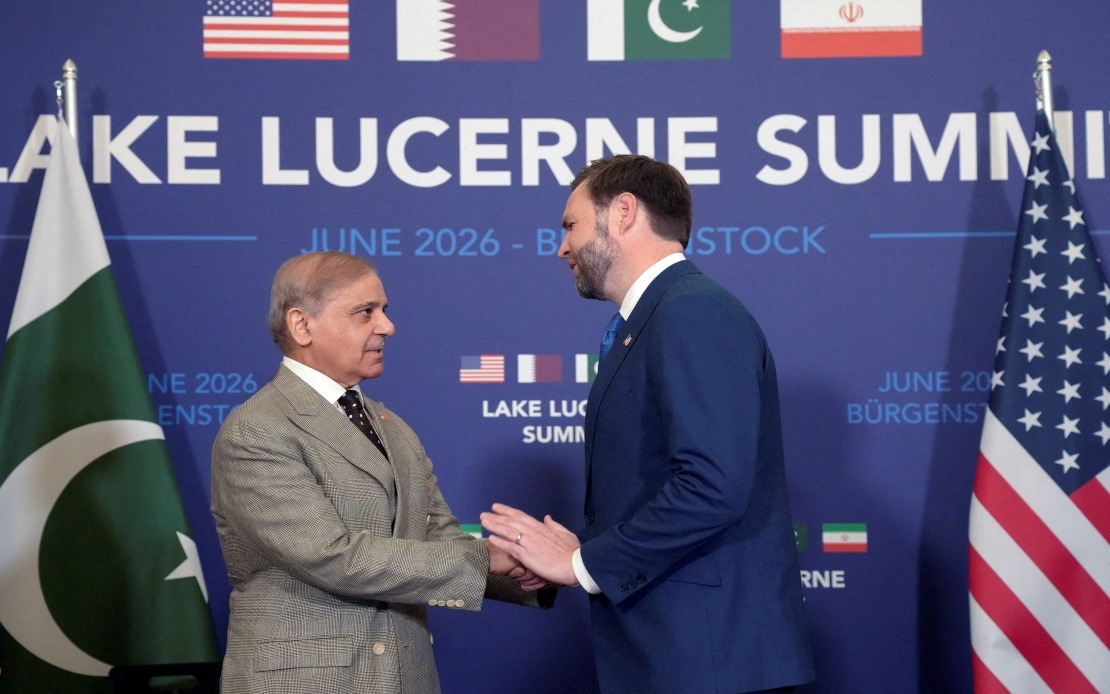
A high-level delegation from the United States gathered with Pakistani officials at the Swiss resort of Burgenstock on Sunday for talks that underscore the regional dimensions of efforts to stabilize US-Iran relations. Vice President JD Vance, along with White House special envoys Steve Witkoff and Jared Kushner, held direct discussions with Pakistan's Prime Minister Shehbaz Sharif and Pakistan Army Chief Field Marshal Asim Munir, according to reports from the White House press pool. The meeting occurred alongside broader technical negotiations involving Iran, the United States, and mediating countries Pakistan and Qatar, all gathered at the Alpine venue to work toward resolving the escalating military tensions that have defined their relationship since February 28.
The inclusion of Pakistan in these negotiations reflects the strategic importance Islamabad holds in any settlement affecting Iran and broader Middle Eastern stability. As a nuclear-armed nation sharing a lengthy border with Iran and maintaining deep ties with the US security establishment, Pakistan's role transcends ceremonial participation. The presence of Field Marshal Asim Munir, who commands Pakistan's 1.2-million-strong armed forces, signals that military considerations are central to these discussions. For Malaysia and other Southeast Asian nations monitoring developments in global security architecture, Pakistan's positioning as an intermediary offers insights into how regional powers navigate great-power competition and conflict resolution.
The timing of the Burgenstock meeting follows a significant breakthrough in the preceding week. On the night of June 17-18, Iran and the United States remotely executed a memorandum of understanding that addresses the armed conflict initiated on February 28. This document represents more than symbolic agreement; it establishes concrete mechanisms and timelines for de-escalation. The US commitment includes lifting its naval blockade that has constrained Iranian maritime activity, while Tehran agrees to restore shipping operations through the Strait of Hormuz, one of the world's most economically vital chokepoints. For global energy markets and Southeast Asian economies dependent on Gulf oil shipments, restoration of normal passage through this waterway carries substantial implications for energy security and pricing stability.
Nuclear dimensions of the accord form perhaps its most consequential element. Iran commits under the memorandum to forgo acquisition of nuclear weapons, marking a formal renunciation of weapons-grade ambitions. However, recognizing the complexity surrounding Iran's existing nuclear programme, the parties have deferred detailed negotiations on this matter to a separate track with a 60-day timeline for reaching agreement. This phased approach allows both sides to address the militarised conflict first while creating structured space for technical nuclear specialists to work through verification mechanisms, enrichment limits, and inspections. Such separation of the military and nuclear issues reflects negotiating sophistication that acknowledges these are distinct but interconnected problems.
For Iran, the ultimate prize emerging from these negotiations centers on sanctions relief. The Islamic Republic has endured decades of comprehensive economic restrictions that have crippled its oil exports, banking sector, and overall development potential. Lifting anti-Iran sanctions would unlock frozen assets, restore international trade relationships, and enable the country's reintegration into global economic structures. This incentive structure explains Tehran's willingness to participate in negotiations and accept constraints on its nuclear programme. The economic calculation is straightforward: the cost of sanctions isolation outweighs the strategic benefits of pursuing nuclear weapons capability.
The closed-door nature of the technical negotiations in Burgenstock signals recognition that diplomatic sensitivity requires confidentiality. When multiple nations with conflicting interests gather to resolve military conflicts and nuclear concerns, public statements can easily derail progress by triggering domestic political backlash or appearing as concessions to adversaries. Pakistan and Qatar, operating as mediators, bring credibility with all parties. Pakistan's Muslim-majority identity and geostrategic location lend it legitimacy with Iran, while decades of security partnerships position it as trusted by American decision-makers. Qatar's role similarly balances these relationships, having hosted both American and Iranian officials during previous diplomatic channels.
The broader geopolitical context illuminates why Southeast Asia should monitor these developments closely. Instability in the Middle East generates ripple effects across maritime trade routes, energy supply chains, and security alignments that extend to Asia-Pacific regions. The Strait of Hormuz disruptions affect oil shipped to China, Japan, South Korea, and markets throughout Asia. A stabilised Iran-US relationship reduces the likelihood of naval confrontations that could threaten shipping in international waters. Additionally, successful conflict resolution through negotiated agreements rather than military escalation sets precedents for how great powers might address other regional flashpoints, including those in Southeast Asia itself.
The presence of Jared Kushner among the American special envoys adds another interpretive layer. Kushner, previously serving as senior advisor in the Trump administration and maintaining involvement in Middle Eastern diplomacy, signals continuity across different US political administrations in pursuing Iran negotiations. This bipartisan commitment to diplomatic engagement, regardless of which party occupies the White House, suggests that achieving nuclear and military stability with Iran enjoys sufficient American consensus to survive electoral transitions. For nations in Southeast Asia concerned about predictability in US foreign policy, this consistency offers some reassurance.
Looking forward, the 60-day nuclear negotiation timeline will test whether the momentum generated at Burgenstock can produce enduring agreements on technical verification matters. Inspections regimes, enrichment centrifuge numbers, stockpile transparency, and international monitoring mechanisms represent areas where technical experts must narrow significant gaps. The involvement of the International Atomic Energy Agency, presumably, will add independent verification capacity. Success on these dimensions would transform the June 21 Burgenstock meeting from symbolic diplomatic moment into the foundation for genuine strategic realignment in one of the world's most volatile regions.
The Pakistan-US bilateral component of the Burgenstock meeting carries significance beyond the Iran negotiations. Relations between Washington and Islamabad have oscillated between partnership and estrangement throughout recent decades. Positioning Pakistan as a respected participant in high-stakes negotiations involving Iran and nuclear matters elevates its diplomatic standing and reaffirms its strategic value. For Shehbaz Sharif's government, demonstrating capacity to mediate regional conflicts and maintain strong American ties supports the Prime Minister's political position domestically while advancing Pakistan's interests in Afghanistan, energy security, and economic development.
The resort setting in Switzerland, neutral territory with no historical baggage for these particular negotiators, provides appropriate venue for such sensitive discussions. Burgenstock's isolation and resort infrastructure allow delegations to concentrate on negotiations without external distractions. The location also symbolises international engagement in these matters, with Switzerland's traditional neutrality lending the proceedings legitimacy across ideological divides. For Malaysian observers, the choice of venue underscores how neutral ground and structured diplomatic procedures remain essential tools for resolving profound international disagreements.
As technical teams convene behind closed doors at Burgenstock, the fundamental question animating these discussions concerns whether military conflict between Iran and the United States can genuinely be arrested through negotiated agreement, or whether underlying tensions will resurface once public attention turns elsewhere. The Strait of Hormuz remains physically unchanged; naval forces maintain their deployments; historical grievances persist. What has changed is the demonstrated willingness of both parties to place their conflict into negotiating frameworks rather than escalate militarily. Success in the coming weeks will depend on whether this willingness translates into concrete agreements on shipping, sanctions, and nuclear matters that all parties view as legitimate and binding.