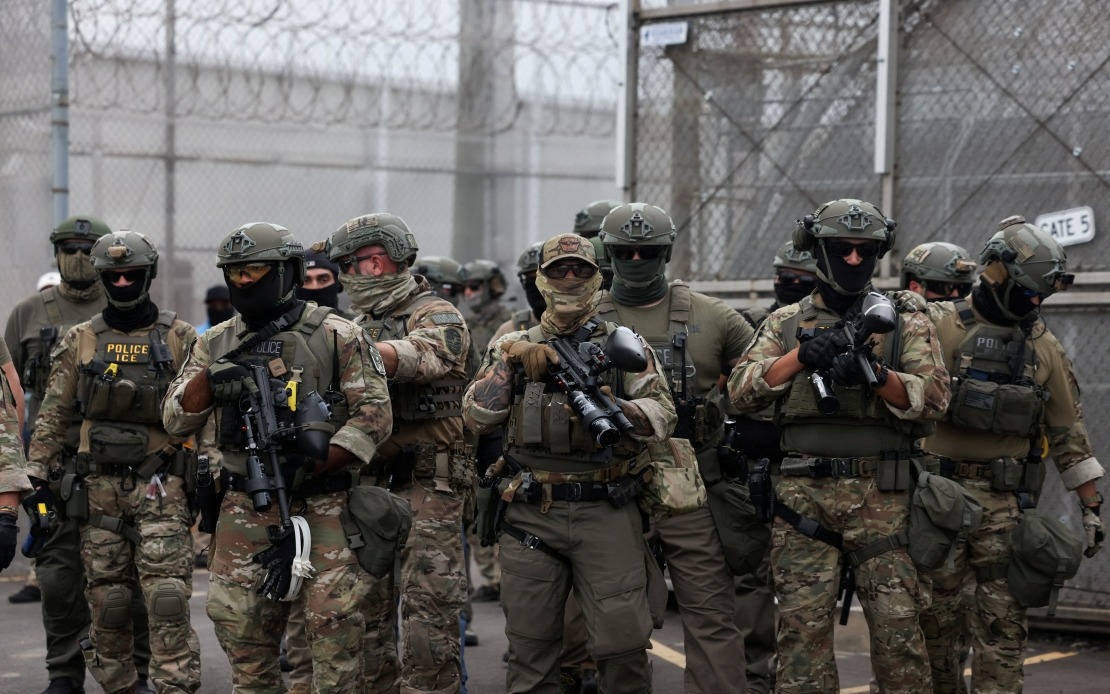
A federal judge in California has issued a sweeping order preventing United States Immigration and Customs Enforcement (ICE) from making arrests at immigration courthouses across the country, delivering a significant legal setback to the Trump administration's immigration enforcement strategy. The ruling effectively halts a practice that has generated considerable controversy among immigration advocates and legal experts, who argue that courthouse arrests fundamentally compromise due process and discourage undocumented migrants from appearing for their hearings.
Immigration courts across the United States handle thousands of cases annually involving migrants who face potential deportation proceedings. The courthouse has traditionally been viewed as a space where legal proceedings can proceed free from enforcement actions, allowing immigrants to present their cases before judges without fear of immediate detention. This principle reflects a longstanding understanding that courthouses serve as forums where the judicial process can function fairly and independently from executive branch enforcement efforts.
ICE substantially escalated its courthouse arrest operations beginning in the previous year, extending enforcement sweeps into and around courthouse facilities nationwide. This expansion marked a significant shift in immigration enforcement strategy, with ICE officers conducting arrests in hallways, parking lots, and courtroom waiting areas. Immigration advocates raised immediate alarm about the practice, contending that such operations create a chilling effect on courthouse attendance and undermine fundamental fairness in legal proceedings.
The Trump administration introduced new guidelines at the start of the president's second term that explicitly promoted courthouse arrests as an effective immigration enforcement tool. These updated directives emphasized the operational benefits of conducting arrests in courthouse settings, essentially making such enforcement actions a formal priority rather than an exceptional measure. The policy represented a deliberate recalibration of how federal immigration enforcement would function in spaces traditionally protected from such operations.
In its ruling, the federal judge found that ICE had fundamentally failed in its legal obligation to properly evaluate the consequences of this policy shift. The court determined that the agency had not adequately assessed or articulated responses to legitimate concerns about how the new practice would affect migrants' willingness to participate in legal proceedings. The judge emphasized that government agencies must provide reasoned explanations when reversing course on significant policy matters, particularly when such changes involve practices affecting fundamental rights.
The decision highlights a critical tension in contemporary American immigration enforcement. While administrations possess legitimate authority to direct immigration enforcement priorities, courts have consistently maintained that such enforcement cannot be pursued in ways that effectively prevent access to the legal system. By arresting migrants at the very moment they are exercising their legal right to appear in court, the policy appeared to cross this threshold, making it vulnerable to judicial challenge.
For regional observers in Southeast Asia, this ruling carries important implications for understanding how advanced democracies balance security priorities with legal protections. Malaysia and other ASEAN nations have grappled with similar questions about immigration enforcement and migrant worker protections. This case demonstrates how judicial systems can act as checks on executive enforcement power, even when dealing with undocumented immigration populations that typically lack significant political constituencies.
The legal vulnerability identified by the court stems partly from procedural requirements that administrative agencies follow when implementing major policy changes. When government agencies abandon previous practices, they must demonstrate that they have considered alternatives and explained why the new approach better serves legitimate policy objectives. ICE's new courthouse arrest guidelines apparently lacked this kind of detailed justification, providing the judge with grounds to find the policy arbitrary and capricious under American administrative law.
Immigration attorneys welcomed the ruling as a crucial protection for due process rights. Many had reported that courthouse arrests were preventing migrants with potentially legitimate legal claims from appearing before judges. Cases involving asylum seekers, individuals with family ties to the United States, and others with valid legal defenses were going unheard because migrants feared arrest upon entering courthouse buildings. This outcome directly contradicts the proper functioning of an immigration justice system.
The decision applies nationwide, meaning ICE cannot resume courthouse arrest operations in any jurisdiction without further legal action or a successful appeal. This nationwide scope reflects the court's determination that the practice raises constitutional and administrative law concerns serious enough to warrant universal prohibition rather than jurisdiction-specific restrictions.
The Trump administration will likely appeal this decision, setting up a significant legal battle over immigration enforcement authority. The case may eventually reach higher courts, potentially including appellate panels that could uphold, modify, or overturn this initial ruling. The ultimate legal outcome remains uncertain, but the current decision represents the strongest judicial statement to date against using courthouses as enforcement venues.
For migrants and their legal representatives, the ruling provides immediate relief from the threat of courthouse arrests during a period when immigration policy faces substantial turbulence. However, the temporary nature of the injunction means that migrant communities cannot assume this protection will remain in place indefinitely without continued legal vigilance and potential further litigation as the case progresses through the judicial system.