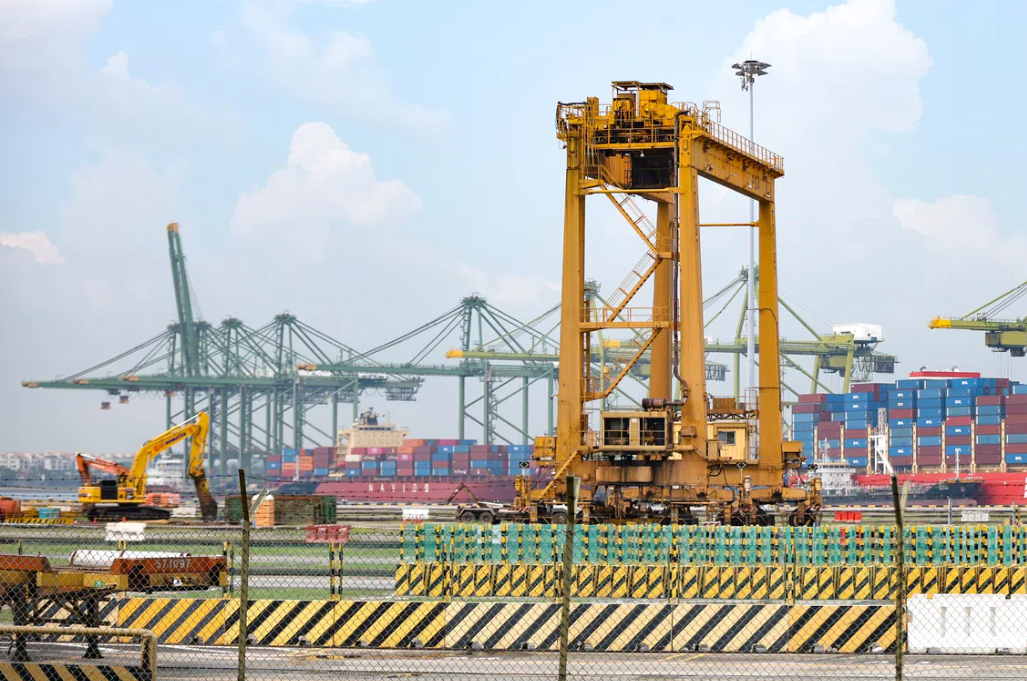
The Trump administration on August 13 released a report accusing Singapore and dozens of other countries of becoming unwitting or complicit participants in a sophisticated scheme to route Chinese goods through their ports and free zones to evade American tariffs. The 40-nation list, formally titled "The Great Transshipment Scam", represents a significant escalation in the ongoing trade tensions between Washington and Beijing, with particular implications for Southeast Asia's role as a global trading hub.
At its core, the White House report identifies a pattern whereby Chinese manufacturers intentionally disguise the origin of their products by shipping them through intermediate countries with lower tariff rates. Once repackaged or minimally processed in these transit nations, goods are then exported to the United States under false country-of-origin declarations. The scheme exploits regulatory gaps and the legitimate complexity of global supply chains to mask what officials describe as tariff evasion on an unprecedented scale. The report contends that this practice has cost the US Customs and Border Protection agency between US$40 billion and US$303 billion in lost revenue.
To combat this, the Trump administration announced deployment of an artificial intelligence-powered system called "Detective Border", designed to identify suspicious transshipment patterns and flag goods likely to have been illegally rerouted. The system represents a technological escalation in customs enforcement, using machine learning algorithms to detect the statistical signatures of fraudulent transshipment operations. Additionally, the US government indicated in August 2025 that it would impose an additional 40 per cent tariff on any goods definitively determined to have been illegally transshipped to circumvent duties.
Singapore's placement in the report carries particular significance for the island nation's economy and regional standing. The White House categorized the 40 nations into three tiers based on their perceived vulnerability to exploitation by Chinese exporters. Singapore was placed in Tier 3, a group described as comprising "small, opportunistic Chinese targets" that possess specific structural vulnerabilities attractive to rerouting schemes. These vulnerabilities include world-class port and airport infrastructure, extensive free trade zones, bonded warehousing facilities, efficient logistics networks, and preferential access to US markets through existing trade agreements. For Singapore, which prides itself on transparent regulatory frameworks and strong customs enforcement, the classification carries reputational implications despite its protestations of compliance with international standards.
Other Tier 3 nations alongside Singapore include Cambodia, Laos, Myanmar, and the Philippines—all of which share the geographic and operational characteristics that make them vulnerable to exploitation. In contrast, Tier 1 economies such as Canada, the European Union, Japan, and Taiwan are viewed as having transshipment risks embedded within broader, legitimate trade flows. Tier 2 comprises countries with deep economic integration with China, including several major Southeast Asian economies: Indonesia, Malaysia, Thailand, and Vietnam all appear on this list, alongside Brazil and Turkey. The stratification reflects varying levels of risk, with Tier 1 nations benefiting from established democratic institutions and regulatory oversight, while Tier 3 nations are presumed to lack the customs enforcement capacity to detect large-scale fraud.
The White House report acknowledges a critical ambiguity in its findings: it concedes that not all trade displacement from China to other nations represents illegal transshipment. Some shifting of supply chains reflects legitimate business decisions by multinational corporations to diversify production, invest in alternative locations, or adjust sourcing strategies for genuine operational reasons. However, the timing, scale, and direction of trade shifts following the 2018 US tariff increases suggest that a significant portion involves deliberate fraud. The report notes that following the imposition of those earlier tariffs, China's direct share of US imports declined measurably while the combined share supplied by the identified transshipment countries increased proportionally—a correlation the administration interprets as evidence of systematic rerouting rather than coincidental market adjustment.
For Malaysia and other Tier 2 nations, the report presents a more nuanced threat assessment. Rather than targeting them primarily for their role in facilitating transshipment, the White House warns that as these economies become increasingly dependent on Chinese inputs, logistics infrastructure, and capital investment, Beijing gains expanded commercial and geopolitical leverage. This dependency, the report suggests, may compromise these nations' ability to enforce customs regulations independently, even when technically capable of doing so. The warning reflects broader American anxiety about Chinese economic influence throughout Southeast Asia and the potential for Beijing to instrumentalize trade relationships for political objectives.
Singapore's Ministry of Trade and Industry was approached for comment on the White House report. In an official response, Singapore Customs emphasized that the nation's legislative and regulatory framework governing transshipment aligns with international best practices established by the World Customs Organization. The agency stressed that transshipment through Singapore is transparent and traceable, with goods maintaining their original country-of-origin designation regardless of processing or handling activities conducted domestically. Singapore maintains that companies engaged in transshipment operations must fully comply with domestic law and that the customs authority actively cooperates with international counterparts to identify and intercept illicit goods.
The policy carries particular weight for Singapore's economy, which relies substantially on entrepot trade and has long marketed itself as a world-leading logistics and financial center. The nation's reputation for regulatory clarity and customs efficiency has been built deliberately over decades, positioning it as a trustworthy intermediary for legitimate international commerce. Being included in the American transshipment report, even in a lower-risk tier, potentially undermines that carefully cultivated image, particularly if multinational companies become concerned about increased US scrutiny of goods transshipped through Singapore.
Beyond Singapore, the report's implications resonate throughout Southeast Asia. The region has increasingly become embedded within Chinese supply chains as manufacturers relocate from mainland China to escape tariffs or to access preferential trade terms with other nations. Vietnam, Indonesia, and Thailand have experienced manufacturing booms partially driven by companies seeking to establish technical production facilities to qualify products as "made in" those countries rather than China. The American report suggests this pattern itself may become subject to heightened enforcement scrutiny. Companies may face the prospect of their goods being reclassified as Chinese-origin despite being physically assembled outside mainland China, a development that would undermine the fundamental logic of their regional investment strategies.
The timing of the report reflects broader shifts in American trade policy under the Trump administration. The White House acknowledged that its enforcement authority had been undermined by a court decision earlier in 2026, necessitating rebuilding of the tariff regime through alternative mechanisms. In July 2026, the administration imposed a new 12.5 per cent levy targeting approximately one-third of Singapore's domestic exports to the US, citing failures to adequately enforce prohibitions on trade in goods produced with forced labour. This represents a shift from tariff-avoidance concerns to human rights compliance, potentially signaling that American trade enforcement will increasingly encompass multiple categories of alleged violation simultaneously.
For Malaysian policymakers and businesses, the Tier 2 classification presents both medium-term risks and strategic opportunities. The nation could face increased American scrutiny of re-exports and transshipment activities, potentially requiring enhanced documentation and transparency measures that raise compliance costs. Conversely, companies manufacturing legitimately in Malaysia and genuinely adding value to products face no direct threat, and those that can clearly demonstrate authentic production operations may benefit from American preference for diversifying supply chains away from China. The key distinction for Malaysian exporters will be maintaining meticulous documentation of value-added activities and supply chain provenance.

