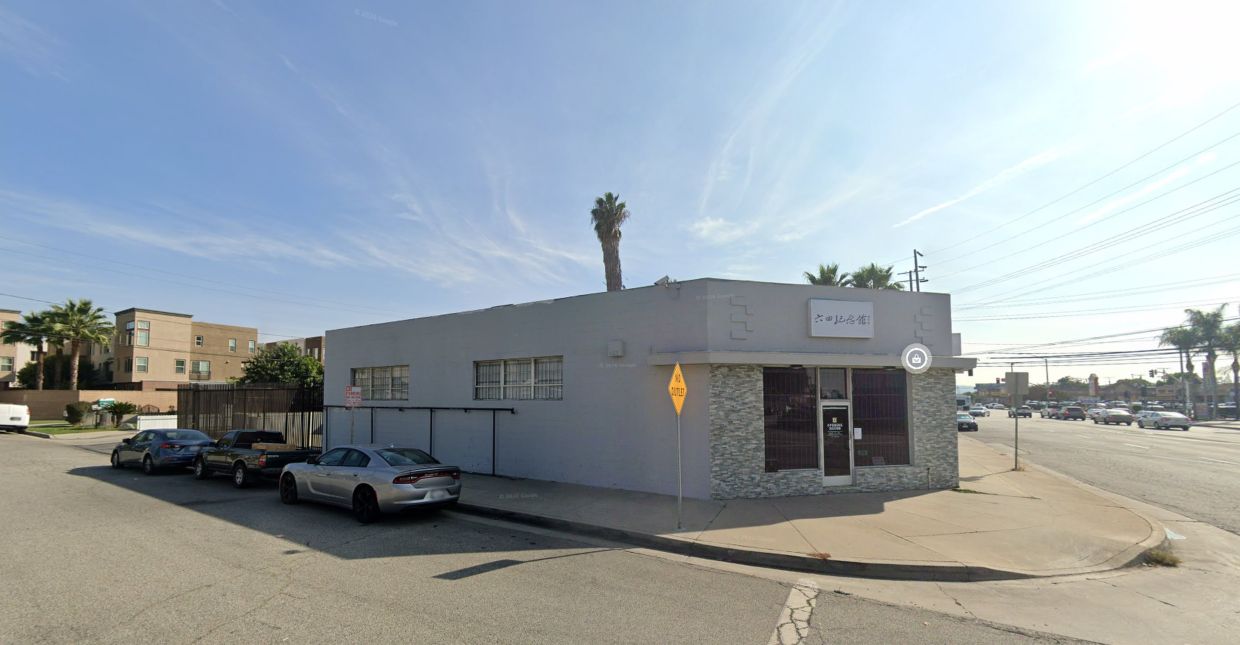
Two influential Republican leaders in Congress have formally requested that America's justice authorities conduct a comprehensive investigation into a break-in and defacement incident at a California-based museum dedicated to commemorating the 1989 Tiananmen Square demonstrations. The incident, occurring in late May at the June 4th Memorial Museum in El Monte, has sparked concern among US lawmakers about what they characterise as potential state-sponsored intimidation targeting the Chinese diaspora community seeking political asylum in the United States.
The formal appeal, submitted to the Justice Department on Thursday in a three-page letter, came from John Moolenaar, the Michigan-based Republican chair of the House Select Committee on China, and Christopher Smith, a New Jersey Republican who co-leads the Congressional-Executive Commission on China. Both legislators represent bipartisan positions within Congress on China-related matters and possess significant influence over US policy discussions regarding the world's second-largest economy. Their intervention signals serious concern about the incident among senior lawmakers with oversight responsibilities for America's China strategy.
According to information published on the museum's official website, intruders entered the facility on May 31, just days before the June 4th anniversary marking the date of the 1989 military crackdown in Beijing. The perpetrators spray-painted walls and display cases, destroyed various exhibits, and deliberately damaged the facility's surveillance equipment, resulting in substantial losses for the institution. The museum's statement noted the deliberate targeting of security systems, suggesting a calculated approach to avoid identification. Officials emphasised their resolve, declaring that despite the threatening nature of the incident, the institution would not yield to intimidation.
The June 4th Memorial Museum itself represents a relatively recent establishment within America's memorial landscape. Launched in 2023, the institution originally operated from a New York location before relocating to the Los Angeles area as a cost-saving measure. The museum functions as a non-profit entity under the American tax system and has depended entirely on independent fundraising efforts, crowdsourced financial contributions, and support from civil society organisations. An online artist collective reported in 2023 that organisers had raised US$500,000 towards an ambitious US$2 million fundraising target, indicating the institution's reliance on grassroots support rather than institutional backing.
The museum administration has characterised the vandalism as potentially representing "transnational repression"—a term describing alleged harassment or intimidation conducted across international borders by authoritarian regimes targeting dissidents abroad. While the museum did not elaborate on specific evidence supporting this assessment, the concept reflects mounting concerns within diaspora communities and American policy circles about coordinated efforts to silence overseas critics of Beijing. The El Monte police department has confirmed opening an investigation into the incident and indicated they have identified certain investigative leads, though public disclosure of findings remains limited.
In their formal request to federal authorities, Moolenaar and Smith explicitly urged the Department of Justice, including the FBI's Los Angeles Field Office and its National Security Division, to examine whether foreign actors—potentially individuals acting on behalf of or sympathetic to the People's Republic of China or its Communist Party—orchestrated, encouraged, financed, or executed the vandalism. This framing reflects congressional concerns that such incidents may constitute state-directed campaigns rather than isolated criminal acts. The legislators called for close coordination between federal investigators and local law enforcement to establish whether the attack followed an organised pattern consistent with Beijing's documented practices.
Beijing's diplomatic representation in Washington has not yet provided a substantive response to inquiries regarding the museum incident or the congressional request for investigation. However, Chinese government officials have historically responded to scrutiny from these same legislative bodies with sharp criticism, characterising the House Select Committee on China and the Congressional-Executive Commission as "political tools with zero credibility" animated by "Cold War mentality" and "ideological bias." This rhetorical pattern suggests Beijing may dismiss the investigation request as part of what it views as an anti-China campaign within American politics.
The institutional context surrounding this incident merits attention for Malaysian and Southeast Asian observers. The House Select Committee on China, established in January 2023, maintains a broad mandate examining American economic and security competition with Beijing across multiple domains. The Congressional-Executive Commission, created in 2000 when China joined the World Trade Organization, focuses specifically on monitoring human rights conditions and rule-of-law standards in the Chinese context. Though neither body possesses legislative authority, both can conduct investigations, develop policy recommendations, and advise Congress on China-related matters, making their involvement in highlighting this incident significant for shaping American China policy discussions.
The broader implications for regional stability warrant consideration. As the United States intensifies strategic competition with China across Asia-Pacific domains, incidents targeting Chinese diaspora communities on American soil take on added significance. The potential involvement of state actors in intimidating overseas critics would represent an escalation in what some analysts describe as Beijing's "long arm" extending beyond its borders. For Southeast Asian nations navigating their own relationships with China while protecting fundamental freedoms, the controversy underscores broader questions about protecting diaspora communities and preventing foreign interference within national borders—challenges increasingly relevant across the region.
The museum itself has become emblematic of a larger struggle over historical memory and political expression. By maintaining a memorial to events that the Chinese government actively censors and suppresses within mainland China, the institution challenges Beijing's narrative control and provides space for remembrance among diaspora communities. The targeting of such facilities suggests authorities view overseas commemoration efforts as threatening enough to warrant direct action, a dynamic that carries implications for how democracies balance protecting free expression while safeguarding institutions from foreign interference.

