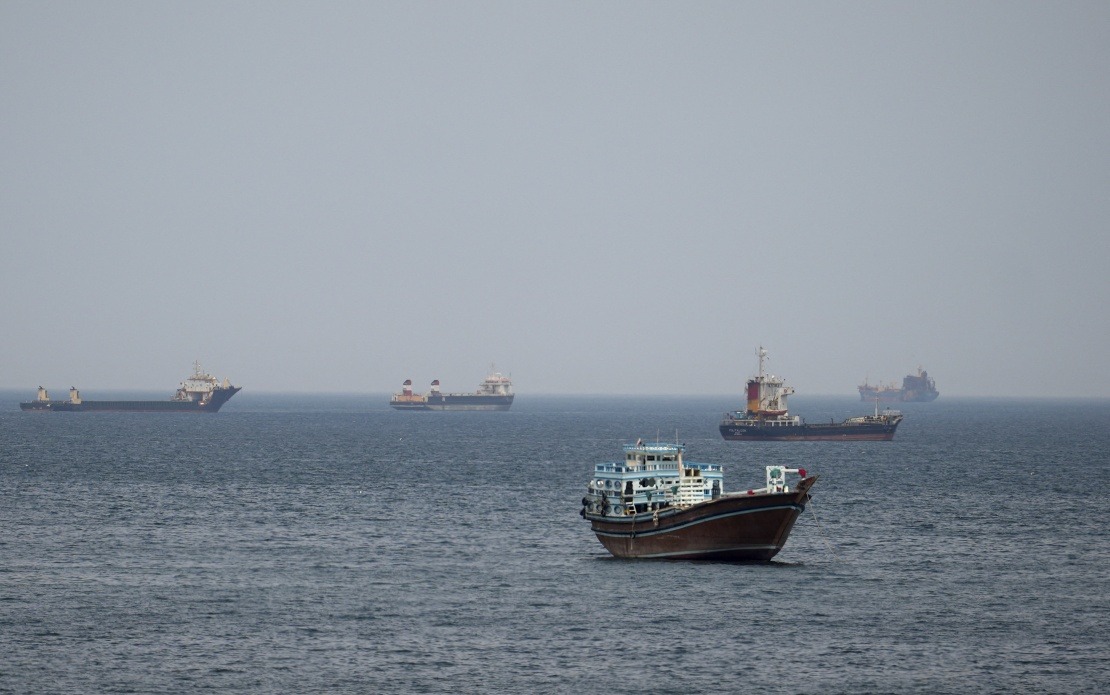
The United States military has successfully managed the transit of more than 800 commercial vessels through the Strait of Hormuz since the beginning of May, representing a critical effort to maintain global shipping stability in one of the world's most strategically important waterways. According to a statement from US Central Command on Thursday, this achievement includes the safe passage of approximately 380 million barrels of crude oil through what remains a vital international trade corridor despite persistent regional tensions.
The Strait of Hormuz serves as a chokepoint for global energy security, with roughly one-third of the world's seaborne traded crude oil passing through its waters annually. For Malaysia and other Southeast Asian economies heavily dependent on imported energy, the maintenance of reliable shipping lanes through this passage has profound implications for fuel costs, manufacturing competitiveness, and overall economic stability. Any disruption to traffic flow can trigger ripple effects across supply chains throughout the region, making US military efforts to ensure safe passage a matter of considerable regional interest.
The statement from US Central Command comes at a time when the fragile relationship between Washington and Tehran faces renewed strain. Recent days have witnessed an escalatory cycle of military exchanges between the two powers, with Iranian attacks on three commercial vessels in the Strait triggering American retaliatory strikes. This pattern of action and counter-action underscores the volatile security environment that commercial shipping must navigate, even as merchant vessels continue operations through the waterway.
On Thursday, Iran responded to a second consecutive night of US military strikes by launching its own series of attacks directed at American military infrastructure located across the region, including positions in Bahrain, Kuwait, Qatar, and Jordan. These Iranian strikes represent part of a broader pattern of tension that has characterised US-Iran relations in recent months, creating uncertainty for international commerce and shipping operators who depend on predictable, secure maritime passages.
The continuation of significant shipping traffic through the Strait despite these tensions reflects both the economic imperative of global trade and the military resources devoted to maintaining order in this critical waterway. Commercial shipping companies face difficult calculations regarding risk management, insurance costs, and routing decisions when operating in contested waters. The visible presence of US naval forces provides a measure of reassurance to merchant vessels and their insurers, though concerns about accidental escalation or collateral damage remain.
For Malaysia, which ranks among Southeast Asia's largest traders and maintains significant maritime interests, the security of the Strait of Hormuz carries direct economic weight. Malaysian shipping companies, petrochemical industries, and refineries depend on steady flows of Middle Eastern crude oil, making the reliability of this passage central to national energy security and industrial competitiveness. Disruptions to shipping through the Strait would likely increase costs for Malaysian importers and reduce profit margins for regional energy-dependent industries.
The reported facilitation of 380 million barrels of crude oil transit over approximately two and a half months indicates steady, sustained shipping volumes despite the underlying political tensions. This figure suggests that while military confrontations grab headlines, the day-to-day mechanics of international commerce continue, albeit under heightened vigilance. The scale of oil movement through the waterway underscores just how dependent the global economy remains on this single maritime passage.
The broader context of US military commitment to the region reflects Washington's assessment that maintaining freedom of navigation in the Strait serves not only American interests but those of the international community more broadly. This perspective gains particular resonance in Southeast Asia, where nations depend heavily on maritime trade and view unfettered access to international shipping lanes as essential to regional prosperity and stability. The US military presence in the Strait can therefore be understood as providing a public good that extends far beyond bilateral US-Iran relations.
However, the escalating military exchanges between the US and Iran raise questions about the sustainability of current arrangements. Each cycle of attack and counter-attack increases risks of miscalculation or accidental harm to civilian shipping, potentially triggering insurance premium increases and encouraging shipping companies to seek alternative routes. Such developments would inflate logistics costs throughout Southeast Asia and beyond, ultimately dampening economic growth across the region.
The challenge facing the international community, including Southeast Asian nations, involves supporting stability in the Strait while avoiding entanglement in US-Iran disputes. Malaysia and neighbouring countries maintain commercial relationships with both Iran and the United States, creating diplomatic complexity. Supporting freedom of navigation serves regional interests, yet openly endorsing one side in regional disputes risks alienating trading partners and complicating regional diplomatic relationships.
Looking forward, the sustainability of current shipping patterns through the Strait depends on whether the US-Iran confrontation can be managed within bounds that do not fundamentally disrupt maritime traffic. Military escalation could force shipping operators to seek alternative routes around the Cape of Good Hope, adding weeks to transit times and significantly raising transportation costs. Such developments would have profound consequences for Southeast Asian economies dependent on timely, cost-effective energy imports and positioned within just-in-time global supply chains.
The reported success in facilitating over 800 vessel transits demonstrates that despite tensions, the international maritime system continues functioning. Yet this stability should not be taken for granted. Maintaining secure shipping lanes through the Strait of Hormuz remains a central concern for regional economic stability and prosperity, making the outcome of US-Iran tensions a matter of genuine significance for Malaysian policymakers and business leaders alike.

