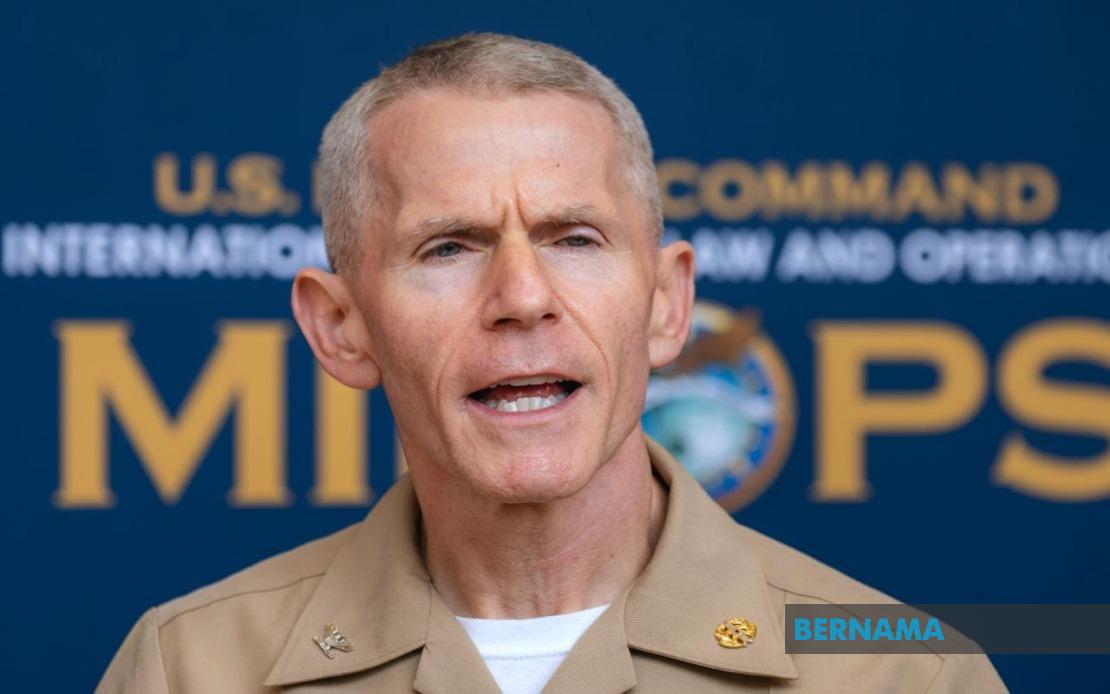
The United States Pacific Command has reaffirmed its intention to sustain an active military presence throughout the South China Sea, framing this deployment as integral to preserving broader Indo-Pacific security while strengthening relationships with regional nations. Navy Captain Dustin Wallace, serving as USPACOM's Staff Judge Advocate, articulated this position during remarks made in Kuala Lumpur on Monday, emphasising that the command views the waterway as strategically vital to its operational mandate across the wider region.
Wallace outlined the command's core strategic objective: deterring military aggression and preventing destabilising activities that could undermine regional equilibrium. The South China Sea, through which trillions of dollars in global trade flows annually and which sits atop significant energy reserves, represents a critical flashpoint where competing territorial claims and geopolitical interests intersect. USPACOM's stated focus on maintaining stability reflects American strategic interests in ensuring open access to sea lanes and preventing any single power from achieving hegemonic control over these vital waterways.
The command's approach emphasises adherence to established international legal frameworks, particularly the principles of freedom of navigation and freedom of commerce enshrined in the United Nations Convention on the Law of the Sea. Wallace stressed that these principles form the bedrock of the US-regional partner relationship, protecting the sovereignty and maritime rights of all nations regardless of size or military capability. This emphasis on rules-based order directly addresses concerns among smaller Southeast Asian nations regarding unilateral actions that might alter existing maritime boundaries or restrict access to traditional fishing grounds and resource zones.
A notable dimension of USPACOM's strategy involves positioning ASEAN as fundamental to achieving regional peace architecture. Rather than imposing a uniform approach, Wallace indicated that the command recognises ASEAN members pursue distinct strategic interests shaped by their individual geographies, economies, and security concerns. Vietnam's focus differs from Indonesia's, which differs from the Philippines' position, reflecting the bloc's internal diversity on South China Sea issues. By pledging to customise engagement with each nation according to their sovereign priorities, USPACOM signals flexibility in partnership arrangements while maintaining overall strategic consistency.
This differentiated approach proves particularly significant for Malaysia, which has territorial disputes in the South China Sea but maintains careful diplomatic balance between engaging China economically and cooperating with Western security partners. The US commitment to respecting individual nations' sovereign interests provides room for Malaysian policymakers to navigate between these competing pressures without being forced into exclusive alignment. Similarly, other ASEAN members can pursue security arrangements with Washington while managing their complex relationships with Beijing.
Wallace's statement on ASEAN centrality represents an important acknowledgment of the bloc's role as the diplomatic hub for regional disputes. The Association of Southeast Asian Nations has invested considerable effort in establishing dialogue mechanisms, negotiating codes of conduct, and maintaining inclusive forums where all claimant states participate. By affirming strong support for ASEAN centrality, USPACOM aligns with regional preferences for multilateral problem-solving rather than bilateral pressure tactics that might escalate tensions.
The timing of these remarks coincides with the 37th International Military Law and Operations Conference, a significant gathering bringing together over 300 defence officials, military lawyers, policymakers and academics from more than 30 nations. Themed "From the Seabed to Space: Advancing Security, Freedom, and Prosperity for All Across the Indo-Pacific", this conference reflects how security concerns in the region have expanded beyond traditional maritime issues to encompass space capabilities, cyber operations, and underwater infrastructure. The inclusive nature of the gathering underscores the consensus that regional stability benefits all parties and requires sustained dialogue mechanisms.
For Malaysia, which co-hosts the conference alongside USPACOM and the Defence Ministry, the event provides valuable exposure internationally while affirming the country's role as a responsible maritime stakeholder. The conference enables Malaysian military and policy professionals to engage directly with leading security thinkers and build networks that enhance the nation's diplomatic capacity. This positions Malaysia as a bridge nation capable of facilitating understanding between regional partners and extra-regional powers.
The emphasis on international law and rule-based systems carries particular weight given ongoing concerns about unilateral actions in disputed areas. Recent incidents involving coast guard vessels, fishing operations, and military activities have occasionally tested the boundaries of acceptable behaviour in the South China Sea. A commitment to legal frameworks and peaceful dispute resolution mechanisms offers a pathway for managing competition without escalating into armed confrontation. This approach appeals to nations like Malaysia that lack the military capacity to defend their claims through force but possess legitimate legal standing under international maritime law.
UPACOM's framing of its mission as supportive rather than confrontational attempts to distinguish American engagement from narratives portraying US involvement as provocative or destabilising. By emphasising partnership, respect for sovereignty, and adherence to international norms, Washington seeks to position itself as a stabilising force concerned with maintaining the status quo ante rather than advancing new territorial claims or spheres of influence. This messaging proves crucial for maintaining legitimacy among regional audiences, particularly in nations with substantial business relationships with China.
The broader strategic context involves growing awareness that the South China Sea's future will be determined not through military dominance but through sustained commitment to inclusive dialogue, respect for international law, and economic interdependence. USPACOM's pledges reflect recognition that military presence alone cannot resolve underlying disputes; instead, legal frameworks, economic cooperation, and diplomatic engagement must accompany security arrangements. For Southeast Asian nations navigating these complex dynamics, this approach offers scope for pursuing distinct national interests while contributing to collective regional stability.
Moving forward, the effectiveness of USPACOM's approach will depend on consistent implementation and genuine respect for ASEAN's centrality in regional architecture. Malaysia and other Southeast Asian states will closely observe whether American commitments translate into sustained engagement and whether the command truly customises partnerships according to individual nations' priorities rather than imposing uniform Cold War-style alliance demands. The conference proceedings and subsequent diplomatic initiatives will provide important indicators of whether the framework outlined by USPACOM can deliver the promised balance between deterrence and dialogue.

