The United States State Department has taken formal action to support a proposed peacekeeping mechanism for Gaza, formally notifying Congress on July 30 of its intention to fund the International Stabilisation Force, or ISF. The move represents Washington's commitment to what senior American officials describe as a historic diplomatic framework aimed at resolving the long-running Israeli-Palestinian conflict. State Department spokespersons characterised the funding notification as preliminary in nature, indicating that further financial commitments may follow as implementation progresses, though officials have declined to disclose specific amounts at this stage.
The ISF proposal sits at the heart of President Trump's 21-point Middle East peace plan, which envisions a phased Israeli military withdrawal from Gaza concurrent with the disarmament of Hamas and other armed organisations operating in the territory. According to the administration's framework, a reconstituted Palestinian police force would work alongside international stabilisation personnel to maintain security and facilitate reconstruction efforts. Trump announced on July 31 that the Board of Peace, an international mediation body established to oversee the initiative, had secured Hamas's agreement to this disarmament arrangement, framing the development as a significant diplomatic breakthrough after months of negotiations.
However, the plan has encountered substantial obstacles from an unexpected quarter. Israeli Prime Minister Benjamin Netanyahu has publicly rejected key elements of the proposal, most notably the requirement for Israeli forces to withdraw from Gaza before Hamas has been fully neutralised according to Israeli security assessments. Netanyahu informed his Cabinet this month that Israeli military operations will continue indefinitely until he is satisfied that Hamas has been genuinely and comprehensively disarmed. This position directly contradicts the sequencing outlined in Trump's framework, creating tension between Washington and Jerusalem at a critical juncture in the peace process.
The disconnect between American expectations and Israeli security concerns became evident during a recent high-level visit to the region. Jared Kushner, a senior White House advisor and central figure in Trump's diplomatic efforts, travelled to Egypt and Israel to meet with Hamas officials and Netanyahu respectively, accompanied by Board of Peace envoy Nikolay Mladenov. According to multiple media accounts of these meetings, disagreements emerged specifically over Israel's continued military operations in Gaza. Kushner reportedly objected to ongoing Israeli strikes in the territory, while Netanyahu remained adamant that such operations must continue unimpeded to achieve Israel's stated security objectives.
The fragility of the ceasefire arrangement negotiated under Trump's plan is evident from casualty figures recorded since its implementation on October 10, 2025. Palestinian health authorities in Gaza have documented 1,283 deaths and 4,248 injuries resulting from what they characterise as Israeli violations of the ceasefire terms. These numbers underscore the persistent violence that has plagued Gaza despite the formal agreement, highlighting the gap between diplomatic frameworks and ground-level realities in the conflict zone.
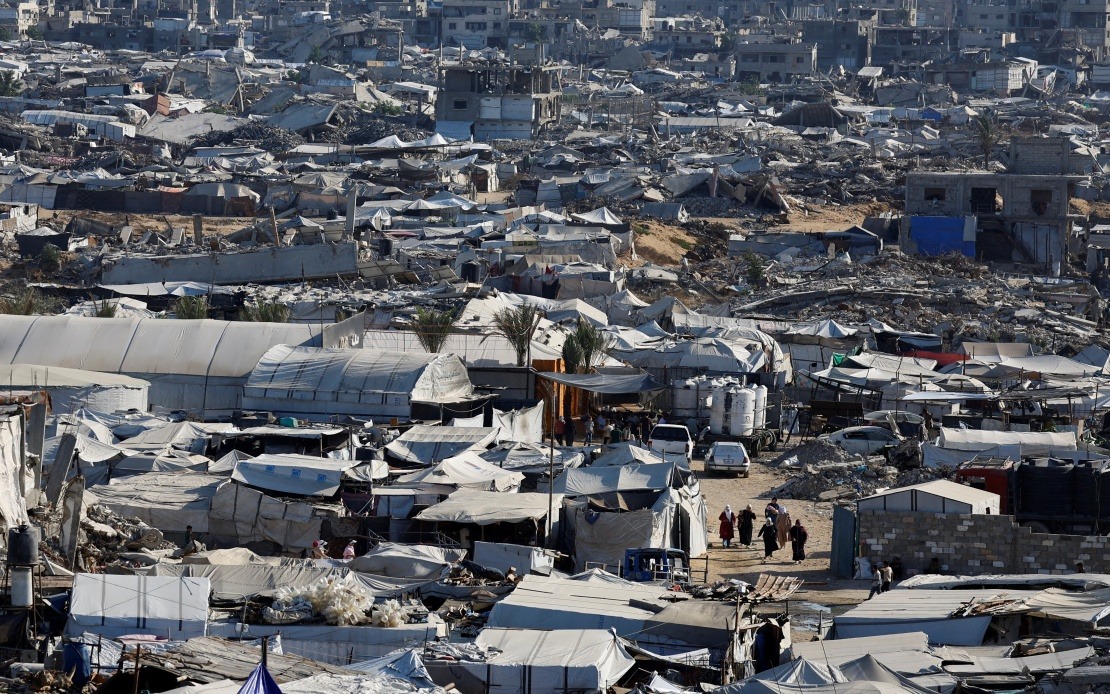
The scale of destruction and human suffering that preceded this peace initiative cannot be overlooked when assessing the challenges ahead. Since October 8, 2023, when Israel launched comprehensive military operations in response to a major Hamas attack, Gaza has endured an extended conflict that has claimed more than 73,000 Palestinian lives and injured over 174,000. The territory's physical infrastructure has been devastated, with approximately ninety percent of buildings and essential services damaged or destroyed. This context of immense humanitarian need and traumatic loss shapes the environment in which peacekeeping and stabilisation efforts must operate.
Despite these challenges, different parties maintain divergent assessments of the peace plan's viability. Hamas has publicly stated its continued commitment to the roadmap agreed through Board of Peace mediation, suggesting that Palestinian factions remain engaged with the diplomatic process despite the security situation on the ground. The Trump administration continues to characterise progress as steady, with State Department spokesman Tommy Pigott emphasising that a broad international coalition has been assembled through the Board of Peace structure and pointing to the release of hostages as evidence of diplomatic momentum.
For Malaysian and Southeast Asian observers, this diplomatic initiative carries broader significance for regional stability and international conflict resolution mechanisms. The involvement of international stabilisation forces in Middle Eastern conflicts has precedent and carries lessons relevant to peacekeeping operations worldwide. The apparent gap between diplomatic agreements and their implementation on the ground reflects persistent challenges in conflict resolution globally, particularly when parties hold fundamentally different security assessments and timelines for implementation.
The US decision to formally fund the ISF component signals sustained American commitment to conflict resolution through multilateral mechanisms, even as implementation faces practical and political obstacles. The funding notification, while described as preliminary, represents tangible American investment in the peace framework and signals to international partners that Washington expects the Board of Peace structure to function as a genuine mediation and implementation body. Whether subsequent funding tranches materialise will depend substantially on whether Israeli and Palestinian factions move toward greater alignment on security timelines and disarmament procedures.

