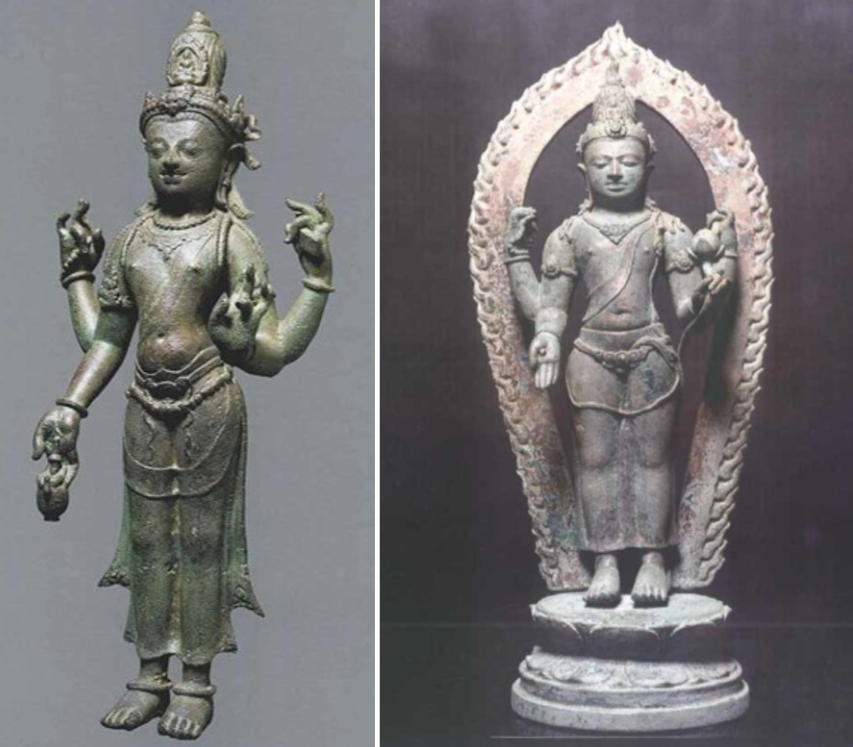
Indonesia has reclaimed two precious eighth-century bronze statues that vanished from its archaeological heritage decades ago, with the United States formally returning the sculptures during a ceremony at the Indonesian Consulate in New York last week. The twin Avalokiteshvara figures, representing the compassionate bodhisattva revered across Buddhist traditions, represent a significant recovery in the ongoing international battle against the plunder of Southeast Asia's cultural treasures.
These statues entered the illicit art market following their removal from Indonesian archaeological sites, subsequently passing through the hands of Douglas Latchford, a British antiquities dealer whose Bangkok-based operation became notorious for trafficking looted artefacts across continents. Between 2003 and 2007, Latchford sold the Indonesian bronzes along with numerous other Southeast Asian antiquities to an American collector, deliberately obscuring their illicit origins by misrepresenting their provenance and concealing critical details about their trafficking history.
The recovery of these pieces traces back to a sprawling criminal investigation launched by the US Attorney's Office for the Southern District of New York into Latchford's operations. In 2019, prosecutors indicted Latchford for orchestrating what they characterised as a decades-long scheme to systematically traffic and commercialise looted Cambodian and other Southeast Asian antiquities among wealthy international buyers and prestigious museums. Though Latchford died in 2020 before facing trial, investigations into his network continued unabated, eventually yielding substantial results across multiple jurisdictions.
The breakthrough came in 2021 when an American collector voluntarily surrendered 34 Cambodian and Southeast Asian antiquities that had been acquired from Latchford's stockpile. Among those surrendered pieces were the two Indonesian bronze Avalokiteshvara sculptures, which then entered a formal repatriation process overseen by US authorities. US Attorney Jay Clayton, speaking at the ceremonial handover, emphasised the Department of Justice's commitment to dismantling antiquities trafficking networks and preventing the commercialisation of culturally significant stolen objects through voluntary cooperation and continued law enforcement collaboration.
Latchford's career trajectory illuminates how individual actors within the art world can facilitate large-scale cultural plunder. Having become a Thai citizen in the 1960s and spent most of his professional life based in Thailand, Latchford cultivated a reputation as one of the globe's foremost specialists in Khmer art and Southeast Asian antiquities. This ostensible expertise and market position enabled him to operate for decades with minimal scrutiny, acquiring looted temple sculptures and archaeological artefacts that he then funnelled to collectors and museums worldwide, profiting handsomely from stolen heritage.
Following Latchford's death, his daughter agreed to surrender his collection, valued at over US$50 million, to Cambodia in acknowledgment of the collection's illicit provenance. This agreement triggered a broader unravelling of Latchford's network, as museums and private collectors across the United States, Europe, and Australia began voluntarily repatriating Khmer artefacts demonstrably linked to his trafficking operations. The cascade of returns underscores how criminal prosecution and reputational pressure can incentivise institutional compliance with repatriation claims even after a trafficker's death.
The Indonesian repatriation represents only the most recent in a series of successful US-led recoveries of looted Southeast Asian cultural property. In 2024, American authorities returned three Indonesian artefacts valued at approximately Rp6.5 billion to Jakarta, including a Majapahit-period stone relief, a seated bronze Buddha figure, and a standing bronze representation of Vishnu. That recovery emerged from investigations into an entirely separate trafficking network centred on Indian-American dealer Subhash Kapoor and American antiquities dealer Nancy Wiener, who allegedly operated the Manhattan-based Art of the Past gallery as a front for commercialising stolen objects.
The Kapoor investigation has proven extraordinarily productive for recovery efforts. Between 2011 and 2023, investigators from the Manhattan District Attorney's Office and the US Department of Homeland Security recovered over 2,500 antiquities allegedly trafficked through Kapoor's network, with a combined estimated value surpassing US$143 million. That single investigation yielded 27 Cambodian artefacts alone, demonstrating the sheer scale at which organised trafficking networks operate and the massive financial incentives driving cultural heritage theft across the region.
These coordinated repatriations reflect a significant institutional shift in how American law enforcement and the art world approach looted antiquities. Once treated as legitimate acquisitions if purchased in good faith, stolen artefacts increasingly face legal scrutiny and voluntary surrender. The cooperation of American collectors and museums in relinquishing disputed pieces signals that reputational risks and moral pressure have begun offsetting the financial and prestige benefits of retaining questionable holdings. However, experts caution that millions of looted objects likely remain undocumented in private collections and institutional storage facilities globally.
For Indonesia specifically, the recovery of these Buddhist sculptures carries both symbolic and practical significance. The bronze Avalokiteshvara figures represent sophisticated metallurgical techniques and aesthetic traditions that flourished during the classical period of Indonesian Hindu-Buddhist kingdoms. Their absence from Indonesian museums and archaeological contexts has impoverished scholarly understanding of the archipelago's artistic development and deprived local communities of tangible connections to their civilisational heritage. Repatriation thus serves not merely as restitution but as restoration of Indonesia's capacity to narrate and study its own cultural history.
The broader pattern of these recoveries suggests that sustained international cooperation, particularly between Southeast Asian governments and US law enforcement, can gradually degrade trafficking networks and recover stolen property at scale. Cambodia's proactive engagement with US prosecutors and museums, combined with Indonesia's diplomatic efforts to document and recover looted items, has proven instrumental in achieving results. As more artefacts surface through investigations and voluntary surrenders, Southeast Asian nations face the simultaneous challenge of building adequate conservation and curatorial infrastructure to preserve recovered pieces and preventing their re-theft.

