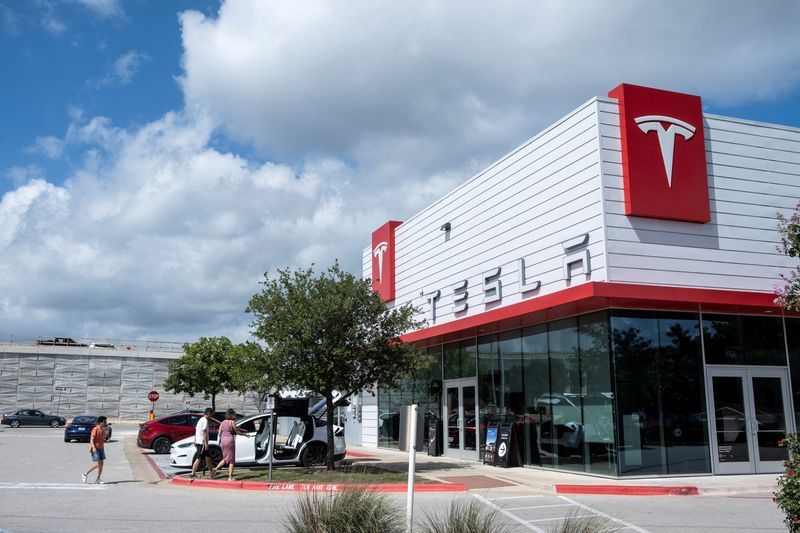
The National Transportation Safety Board announced it would examine a high-speed Tesla Model 3 collision in Katy, Texas that claimed the life of Martha Avila, a 76-year-old resident, after the vehicle struck her home last week. The accident marks another addition to a growing catalogue of Tesla-related incidents now under official scrutiny, intensifying pressure on the electric vehicle manufacturer over the safety implications of its autonomous driving technologies.
According to accounts provided to law enforcement, driver Michael Butler had activated the vehicle's Autopilot system before the Model 3 careened through the front wall of Avila's residence on June 19. The collision left Avila fatally injured, while a second resident, Justin Barbour, sustained injuries in the incident. Emergency responders transported Avila to a nearby medical facility, where she subsequently died from her injuries.
The tragedy has already triggered legal action from Avila's family. Barbour, along with his wife Jennifer Barbour, filed a complaint in Harris County state court seeking compensation exceeding US$1 million, plus additional punitive damages. The lawsuit names both Tesla and the vehicle's operator as defendants, contending that the company demonstrated gross negligence and failed to adequately warn consumers about defects within its Autopilot and Full Self-Driving capabilities. The complaint specifically characterises Tesla's conduct as representing a "reckless disregard for a substantial risk of severe bodily injury."
This incident arrives amid an expanding pattern of Tesla-related accidents under federal investigation. Since 2016, the National Highway Traffic Safety Administration has initiated approximately 50 dedicated investigations into Tesla collisions suspected of involving the company's advanced driver assistance systems, with roughly two dozen fatalities reported across these cases. The scale of these investigations underscores the regulatory community's growing apprehension regarding the real-world performance and safety protocols associated with Tesla's autonomous features.
Tesla's leadership has moved swiftly to challenge the narrative surrounding the incident. Elon Musk, the world's wealthiest individual, posted on the social media platform X on Monday evening, asserting that "FSD drives slowly through neighborhood streets and this was a high speed crash," suggesting the vehicle would not have achieved such velocity under its autonomous systems. Ashok Elluswamy, Tesla's vice president of AI software, elaborated further through a subsequent post, claiming the driver had manually overridden the self-driving capability by depressing the accelerator pedal to its maximum extent within a residential zone.
However, these explanations come at a time when regulatory confidence in Tesla's systems appears to be deteriorating. In March, NHTSA significantly expanded its investigation into Full Self-Driving across approximately 3.2 million Tesla vehicles, citing particular concern that the system may fail to adequately detect hazards or alert drivers during conditions of reduced visibility. This wider probe reflects accumulated evidence suggesting potential gaps in the technology's perception and warning mechanisms under challenging environmental circumstances.
Tesla's compliance record has already necessitated substantial remedial actions. In 2023, the manufacturer executed a recall affecting nearly two million vehicles—representing virtually all of its electric cars then operating across American roads—to enhance driver attentiveness protocols when Autopilot remains engaged. The company has consistently maintained that both Autopilot and Full Self-Driving demand "fully attentive" operators who maintain their hands on the steering wheel at all times.
The distinction between these two systems, according to Tesla's own categorisation, centres on their operational scope. Autopilot permits a vehicle to autonomously steer, adjust speed, and brake while remaining within established lane markings. Full Self-Driving extends these capabilities to include recognition of traffic control devices and autonomous lane-changing manoeuvres. Yet despite these technical delineations, both systems remain classified as driver assistance technologies rather than fully autonomous systems, placing continued responsibility on the human operator.
As of the reporting timeframe, neither Tesla nor Elon Musk had responded to formal inquiries regarding the Katy incident. The company's silence stands in contrast to Musk's social media defence of the technology. Butler, the driver involved in the collision, remains listed as a defendant in the Barbours' action, though his legal representation status remained unclear. Attempts to establish communication with Butler were unsuccessful at the time of publication.
For Malaysian and Southeast Asian automotive consumers, this sequence of events carries important implications. As Tesla expands its market presence across the region and as other manufacturers increasingly integrate similar driver assistance features into their offerings, the safety validation and regulatory oversight mechanisms governing these systems merit close attention. The escalating pattern of investigations and litigation in North America suggests that autonomous and semi-autonomous technologies require substantially more rigorous safety frameworks before achieving wider deployment in densely populated urban and residential environments throughout the Asia-Pacific region.