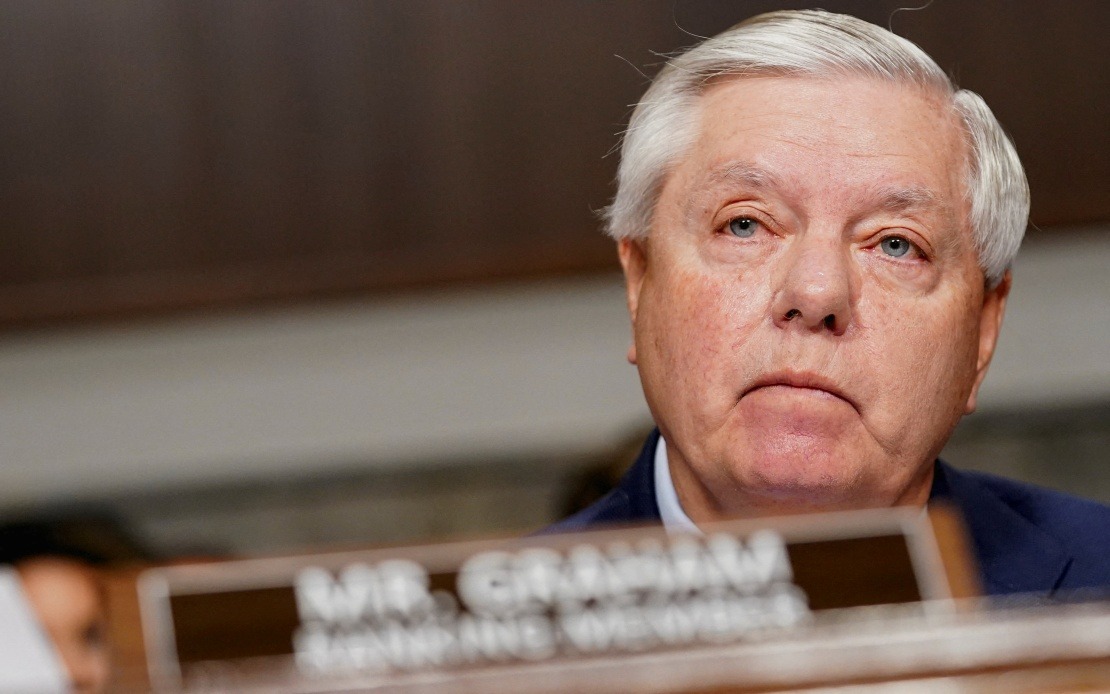
Prominent United States Senator Lindsey Graham of South Carolina has passed away at the age of 71, his office confirmed on Sunday, ending an influential career that spanned more than two decades in the upper chamber of Congress. The Republican lawmaker succumbed to what his office described as a sudden and brief illness on Saturday evening, July 11. The announcement came as a shock to political circles in Washington, where Graham maintained significant influence across multiple legislative committees and maintained close ties to President Donald Trump.
Graham's office released a brief statement acknowledging the loss and requesting privacy for his family during the period of mourning. His family also requested that well-wishers remember them in their prayers as they navigate this unexpected tragedy. The politician had been actively engaged in his legislative duties and international diplomacy work right up until his final days, having only recently returned from Ukraine where he conducted official meetings with government leaders.
A native of South Carolina, Graham had represented the state in the Senate since his initial election in 2002. He successfully retained his seat through subsequent election cycles in 2008, 2014, and 2020, each time securing renewal of his six-year term. His consistent reelection indicated strong political support among his state's voters and demonstrated his ability to maintain political relevance across shifting national political landscapes. He had been actively campaigning and preparing to seek another six-year term in the November election cycle.
Within the Republican Party hierarchy, Graham held the position of chair of the Senate Budget Committee, placing him in a strategically important role overseeing federal spending decisions and fiscal policy. This position gave him considerable leverage in shaping legislative priorities and budget allocations across government agencies. His committee responsibilities made him a central figure in many of the Senate's most consequential debates regarding taxation, spending, and deficit management.
Graham's relationship with President Trump was particularly noteworthy and well-documented. The senator became one of Trump's closest and most reliable allies within Congress, frequently defending the former president's positions and policies. This alignment shaped much of Graham's recent legislative record and public posture, making him a frequent presence in discussions about the Trump administration's agenda and legislative priorities. His loyalty to the former president often placed him at the center of partisan debates and policy discussions.
Just days before his death, Graham had undertaken a diplomatic mission to Kyiv, Ukraine's capital, where he met with Ukrainian President Volodymyr Zelenskyy on Friday. This trip underscored his ongoing engagement with international affairs and his role in shaping American foreign policy, particularly regarding support for Ukraine amid ongoing conflict with Russia. The timing of this visit, combined with his apparent good health during the meetings, made his sudden passing even more unexpected for those who had recently interacted with him.
Graham's death removes a significant voice from the Republican Party at a time when the political landscape continues to evolve. His influence extended beyond his committee work into broader party strategy and messaging. Many political observers had anticipated his active participation in the upcoming election cycle and his continued prominence in Senate deliberations. His long tenure had made him a familiar figure across multiple congressional sessions and presidencies, allowing him to develop relationships and institutional knowledge that shaped legislative outcomes.
The loss affects not only his South Carolina constituency but also the broader political ecosystem in Washington where his voice carried considerable weight. His South Carolina seat will require attention from state officials regarding succession procedures. The timing of his death, occurring before the November elections, raises questions about how his party will manage the transition and whether any special election process may be required to fill the vacancy.
Graham's career had been marked by his active engagement in both domestic and foreign policy matters. Beyond his Budget Committee role, he maintained involvement in security and defense discussions, reflecting his long-standing interest in military and intelligence matters. His participation in debates over government spending, military appropriations, and strategic priorities had established him as a figure whose perspective was sought across multiple policy domains. His sudden passing eliminates a voice that many Republicans relied upon for strategic guidance and legislative leadership during critical moments of political decision-making.

