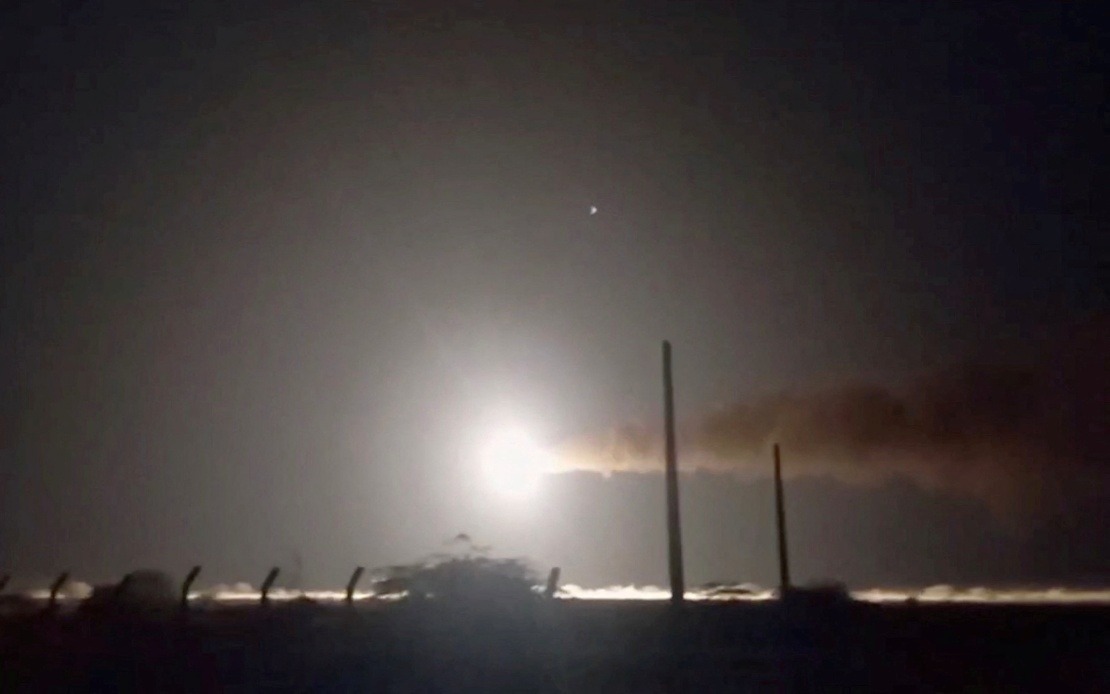
The United States military confirmed on Saturday that it had sustained significant casualties during Iranian ballistic missile and drone strikes targeting a military installation in Jordan the previous day. The attacks, which occurred on July 17, resulted in the deaths of two service members and left another unaccounted for, according to a statement released by the US Central Command. The incident marks an escalation in regional tensions and underscores the persistent security challenges facing American military operations across the Middle East.
The Central Command outlined the sequence of events during the coordinated assault, describing how Iranian forces deployed both ballistic missiles and unmanned aerial vehicles against the facility where American personnel and allied forces were stationed. The defensive operations mounted by CENTCOM and its partner forces proved challenging against the multi-vector attack, which employed advanced weaponry. The command's acknowledgment of the losses represents a significant moment in the broader context of Iran-US military tensions that have periodically flared across the region over recent years.
Beyond the two fatalities, the military operation resulted in injuries affecting several other personnel. Four service members were airlifted to medical facilities within Jordan for treatment, though all of these individuals were subsequently discharged from hospital care. Additionally, several other personnel sustained minor injuries during the encounter but remained capable of returning to their operational duties following medical evaluation. This distribution of casualties suggests that while the Iranian attack inflicted damage, American defensive measures and the dispersal of personnel helped mitigate what could have been significantly greater losses.
The missing service member represents an ongoing concern for military leadership and likely will trigger extensive search and recovery efforts. Such situations in active conflict zones present complex operational and diplomatic challenges, requiring coordination with local authorities and maintaining security protocols while conducting search operations. The presence of a missing individual also underscores the inherent dangers facing military personnel deployed to regional hotspots where hostile actions can occur with limited warning.
CENTCOM stated that it would withhold further details, including the identities of the fallen personnel, until family members had been notified for a minimum of twenty-four hours. This protocol reflects standard military practice and respects the privacy and dignity of grieving families during initial notification phases. The decision to delay public identification also allows military command structures time to ensure that all next-of-kin communications have been completed before broader disclosure, preventing families from learning of losses through media channels rather than official military contacts.
For Malaysia and Southeast Asian nations, the incident carries several implications worth considering. The region has long maintained careful diplomatic balancing between various powers, including the United States and Iran. Any escalation in direct military confrontation between these parties increases volatility in global energy markets, which directly affects pricing and supply chains throughout Asia. Malaysian businesses with exposure to Middle Eastern markets or reliant on stable petroleum pricing face potential disruption from such regional instability.
The attack also demonstrates the growing sophistication of Iranian military capabilities, particularly regarding ballistic missile and drone technology. This development has prompted ongoing assessment by regional security analysts and military planners across Asia who monitor evolving threats. The effectiveness of American defensive systems versus Iranian ordnance provides valuable intelligence for military establishments evaluating their own air defence requirements and procurement strategies.
Furthermore, the incident illustrates the persistent demands placed on American military resources across multiple theaters simultaneously. With personnel engaged in Jordan, alongside ongoing commitments elsewhere in the Middle East and across the Indo-Pacific, the United States military faces continuous operational tempo that shapes its strategic posture globally. This reality affects Washington's bandwidth for addressing other regional concerns that matter to Southeast Asian partners.
The broader context of these attacks involves longstanding tensions stemming from various incidents and policy decisions across the past several years. Iranian leadership has repeatedly signalled its willingness to respond to actions it perceives as threats or provocations, and the missile and drone attack appears consistent with this pattern. Understanding these motivations helps regional observers comprehend the dynamics driving Middle Eastern security developments that can have far-reaching consequences.
Looking forward, the loss of American personnel in direct Iranian action may influence Pentagon planning and resource allocation for Middle Eastern operations. It could accelerate procurement of advanced air defence systems or prompt repositioning of forces to reduce vulnerability to similar attacks. These adjustments ripple through international defence markets and alliances, affecting strategic calculations across Asia.
The incident also reinforces why Southeast Asian nations benefit from maintaining diverse diplomatic relationships and avoiding excessive dependence on any single great power. The predictable cycle of escalation and retaliation in the Middle East demonstrates how regional conflicts can create broader disruptions affecting commerce, energy security, and geopolitical stability far beyond the immediate zone of conflict. Malaysian policymakers and business leaders should continue monitoring developments with attention to potential impacts on maritime trade routes, regional stability, and investment climates.

