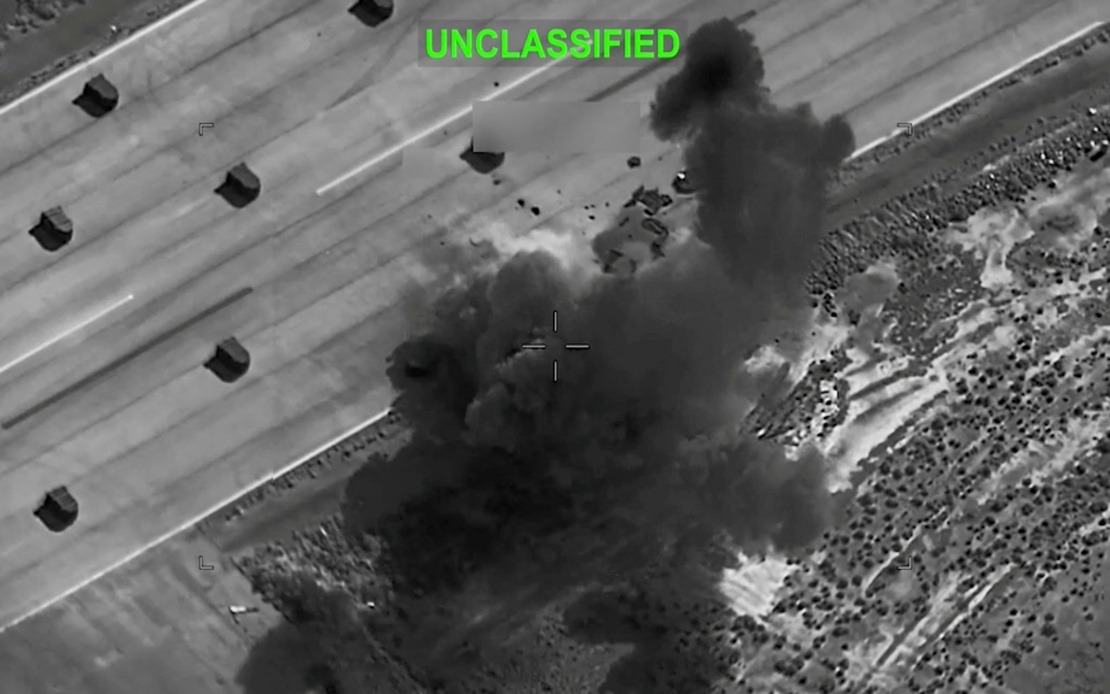
The Iranian Ministry of Health reported a deadly escalation in regional hostilities on Thursday, announcing that American military strikes conducted over two consecutive days have claimed at least 14 lives and left 78 people wounded. The attacks, which targeted five separate provinces within Iranian territory, occurred on July 8 and 9, 2026, according to Health Ministry spokesman Hossein Kermanpour, who disclosed the casualty figures through a statement posted on the social media platform X.
The timing of these strikes carries particular significance within the broader regional conflict context. According to Tehran's official account, the American military operations proceeded despite an active ceasefire arrangement that was meant to provide temporary relief from active hostilities. This contradiction between the ceasefire status and the occurrence of military strikes raises critical questions about the stability of any agreed-upon arrangements and the commitment of parties involved to honour their terms.
The geographic scope of the reported attacks demonstrates the scale and coordination of the military operation. Rather than striking a single location or installation, the American forces distributed their firepower across five distinct provinces within Iran. Such dispersed targeting typically indicates either multiple objectives of strategic interest or a deliberate effort to maximize pressure on Iranian civilian and military infrastructure across a broad geographic area. The selection of multiple provinces suggests this was not a limited or contained operation but rather a significant escalation in military activity.
Casualty statistics offer insight into the severity of the strikes. The 14 confirmed deaths represent a substantial human cost, while the 78 injured indicates that the strikes affected a wide population beyond those killed. Of particular note is that 47 of the wounded individuals remained hospitalized at the time of the Health Ministry's statement, suggesting that many suffered serious injuries requiring ongoing medical care. The remaining injured had been discharged following treatment, indicating a mixed severity profile among those affected by the strikes.
For Malaysian observers and regional analysts, these developments underscore the volatile nature of Middle Eastern geopolitics and the fragility of de-escalation efforts. Southeast Asia maintains significant economic interests throughout the Middle East, with substantial populations and diaspora communities in the region. Any escalation that disrupts regional stability carries potential consequences for global energy markets, international trade routes, and regional security architecture that ultimately affects ASEAN nations.
The ceasefire framework itself becomes questionable following these strikes. The existence of a supposed cessation of hostilities while military operations continue raises practical questions about whether all parties share the same understanding of what the ceasefire entails, or whether some actors view the arrangement as contingent upon certain conditions. This ambiguity complicates international diplomatic efforts to establish sustainable peace mechanisms and indicates that fundamental disagreements persist regarding the terms and scope of any pause in fighting.
The Iranian Health Ministry's decision to publicly disclose these figures through social media represents part of the broader information warfare dimension of Middle Eastern conflicts. By communicating casualty numbers directly to the public, Tehran shapes the narrative around American actions and frames the strikes as violations of ceasefire commitments. This approach ensures that the narrative reaches international audiences and domestic constituencies simultaneously, reinforcing perceptions of American aggression during what Iran characterizes as a period of supposed calm.
The wounded individuals receiving ongoing hospitalization constitute a longer-term humanitarian concern. Extended hospital stays indicate trauma injuries, burn wounds, or other serious conditions that require sustained medical intervention. For Iran's healthcare system, accommodating 47 additional patients places strain on resources and infrastructure. The recovery timeline for such patients typically extends weeks or months, creating lasting impacts on affected families and communities well beyond the immediate moment of the strikes.
Regional observers note that patterns of escalation punctuating ceasefire periods have become characteristic of recent Middle Eastern conflicts. These cycles wherein temporary truces prove insufficient to produce sustained peace create psychological fatigue among civilian populations and reduce confidence in negotiated settlements. Each violation of a supposed ceasefire makes subsequent negotiating efforts more difficult and deepens mutual distrust between opposing parties, potentially locking the region into patterns of recurring violence.
The five-province targeting approach also suggests that the American military possessed detailed intelligence about targets of interest across Iranian territory. This implies a capability to conduct sustained surveillance and reconnaissance operations, and it indicates that the operation represented execution of pre-planned targeting rather than reactive strikes. The coordination required to simultaneously or sequentially strike multiple provinces requires significant logistical preparation and intelligence coordination.
International humanitarian organizations monitor such incidents closely, as the distinction between civilian and military casualties becomes crucial for determining compliance with international humanitarian law. The Iranian Health Ministry's reporting focuses on aggregate numbers without categorical breakdown, a common practice in conflict situations where clear separation of civilian and military casualties proves difficult or politically disadvantageous for the reporting authority.
Looking forward, these strikes establish a new baseline for hostilities and challenge any assumption that ceasefire arrangements provide meaningful protection for civilian populations. The incident demonstrates that competing parties maintain fundamentally different objectives and may interpret temporary truces as tactical pauses rather than genuine commitments to peaceful resolution. For international mediators and regional stakeholders, the continuation of military operations during supposed ceasefire periods indicates that negotiated settlements require far more robust verification mechanisms, clearer definitions of permissible activities, and more credible enforcement provisions.

