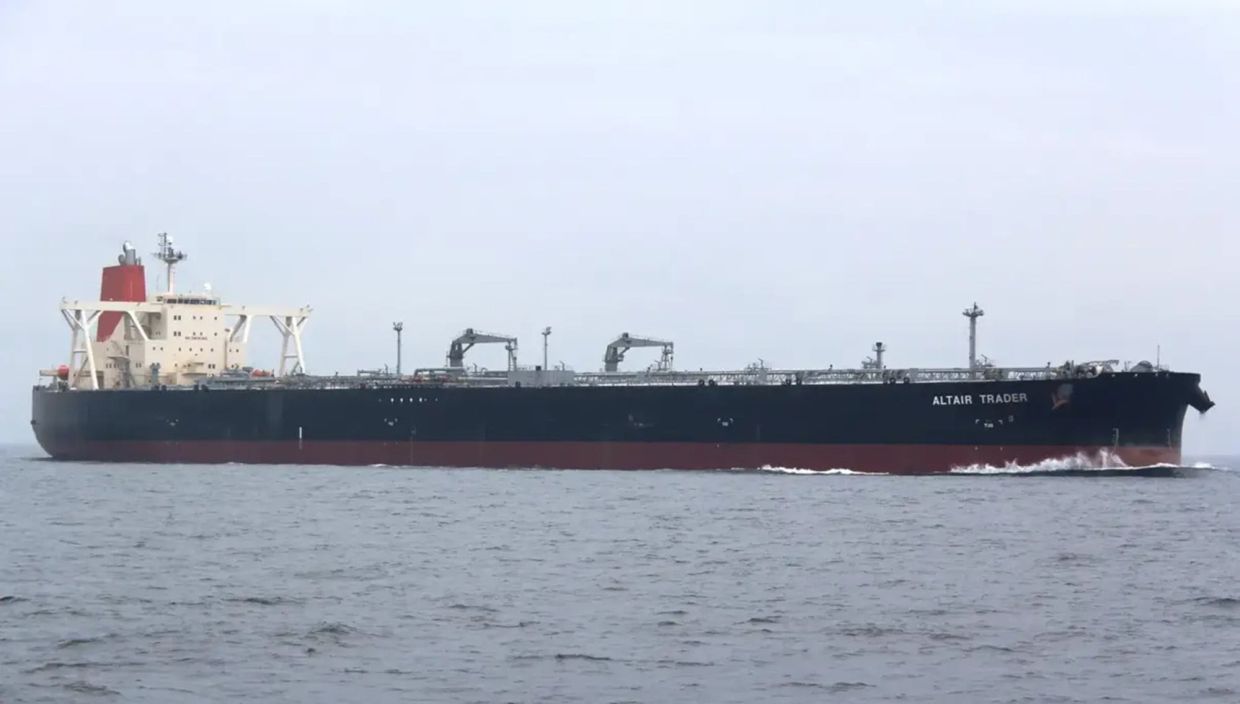
The United States has moved to impose financial penalties on eight shipping firms registered in mainland China and Hong Kong that the American authorities accuse of moving Iranian crude oil and petrochemical cargo destined for China and the United Arab Emirates. The sanctions, announced on Wednesday, represent an intensification of Washington's economic pressure on Iran's energy sector and specifically target what officials describe as Tehran's "shadow fleet"—vessels used to circumvent international sanctions by obscuring the origin and destination of oil shipments. The measure extends the Trump administration's strategy of combining economic sanctions with naval enforcement operations in the Persian Gulf and beyond.
According to the US Treasury Department, six of the eight designated vessels transported Iranian crude specifically bound for China, with some tankers having moved millions of barrels during 2026 alone. The scope of the alleged transfers underscores the scale of Beijing's oil imports from Iran and highlights the persistent vulnerability of the international shipping system to sanctions-evasion schemes. Financial penalties imposed through these designations freeze any assets held by the targeted companies within American jurisdiction and generally bar US citizens and businesses from conducting transactions with them. The action carries secondary effects as well, exposing foreign financial institutions and international companies to potential sanctions risk if they continue engaging in certain types of commerce involving the designated entities.
State Department spokesman Tommy Pigott characterised the sanctions as supporting enforcement of what Washington describes as a naval blockade of Iranian ports and coastline. This explicit linkage between economic coercion and military operations signals a coordinated approach aimed at strangling Iran's oil export revenue. Treasury Secretary Scott Bessent framed the action in terms of Iran's economic distress, noting that the country faces severe inflation and currency pressures. Bessent stated that the United States would not permit Iran to leverage international shipping infrastructure to finance what he termed the Islamic Revolutionary Guard Corps' operations, described as encompassing terrorism, regional aggression, and domestic repression.
Among the sanctioned companies is Qi Hang Ship Management Limited, a mainland China-based vessel operator controlling the Marshall Islands-flagged tanker Well Sail, which Treasury says transported hundreds of thousands of barrels of Iranian petroleum products to the UAE this year. Hong Kong-registered Confident Apex Limited operates the Mozambique-flagged Lily, identified as having moved millions of barrels of Iranian crude since 2025. The Al Salmi, owned by Hong Kong-based Billion Nexus International, allegedly delivered hundreds of thousands of barrels directly to Chinese ports from last year onwards. Additional vessels under sanctions include the Breeze V, managed by Nevada Spirit Company in Hong Kong and accused of transporting millions of barrels to China this year, and the Natsumi, controlled by Marinova Freight in Hong Kong and cited for carrying Iranian crude to Chinese refineries continuously since 2022.
The Vast Mighty Limited-operated Crystal, described by Treasury as based in both Hong Kong and the Marshall Islands, is alleged to have delivered millions of barrels to China during 2026. Two further tankers, the Nireta and Yehope, managed by Marshall Islands-registered companies, reportedly moved hundreds of thousands of barrels of Iranian crude to Chinese destinations during 2026. The concentration of these vessel operators in Hong Kong reflects the territory's historic role as a shipping and maritime finance hub, though the designations may complicate Hong Kong-based companies' international business operations and access to dollar-denominated transactions.
Beijing has rejected the American allegations with characteristic directness. Liu Pengyu, spokesman for the Chinese embassy in Washington, asserted that Sino-Iranian economic cooperation operates within fully transparent and lawful parameters deserving of international respect. The Chinese government accused Washington of abusing unilateral sanctions mechanisms to target Chinese enterprises and exercised what it characterised as illegitimate extraterritorial jurisdiction. Liu urged the United States to cease targeting Chinese companies and pledged that Beijing would "continue to do what is necessary to firmly defend the legitimate and lawful rights and interests of Chinese companies." This response reflects the broader friction between Washington and Beijing over sanctions enforcement and the extent of America's authority to regulate international commerce.
The sanctions campaign extends beyond shipping operators to Iranian insurance entities that Washington alleges operate extortion schemes targeting vessels transiting the Strait of Hormuz. The Persian Gulf Marine Insurance Company and the Hormuz Safe Marine Services Authority, the latter a digital insurance business accepting bitcoin and cryptocurrency, face designation for imposing mandatory insurance charges on commercial vessels seeking passage through one of the world's most critical energy corridors. Treasury characterises these arrangements as coercive in nature, with Iran manufacturing the very risks—such as vessel seizures—against which the insurance policies purport to protect. The authorities argue that by controlling both the threat and the insurance solution, Tehran generates revenue for the IRGC while effectively imposing a tax on global commerce.
Hormuz Safe, allegedly developed by Iran's Ministry of Economy, purportedly offers integrated maritime services including traffic management, security provisions, and emergency response capacity in addition to insurance coverage, all while channeling revenue toward the IRGC. State Department officials described these arrangements as schemes in which Iranian government entities deliberately manufacture security risks and subsequently demand payment from international shipping companies for protection against dangers created by the government itself. The insurance dimension of the sanctions represents Washington's effort to address what it views as Iran's systematic exploitation of its geographic position astride critical shipping lanes.
The broader implications for regional commerce warrant close examination. Malaysia and other Southeast Asian nations depend substantially on predictable passage through the Strait of Hormuz for energy imports and export-oriented trade. Escalating American enforcement operations and sanctions targeting Asian shipping companies create compliance complexity and potential financial exposure for regional maritime operators. Chinese shipping firms face mounting pressure from American designations, while Hong Kong-based operators may experience particular vulnerability given the territory's reliance on international financial system integration and dollar-denominated trade. The sanctions campaign reflects ongoing Washington-Beijing competition over Iran policy, with the United States deploying financial and military tools to constrain Tehran's revenue sources while Beijing defends its economic partnerships on grounds of reciprocal benefit and sovereignty.
The tanker designations also illuminate the resilience and continued functionality of Iran's shadow fleet network despite years of American sanctions and enforcement efforts. The persistence of these operations, particularly the documented transfer of millions of barrels to Chinese refineries, indicates that Tehran continues developing alternative shipping mechanisms and financial arrangements to maintain crude exports despite international restrictions. The scale of alleged transactions—multiple vessels each moving millions of barrels—suggests that Iranian oil continues reaching major Asian markets through mechanisms that Washington considers illegal but that Beijing characterises as legitimate commerce. This divergence in legal interpretations and enforcement approaches reflects fundamental disagreements between Washington and Beijing regarding the legitimacy of American unilateral sanctions and their application to third-country companies engaged in commerce with Iran.

