The United States will attempt to extend its World Cup ambitions when it meets Belgium on home soil in a knockout-stage fixture in Seattle, a contest that has grown in significance given the American side's impressive progression through the tournament's earlier rounds. The match represents a substantial test for Mauricio Pochettino's squad, which has exceeded initial projections and now harbours genuine expectations of a deep tournament run rather than merely surviving the group stage as many had predicted before competition began.
Playing at Lumen Field, the Seattle Seahawks' stadium renowned for its deafening atmosphere and tight confines that amplify crowd noise to intimidating levels, the Americans will benefit from one of the most hostile environments available in North American venues. This home advantage carries particular psychological weight in knockout football, where momentum and confidence often prove as decisive as technical quality. The roaring backdrop should provide the home side with considerable impetus as they seek to navigate a Belgian team widely considered among Europe's strongest outfits.
The trajectory of the US campaign has shifted dramatically since the tournament's commencement. Prior to the World Cup, modest ambitions dominated discourse among supporters and analysts, with qualification for the round of sixteen viewed as a respectable achievement requiring effective group-stage management. However, successive victories against Paraguay and Australia followed by an emphatic 2-0 triumph over Bosnia and Herzegovina—achieved despite being reduced to ten players for the final three-quarters of that encounter—have fundamentally altered expectations and generated genuine belief that this American generation can challenge for deeper tournament honours on American pitches.
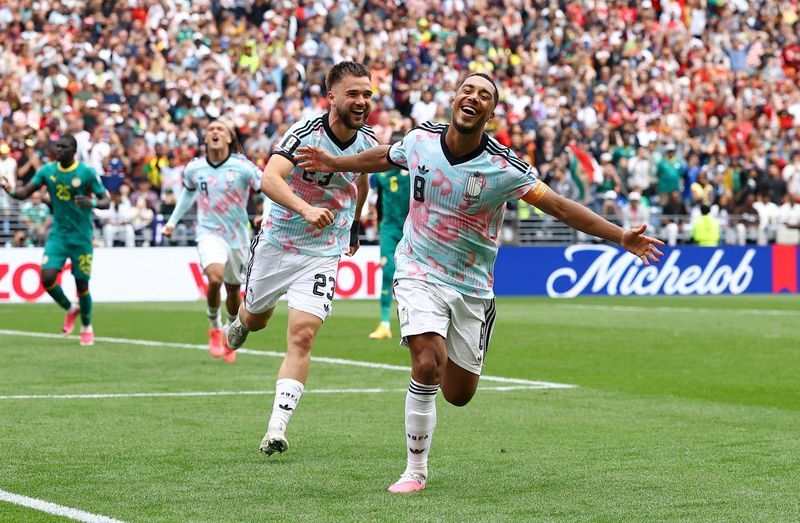
Belgium, conversely, presents a considerably more experienced but less convincing profile. The European powerhouse narrowly escaped elimination in their knockout-stage opener, requiring dramatic late heroics against Senegal to advance. The African team dominated possession and created genuine scoring opportunities throughout a contest that Belgium appeared destined to lose before two quick goals in regular time drew level, followed by a controversial penalty decision awarded through video review in extra time that allowed the Belgians to progress amid considerable controversy and recrimination from the Senegalese contingent.
For Belgium, this tournament potentially represents the final collective opportunity for what has been termed the country's 'Golden Generation', a cohort of elite players assembled over nearly a decade. Kevin De Bruyne's enduring brilliance, Romelu Lukaku's consistent goal-scoring prowess, and Thibaut Courtois' steadfast goalkeeping have defined Belgian football across three consecutive World Cups, but age and mounting fixture congestion suggest this campaign may constitute the last realistic chance for these accomplished professionals to claim the ultimate prize at international level.
The American defensive organisation, which entered the tournament as a potential vulnerability given the side's relative inexperience at this level, has evolved into a notable strength. The performance against Bosnia demonstrated a fundamental improvement in structural stability and individual positioning, with defenders communicating effectively and responding decisively to threatening situations. This progression becomes particularly relevant given Jeremy Doku's threatening potential, the Belgian winger having remained relatively subdued throughout the tournament despite his considerable talent at elite club level. Containing Doku's creativity and athleticism will occupy significant attention in American tactical planning.
The fixture carries historical resonance extending back to 2014, when Belgium eliminated the United States in a dramatic last-16 encounter in Brazil that stretched to extra time. That match remains etched in American football memory, primarily recalled for Tim Howard's extraordinary goalkeeping display—sixteen saves that established a World Cup record—and the late American resurgence that ultimately fell narrowly short. Exactly nine years later, both nations return to knockout football with substantially altered circumstances and contrasting trajectories through their respective campaigns.
The Americans face a significant setback regarding attacking resources, as Folarin Balogun, who contributed a vital goal against Bosnia before receiving a red card that resulted in suspension, will remain unavailable for this fixture. This absence creates a complex selection challenge for Pochettino, requiring careful tactical adjustment and potentially necessitating modifications to the attacking formation. The loss of an in-form striker with proven tournament credentials during knockout stages represents a considerable complication in pursuing deeper advancement.
Yet the broader narrative reflects genuine transformation in how Americans view this World Cup campaign. The tournament has captured national imagination in ways few international competitions achieve, with mainstream media attention extending well beyond traditional soccer enthusiasts. Midfielder Tyler Adams articulated the collective sentiment within the squad, emphasising that the Americans harbour aspirations to establish a meaningful legacy rather than merely participate. As Adams noted, the deeper the team progresses, the greater the cultural resonance and national engagement surrounding the competition, creating a virtuous cycle of momentum that propels previously modest ambitions toward increasingly substantial objectives as the tournament unfolds.

