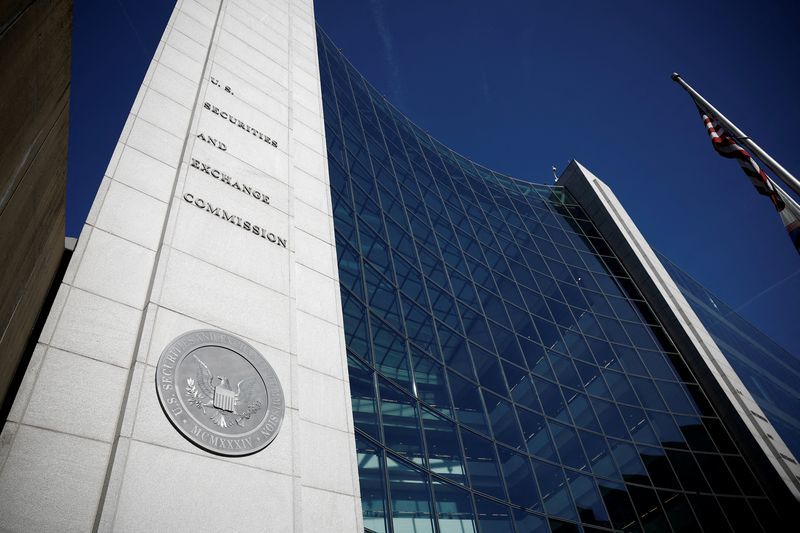
The US Securities and Exchange Commission has brought enforcement action against Jason Satsky, a former co-head of Americas power and renewable energy banking at Bank of America, for allegedly sharing material nonpublic information with an associate about a major acquisition. The regulator contends that Satsky disclosed details regarding South Jersey Industries' impending $8.1 billion buyout to Gavin Wolfe, who used the confidential information to accumulate a stake worth approximately $53 million and realised unlawful gains of $18.5 million following the public announcement of the transaction on 24 February 2022.
The relationship between the two men spans more than two decades. Wolfe currently operates Evergreen Capital, a firm managing family assets, and previously worked as a senior banker in the power and renewable energy sector at Credit Suisse before both men joined Bank of America in 2012. According to the SEC's allegations, Satsky and Wolfe engaged in multiple communications regarding the potential acquisition, with their conversations extending even to social occasions. The men and their wives attended a college basketball match between Duke and Kentucky at Madison Square Garden, where Satsky had access to luxury seating arrangements provided through his employer.
Wolfe's trading activity demonstrates the extent of the alleged misconduct. The individual purchased more than 2.2 million shares of the South Jersey Gas parent company, generating a 36 percent return on his investment once the acquisition became public knowledge. The SEC's investigation determined that this trading pattern, combined with the timing of Satsky's disclosures and the subsequent market movements, indicated unlawful insider trading had occurred. The magnitude of the profits—exceeding $18 million—underscores the significance of the information advantage that Wolfe possessed.
The regulator's enforcement action seeks comprehensive remedies against both parties. The SEC intends to recover the ill-gotten gains realised by Wolfe through the questionable trades. Additionally, the commission is pursuing civil penalties against Satsky and requesting officer-and-director bars that would prohibit both men from serving in executive roles at publicly listed companies. Such bars represent severe career consequences for individuals operating in the financial sector and signal the seriousness with which regulators view insider trading violations.
Bank of America, as the institution where Satsky held his position, was not implicated in any wrongdoing related to the alleged misconduct. The bank confirmed that Satsky terminated his employment in March 2025. Bank of America's own internal investigation and cooperation with the SEC likely contributed to the regulator's conclusion that the violation reflected individual misconduct rather than institutional failure. This distinction preserves the institution's regulatory standing while holding the individual accountable.
Both defendants have mounted vigorous denials. Satsky's legal representation, through attorney Robert Anello, issued a statement asserting that the former banker did not provide Wolfe or any third party with material nonpublic information concerning South Jersey Industries. Anello emphasised his client's confidence that evidence would demonstrate proper conduct and result in vindication. The defence strategy appears to centre on establishing that no improper disclosure occurred rather than acknowledging a disclosure that was legally justified.
Wolfe's legal team adopted a similarly combative posture. Attorney Reed Brodsky stated categorically that his client denies the allegations and intends to mount a vigorous defence. Brodsky argued that the SEC's case overlooked sworn testimony and documentary evidence demonstrating that Wolfe formulated his investment decision independently, based on his own analytical framework regarding South Jersey Industries' prospects. This "independent investment thesis" argument suggests that Wolfe would have made identical trading decisions regardless of whether Satsky disclosed confidential information, a defence strategy commonly employed in insider trading cases.
For Malaysian and Southeast Asian observers, this case illustrates the enforcement environment facing financial professionals in developed markets. The SEC's willingness to pursue lengthy investigations and bring charges against high-ranking bankers demonstrates that insider trading enforcement remains a regulatory priority in North America, even years after trades occur. The substantial financial penalties and career consequences attached to such violations contrast markedly with regulatory approaches in some Asian jurisdictions, where insider trading enforcement has historically been less vigorous.
The case also highlights vulnerabilities within institutional control systems. Despite working at a major global bank, Satsky allegedly managed to communicate sensitive merger information to an associate without detection, including during publicly visible social events. This suggests that even substantial institutions struggle to prevent unauthorised disclosures of confidential information when motivated individuals seek to share it. Banks across Asia that manage significant advisory relationships face similar risks and must continually strengthen their internal information barriers and surveillance mechanisms.
The investment community in Southeast Asia should note that this enforcement action reflects broader trends toward stricter interpretation of information protection obligations. Bankers advising on significant cross-border transactions increasingly face heightened scrutiny regarding their communications with external parties. The timing of Satsky's alleged disclosure—late 2021, well before the public announcement—demonstrates how early-stage information about major transactions can pose insider trading risks, particularly when bankers maintain personal relationships with market participants who might trade on such information.
The geographic distribution of the defendants—Satsky in New York and Wolfe splitting time between New York and Sunny Isles Beach, Florida—did not shield them from SEC jurisdiction. The SEC's ability to pursue cases involving communications that crossed jurisdictional lines underscores the extraterritorial reach of American securities regulation, a concern for multinational firms with operations across Asia-Pacific regions. Financial professionals must understand that their professional obligations regarding material nonpublic information apply regardless of where they communicate or where the receiving parties reside.
The case awaits further proceedings, with both defendants having denied wrongdoing and committed to defending against the charges. The eventual outcome will likely provide additional guidance regarding the evidentiary standards the SEC employs when pursuing insider trading cases involving high-level professionals and the factors that distinguish unlawful tipping from permissible professional communication. Malaysian regulators and financial institutions monitoring this case will gain insight into enforcement expectations that may influence their own supervision of financial professionals engaged in sensitive advisory relationships.

