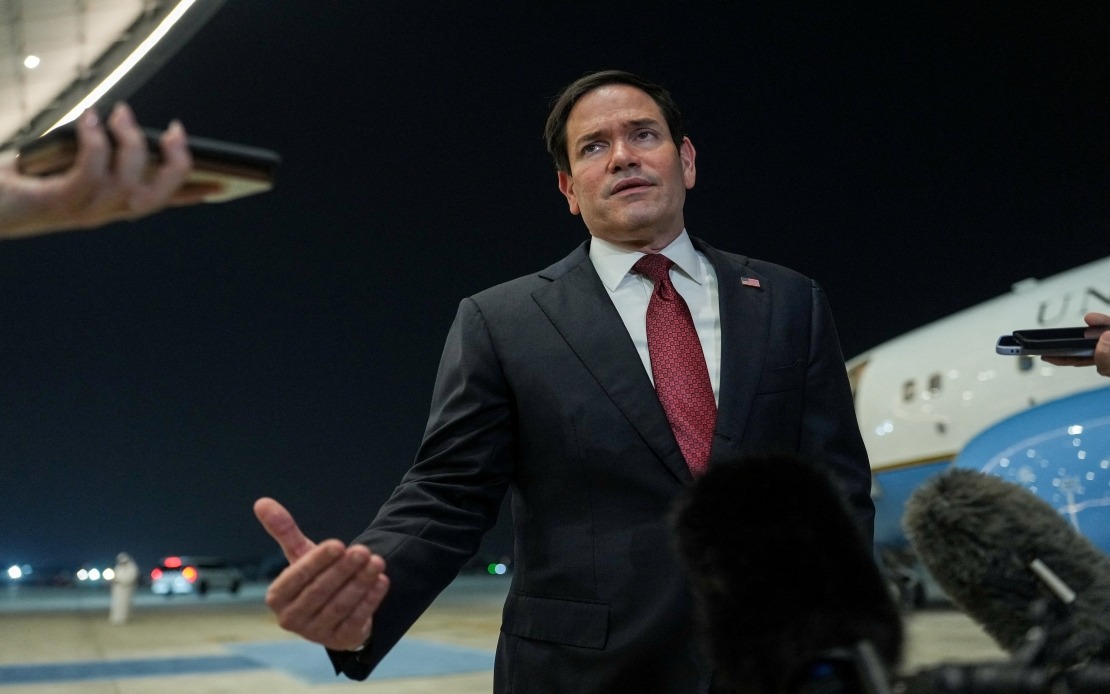
United States Secretary of State Marco Rubio moved to temper expectations about American involvement in a potential reconstruction fund for Iran, asserting that while such an initiative may be discussed, the US government will not be a financial contributor to any such arrangement. Speaking to reporters on Tuesday, Rubio dismissed speculation about Washington's role in what some analysts have suggested could become a significant economic mechanism following recent diplomatic breakthroughs between the two countries.
Rubio's comments represent an attempt to establish clear boundaries around American participation in post-conflict economic arrangements with Iran. The secretary of state emphasised that decisions regarding which nations or entities would fund any reconstruction initiative remained far removed from current discussions, and that such matters would depend substantially on progress in addressing other pressing security concerns that both sides must confront in the coming months. His remarks suggest the Trump administration is taking a cautious approach to economic engagement, preferring to link any financial commitments to verifiable security improvements and compliance with broader agreements.
The clarification arrives in the context of earlier reports suggesting a $300 billion fund might be established as part of broader US-Iran arrangements. President Donald Trump had previously dismissed these reports as speculative, and Rubio's intervention reinforces the administration's position that no such figure has been formally negotiated or committed. Instead, the focus remains on whether Iran might generate economic opportunities independently, a prospect Rubio acknowledged while simultaneously conditioning such development on successful resolution of security matters.
Meanwhile, substantial progress appears to have been achieved in recent negotiations between the two adversaries. Iran and the United States held comprehensive talks in Burgenstock, Switzerland, on Sunday, with Qatar and Pakistan serving as mediators in what represented a significant diplomatic engagement between the historically antagonistic nations. The US delegation was led by Vice President James David Vance, while Mohammad Bagher Ghalibaf, Iran's parliamentary speaker, headed the Iranian negotiating team, indicating the high-level nature of the discussions.
Following the Burgenstock meeting, both delegations released statements highlighting tangible progress. Ismail Baghaei, Iran's Foreign Ministry spokesman, and Vance both announced that negotiations had yielded productive results, though the parties remained deliberately vague about specific outcomes to avoid undermining ongoing discussions. These cautious public statements reflect the delicate nature of US-Iran relations and the potential for domestic political pressures within both countries to derail fragile agreements.
More significantly, the two nations had recently signed a memorandum remotely that formally terminates the military conflict that commenced on February 28. This document represents a fundamental shift in the regional dynamics and carries profound implications for global stability, particularly affecting maritime commerce and energy security across the Middle East. The agreement establishes concrete timelines for American naval blockade removal and Iranian restoration of shipping operations through the strategically vital Strait of Hormuz, underscoring how this dispute has impacted international trade and petroleum flows.
The memorandum framework also addresses Iran's nuclear programme, one of the most contentious elements in US-Iran relations over the past two decades. Tehran commits to forgoing nuclear weapons acquisition under the agreement, though the specifics of how this commitment will be verified and enforced remain to be determined through subsequent negotiations. The parties have allocated 60 days to conduct detailed negotiations on nuclear matters, setting an ambitious timeline for resolving an issue that has generated international concern and regional tensions for years.
For Malaysia and Southeast Asia, this developing rapprochement between the United States and Iran carries significant implications. As a maritime trading nation dependent on freedom of navigation through critical chokepoints including the Strait of Hormuz, Malaysia benefits directly from any de-escalation that stabilises the region and reduces the risk of conflicts disrupting global commerce. The Strait of Hormuz remains one of the world's most important petroleum transit routes, with disruptions capable of driving energy prices upward and destabilising economic growth throughout Asia.
The agreement also signals a potential shift in American foreign policy priorities under the Trump administration, suggesting greater willingness to engage adversarial nations through direct diplomacy rather than military confrontation. This approach may influence broader regional dynamics and US relationships with traditional allies in the Gulf, requiring Malaysian policymakers to recalibrate their understanding of American strategic commitments in the Indo-Pacific and Middle Eastern regions.
Rubio's insistence that the US government will not fund Iranian reconstruction underscores America's determination to ensure that any economic engagement serves strategic objectives rather than functioning as unconditional aid. This conditionality approach reflects lessons learned from previous agreements that the Trump administration views as insufficiently stringent in protecting American interests. The emphasis on security progress as a prerequisite for economic cooperation represents a departure from earlier diplomatic frameworks that pursued parallel tracks of negotiation.
The coming weeks will prove critical in determining whether these preliminary agreements can evolve into comprehensive settlements addressing the multifaceted sources of US-Iran confrontation. Success would likely require sustained political will from both governments, particularly given domestic opposition to rapprochement within both nations and the complex verification mechanisms necessary to ensure compliance. For regional observers including Malaysia, continued monitoring of these negotiations remains essential given the potential consequences for global energy markets, maritime security, and the broader balance of power across Asia.