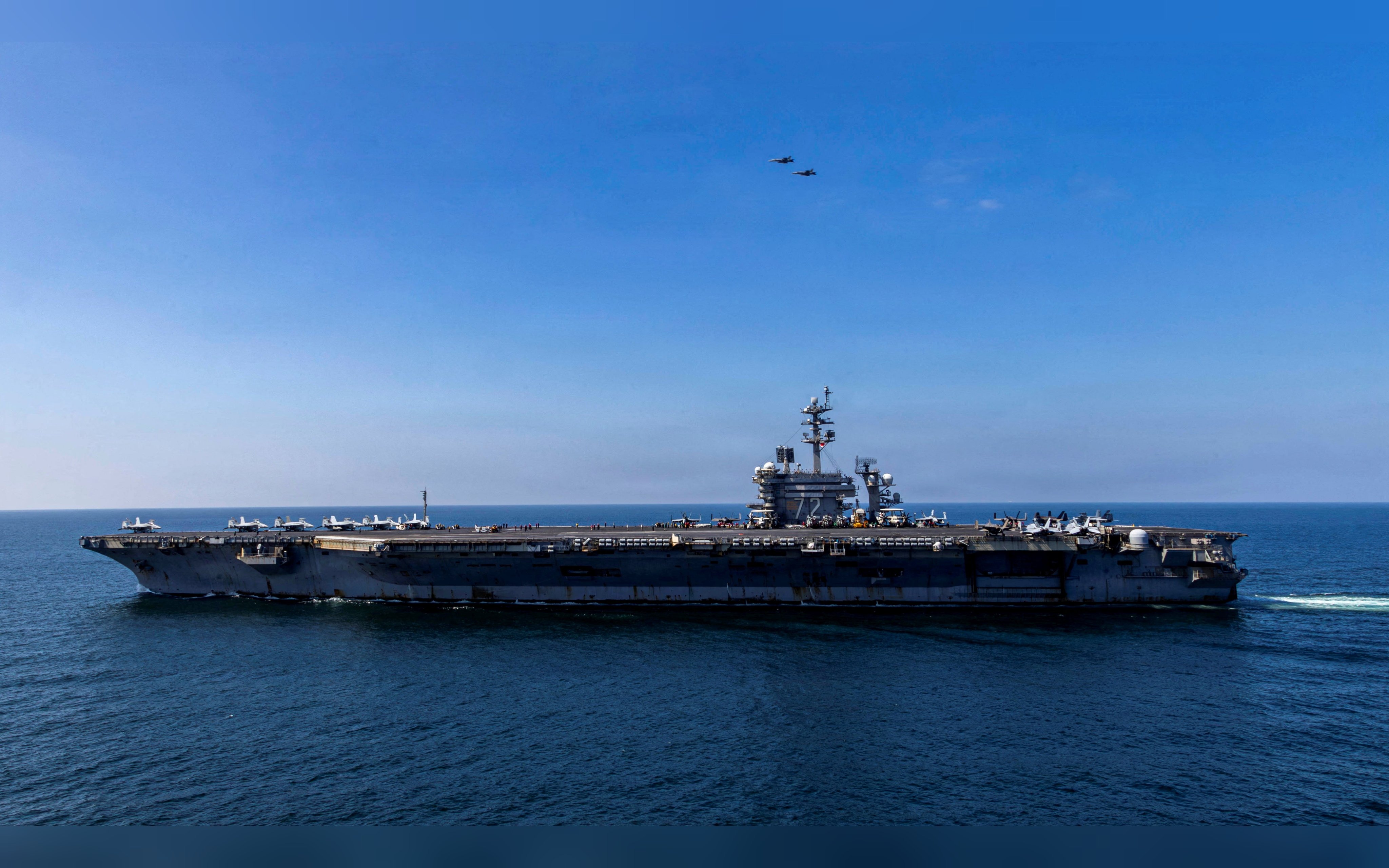
The United States military is proceeding with a planned rotation of its carrier presence in West Asia, as President Donald Trump confirmed that the USS Abraham Lincoln will be replaced by another vessel following concerns over extended deployment conditions affecting American naval personnel. The carrier replacement represents a significant shift in the US Navy's operational posture in the strategically critical region, where tensions with Iran have remained elevated and American military assets have played a central role in regional security dynamics.
Trump's announcement came in response to questions from journalists regarding the Lincoln's prolonged absence from home ports and the hardships experienced by sailors aboard the vessel. When pressed on whether the deployment had extended beyond acceptable parameters, Trump dismissed the notion, stating it had not lasted nearly long enough, a characterization that underscored the administration's emphasis on sustained military presence in the region. However, the president acknowledged that the carrier would be replaced by another similarly capable vessel as part of standard rotation procedures rather than as an emergency measure.
According to reports from The Wall Street Journal, the USS George Washington is designated to assume the Lincoln's responsibilities in the region as part of a previously arranged succession plan within the Navy's deployment schedule. This transition reflects the enduring American commitment to maintaining continuous carrier task force presence in Middle Eastern waters, a cornerstone of US naval strategy that has remained consistent across multiple administrations. The rotation also signals the Navy's intention to manage personnel rotations more strategically going forward, balancing operational demands against crew welfare considerations.
The USS Abraham Lincoln has completed a demanding operational cycle that extended well beyond typical deployment timelines. The carrier spent 266 days deployed overall, with 200 of those days dedicated specifically to combat zone operations, figures released by Acting Navy Secretary Hung Cao. During this period, the vessel's aircraft conducted more than 10,000 sorties and delivered ordnance exceeding 1.5 million pounds, demonstrating the intensity of sustained air operations conducted from the carrier. The scale of this operational tempo has few parallels in recent naval aviation history, underscoring the genuine demands placed on both pilots and maintenance personnel.
The decision to rotate the carrier followed mounting concerns raised by families of service members and congressional representatives regarding deteriorating conditions aboard the Lincoln. Senator Richard Blumenthal had articulated specific grievances in correspondence to Defense officials, documenting reports of inadequate supplies, water contamination affecting the crew, plumbing system failures, psychological stress among sailors, structural safety issues on flight decks, and severe delays in mail delivery that prevented care packages from reaching personnel. These issues, while individually manageable on short deployments, compound significantly over extended periods and directly impact crew morale and operational effectiveness.
Acting Navy Secretary Cao framed the Lincoln's extended deployment as a mission-driven necessity rather than an administrative decision, emphasizing that operational requirements rather than bureaucratic oversight had prolonged the carrier's time in the region. Cao's statement acknowledged the inherent difficulties of sustained combat operations, noting that wartime conditions inevitably disrupt normal routines and impose psychological burdens beyond the already considerable stress of military service. His remarks attempted to contextualize the deployment within broader strategic imperatives while simultaneously pledging that sailor and marine welfare would remain a paramount consideration in future planning.
The mental health dimensions of the extended deployment received specific attention from navy leadership, with Cao confirming that a small number of sailors and marines sought mental health treatment during the cruise but emphasizing that no deaths resulted from these cases. This disclosure, while intended to provide reassurance, also underscores the psychological toll of extended combat deployments on naval personnel. The acknowledgment suggests the Navy is monitoring psychological impacts more carefully, a positive development that aligns with broader military efforts to address mental health challenges among service members facing sustained operational stress.
For Malaysia and broader Southeast Asian observers, the Lincoln's replacement by the USS George Washington carries implications for regional security dynamics and the maintenance of American military presence in adjacent waters. The continuous rotation of advanced carrier task forces through the Indian Ocean and surrounding regions reflects sustained American strategic interest in preserving freedom of navigation and maintaining the balance of power that has characterized maritime security in the region for decades. The commitment to maintaining carrier presence, despite the evident operational and personnel challenges, demonstrates the priority the United States assigns to these waters.
The incident also illustrates the complexity of managing military operations across vast distances and demanding environments. Extended deployments create cascading logistical challenges—from maintaining adequate fresh water supplies to managing crew morale and preventing structural fatigue of complex mechanical systems. These mundane yet critical issues become magnified when sailors spend months without significant port calls, unable to conduct routine maintenance or provide adequate shore leave for personnel recovery. The Lincoln's experience provides lessons for how modern navies must balance operational demands with personnel sustainability, a challenge that will only intensify as geopolitical tensions persist.

