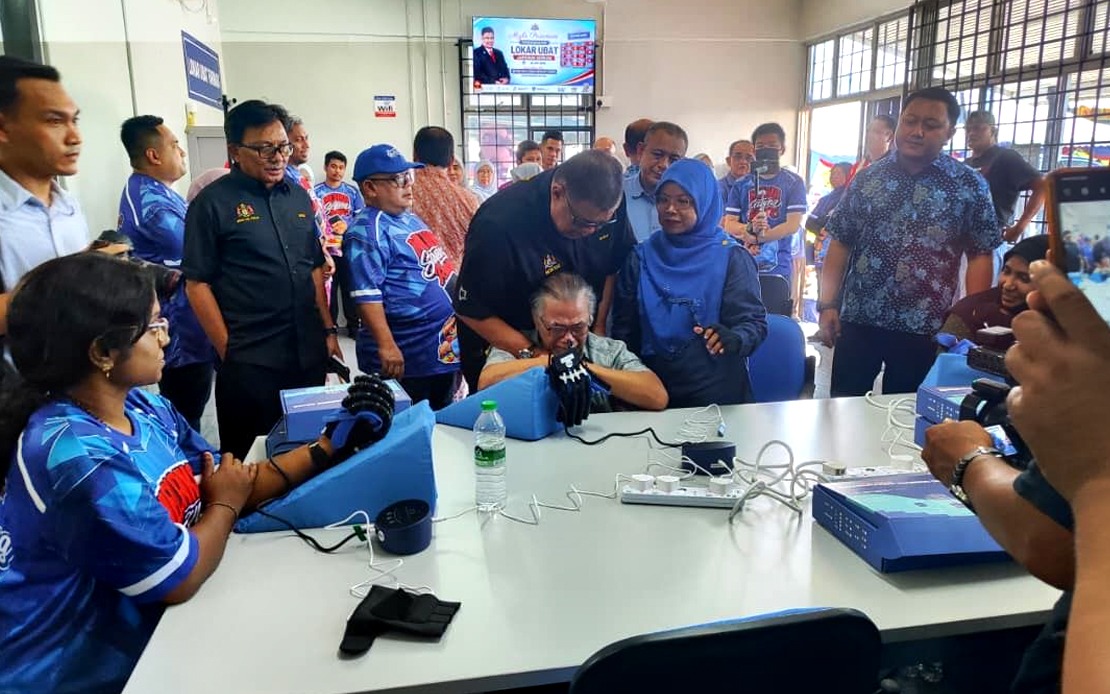
Universiti Teknikal Malaysia Melaka (UTeM) has inaugurated a technologically advanced rehabilitation facility in Serkam, Jasin, designed to deliver cutting-edge recovery services to patients with mobility challenges, stroke complications, and limb weakness. The MADANI Community Rehabilitation Centre and Gymnasium represents a significant step forward in translating academic research into practical healthcare solutions within the Melaka community, combining university innovation with accessible rehabilitation infrastructure.
Funded through the Finance Ministry's UniMADANI 2024 Grant, the centre demonstrates a collaborative model that bridges the gap between academic institutions and community health needs. This funding mechanism reflects the government's broader strategy of leveraging higher education research capabilities to address pressing social and health challenges at the grassroots level. By channelling university-developed technologies directly into community settings, the initiative aims to democratise access to rehabilitation services that might otherwise remain confined to expensive private clinics or urban teaching hospitals.
The facility houses several proprietary technologies developed by UTeM researchers that represent the frontier of rehabilitation innovation in Malaysia. The Roboglove system provides targeted assistance for hand and finger rehabilitation, enabling patients to regain dexterity and grip strength through guided robotic training protocols. Complementing this is the Assistive Lower Limb Chair (ALLC), which automates lower limb exercise routines to help patients rebuild leg strength and mobility without requiring constant supervision. The most sophisticated offering is an exoskeleton system that augments the body's natural movement, allowing patients to perform therapeutic exercises with enhanced biomechanical support and precision monitoring.
The project leadership of Associate Professor Dr Mariam Md Ghazaly and the university's commitment to this initiative underscores how Malaysian research institutions are increasingly positioning themselves as active participants in national health and social welfare agendas. Rather than remaining purely academic, UTeM has embraced a translational research model that measures success not only through publications but through tangible improvements in patient outcomes and quality of life within surrounding communities.
Chief Minister Datuk Seri Ab Rauf Yusoh's official launch of the centre reflects Melaka's broader development priorities, signalling state-level recognition of the importance of health infrastructure and innovative service delivery. The timing of the opening as part of the Public University Community Empowerment Programme (Komuniti @UniMADANI) positions the rehabilitation centre within a larger ecosystem of university-community engagement initiatives across Malaysia.
UTeM Vice-Chancellor Prof Datuk Dr Massila Kamalrudin has positioned the centre as a prototype for scaling technology-based rehabilitation beyond its current location. Her vision of expanding this model to multiple sites addresses a critical gap in Malaysia's healthcare landscape: rural and semi-urban areas often lack access to advanced rehabilitation services due to cost, geographic remoteness, and limited specialised personnel. By developing replicable systems anchored in robust university research, UTeM is creating a pathway for sustainable national health service improvement.
The collaborative structure underpinning the centre's operation reveals the complexity of establishing community-focused health facilities in Malaysia. Partnership arrangements involving UTeM, the Serkam State Constituency Development and Coordination Committee (Japerun) Office, the Kampung Pulai Village Development and Security Committee, the Social Welfare Department, and the Social Security Organisation (PERKESO) demonstrate how multiple stakeholder coordination is essential for effective implementation. Each partner brings distinct resources and mandates that collectively enable the centre's multifaceted operations, from infrastructure provision to ongoing patient support and administrative oversight.
The integration of PERKESO into this collaborative framework is particularly significant, as the social security body manages workplace injury and disability compensation schemes affecting millions of Malaysian workers. Access to technology-enhanced rehabilitation through the MADANI centre could substantially improve recovery prospects for workers undergoing insurance-supported treatment, potentially reducing long-term disability claims and enabling faster return to productive employment.
Rehabilitation innovation addresses a growing public health priority for Malaysia. Stroke incidence continues rising due to ageing demographics and lifestyle-related risk factors, while work-related injuries and mobility disorders remain persistent challenges affecting workforce productivity and individual wellbeing. By introducing robotic and exoskeleton-assisted therapy, UTeM is responding to labour shortages in rehabilitation therapy professions and enabling more intensive, customised treatment protocols than traditional manual physiotherapy can provide.
The centre's establishment also signals Malaysia's participation in global trends toward precision medicine and personalised recovery programmes. Exoskeleton and robotic rehabilitation systems are advancing rapidly in developed healthcare systems, and UTeM's integration of these technologies locally demonstrates Malaysian universities' capacity to adopt and adapt international innovations rather than remaining passive recipients of foreign medical technology.
Looking forward, the success of the MADANI centre could catalyse broader institutional partnerships between Malaysian universities and healthcare delivery organisations. As UTeM scales this model, opportunities emerge for other technical universities to develop specialised rehabilitation facilities leveraging their respective research strengths. This decentralised approach to healthcare innovation could eventually create a network of university-anchored rehabilitation centres distributed across major urban and semi-rural population centres.
The centre also represents an investment in workforce development within rehabilitation professions. By establishing a facility equipped with advanced technology, UTeM creates training grounds for physiotherapists, occupational therapists, and rehabilitation technicians to develop expertise in technology-assisted recovery protocols. This builds domestic capacity in a specialised field where Malaysia currently relies heavily on overseas training and consulting.
Ultimately, the MADANI Rehabilitation Centre exemplifies how Malaysian higher education can evolve beyond traditional academic functions to become a direct instrument of public health improvement. By combining rigorous research capabilities with community accessibility and collaborative governance, UTeM has created a model that policymakers across Southeast Asia are likely to study as they seek to integrate academic research capabilities into equitable healthcare service delivery.

