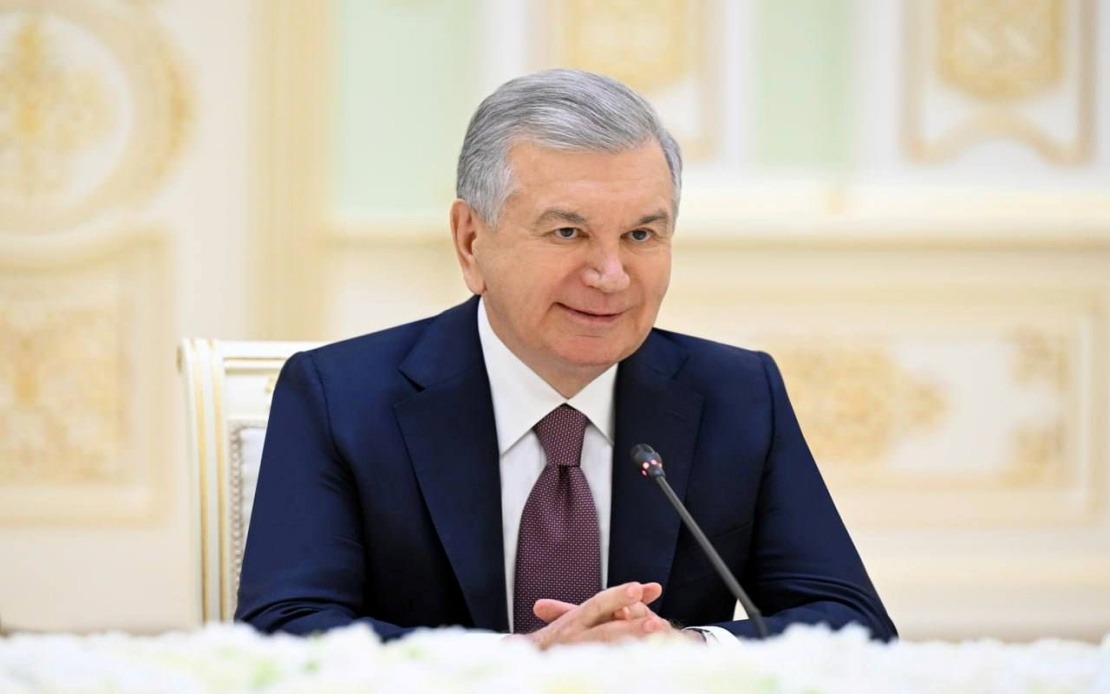
Uzbekistan's President Shavkat Mirziyoyev has made a compelling case for leveraging the Islamic civilisation's rich intellectual and cultural legacy as a foundation for addressing mounting global tensions. Speaking at the First International Islamic Civilisation Forum held across three Central Asian cities, he emphasised that as the world grapples with deepening conflicts, mutual suspicion, and deliberate attempts to fracture relations between cultures and faiths, the timeless principles embedded in Islamic values remain indispensable anchors for constructing sustainable peace and societal advancement.
The Uzbek leader articulated a vision wherein Islamic civilisation serves not as a parochial religious identity but as a universal repository of wisdom spanning science, philosophy, ethics and the arts. Throughout history, he argued, the intellectual traditions rooted in Islamic thought have catalysed breakthroughs in mathematics, astronomy, medicine and other disciplines, thereby enriching the collective inheritance of human knowledge. This framing allows Muslim-majority nations to reclaim narratives often distorted by Orientalist scholarship and contemporary stereotypes, positioning Islamic intellectual achievement as integral to global modernity rather than antithetical to it.
Central to Mirziyoyev's address was Uzbekistan's "Enlightenment Against Ignorance" initiative, first tabled at the United Nations in 2017. The doctrine explicitly links scientific inquiry, educational advancement, cultural stewardship and ethical foundation-building as mutually reinforcing mechanisms for fostering transnational understanding and sustainable development. By framing enlightenment as fundamentally anchored in these secular and humanistic pursuits—rather than theological doctrine alone—the initiative creates space for non-Muslim actors to participate in what might otherwise be perceived as exclusively Islamic intellectual projects. This pragmatic pluralism carries particular resonance for Southeast Asian democracies such as Malaysia and Indonesia, where interfaith dialogue and inclusive nation-building remain central political imperatives.
The forum itself, unfolding across Tashkent, Samarkand and Termez, assembled approximately three hundred scholars, theologians, policymakers and cultural custodians from over fifty nations. This breadth of participation underscores a deliberate effort to position Central Asia—and Uzbekistan specifically—as a convening power capable of marshalling consensus around shared civilisational values amid geopolitical fragmentation. For Malaysia, which has consistently positioned itself as a bridge between the Islamic world and global institutions, the Uzbek model offers both inspiration and competitive consideration regarding intellectual leadership within Muslim-majority regions.
Mirziyoyev dedicated substantial attention to honouring Central Asia's historical contribution to world civilisation, specifically invoking luminaries such as Muhammad al-Khwarizmi, whose mathematical innovations permeate contemporary computing, and Ibn Sina, whose medical treatises shaped European universities for centuries. By excavating these historical figures from archival obscurity and reconnecting them to contemporary scientific endeavour, the president constructs a genealogy in which Islamic intellectual heritage flows directly into modern knowledge systems. This historical consciousness challenges narratives implying that Islamic civilisation ceased meaningful contribution after a supposed "Golden Age," instead suggesting continuity and renewal.
The notion of a "Third Renaissance" anchored on innovation, contemporary education, spiritual renewal and respect for heritage reflects Uzbekistan's developmental strategy of modernisation without wholesale cultural displacement. This framework resonates particularly in Southeast Asia, where societies navigate the tension between rapid technological integration and preservation of indigenous intellectual traditions. The Uzbek model suggests these are not necessarily antagonistic projects—that scientific advancement and spiritual cultivation, historical consciousness and digital transformation, can be mutually constitutive rather than competitive.
The Islamic Civilisation Centre itself functions as what Mirziyoyev described as an intellectual crossroads connecting historical memory to future possibility and linking Eastern and Western scholarly traditions. Rather than serving as a repository for static heritage, the institution positions itself as an active research and convening space where contemporary challenges—from artificial intelligence applications in manuscript preservation to digital heritage documentation—are addressed through frameworks informed by Islamic civilisational traditions. This forward-facing approach distinguishes the Uzbek initiative from museum-centric approaches to cultural preservation.
The forum's programming structure reflects this commitment to substantive intellectual engagement. Eleven plenary sessions, four international scientific conferences, exhibitions of rare manuscripts and artefacts, and presentations on technological applications for preserving Islamic texts create a comprehensive ecosystem wherein past and present knowledge systems interact productively. For Malaysian scholars and policymakers, such comprehensive forums offer platforms for advancing research agendas that might struggle for resources or visibility within purely national contexts, while contributing Malaysian intellectual traditions to broader Islamic civilisational discourse.
Mirziyoyev explicitly framed science and education as contemporary civilisation's most potent unifying forces, capable of transcending the ideological and religious divisions that increasingly fragment international relations. This emphasis on knowledge-production as a pathway to reconciliation carries particular weight given rising anti-Muslim sentiment in various global contexts. By positioning Islamic civilisation not as a theological or cultural assertion but as a scientific and educational enterprise, the Uzbek president navigates a delicate rhetorical terrain—affirming Islamic identity and heritage while establishing common ground with secular and non-Muslim stakeholders concerned primarily with global stability and shared prosperity.
The forum's expected outcomes—including the Tashkent Declaration, approval of the Islamic Civilisation Centre's 2027-2030 development roadmap, and multiple cooperation agreements—suggest ambitions extending beyond symbolic gathering toward institutionalised collaborative frameworks. These mechanisms, if operationalised effectively, could establish networks through which Southeast Asian institutions, researchers and policymakers access funding, partnership opportunities and intellectual resources within a broader civilisational context. For Malaysia particularly, such frameworks could reinforce its position as a natural bridge between established Western academic institutions and emerging Islamic world research centres.
The partnership between Uzbekistan's domestically-led Islamic Civilisation Centre and the Islamic World Educational, Scientific and Cultural Organisation (ICESCO) demonstrates how regional initiatives can achieve international legitimacy and resource-sharing arrangements through engagement with established multilateral bodies. This model proves instructive for Southeast Asian nations seeking to advance culturally-rooted development agendas while maintaining standing within global governance structures. The emphasis on concrete outputs rather than rhetorical flourishes—specific cooperation agreements, development roadmaps with defined timelines, digital preservation initiatives—suggests Uzbekistan's commitment to translating aspirational calls for unity into tangible institutional reality.
Ultimately, Mirziyoyev's intervention reflects a broader repositioning within Central Asia and the Islamic world more generally. Rather than defensive reactions against Islamophobia or cultural marginalisation, the initiative frames Islamic civilisational heritage as an active resource for addressing contemporary global challenges spanning education, scientific innovation, conflict resolution and sustainable development. For Southeast Asia, where Islam coexists productively with diverse religious traditions and secular governance frameworks, the Uzbek approach offers a template for asserting religious and cultural identity while contributing meaningfully to shared human concerns and global intellectual commons.

