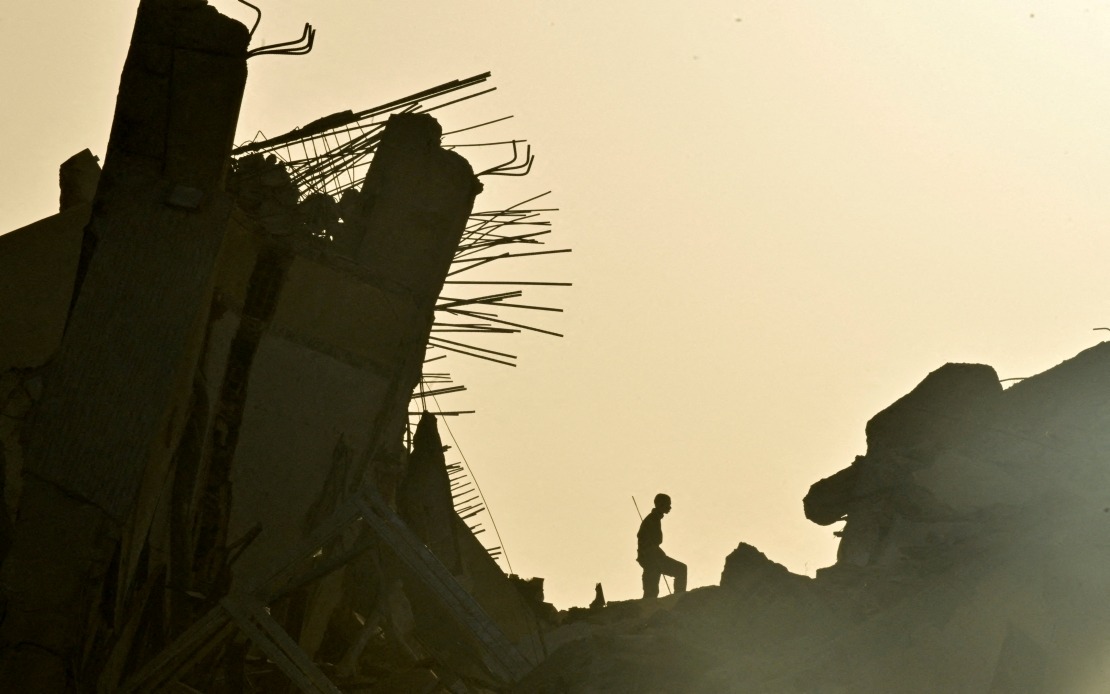
The humanitarian crisis unfolding in Venezuela has reached devastating proportions following consecutive seismic events that have claimed the lives of at least 1,450 residents and left more than 3,200 injured. Authorities reported the twin disasters on Sunday, emphasising the scale of the disaster that struck the South American nation and its repercussions across the region. The magnitude of casualties places this among the most severe natural disasters to strike the country in recent memory, with implications extending beyond Venezuela's borders to neighbouring states and the international community.
The pair of powerful earthquakes, measuring magnitude 7.2 and 7.5 respectively, struck back-to-back on Wednesday, followed by an alarming sequence of 430 aftershocks according to National Assembly President Jorge Rodríguez. This sustained seismic activity has compounded rescue difficulties and heightened anxiety among survivors who continue to shelter in damaged structures. The geographical distribution of the impact has left both the coastal city of La Guaira and the capital Caracas particularly devastated, with entire residential and commercial blocks flattened by the force of the tremors.
The material destruction assessment reveals the comprehensive nature of the damage inflicted upon Venezuelan infrastructure. More than 2,500 residential buildings and associated structures have sustained complete or severe damage, rendering them uninhabitable or dangerous. Among the most critical losses are approximately 780 residential units destroyed and 38 medical facilities damaged or destroyed, severely hampering the ability of the healthcare system to respond to the injured and displaced population. This infrastructure collapse creates compounding crises as hospitals struggle to treat casualties while simultaneously dealing with structural compromises to their own facilities.
Thousands of individuals remain unaccounted for and are feared trapped beneath the collapsed structures, according to statements from Rodríguez. The passage of time has become a critical factor in determining survival prospects, as rescue personnel understand that the likelihood of finding living survivors diminishes significantly beyond the 72-hour window following structural collapse. Each hour that passes reduces the probability of locating and extracting people alive from the rubble, transforming the rescue operation from a recovery mission into a race against biological and physical realities.
The international mobilisation of rescue resources represents a significant coordinated response to the catastrophe. Venezuela has deployed approximately 30,000 emergency workers alongside 2,700 rescue specialists drawn from 24 foreign nations, creating an unprecedented multinational effort to comb through debris fields and locate survivors. This international collaboration underscores the severity of the situation and the recognition that domestic resources alone cannot adequately manage such a large-scale disaster. Nations across Latin America and beyond have contributed personnel and expertise to supplement Venezuelan efforts, although logistical challenges and damaged infrastructure complicate coordination and deployment.
The aftershock sequence presents additional hazards to both rescue workers and any survivors sheltering in partially damaged structures. The 430 recorded aftershocks create ongoing danger of secondary collapses, potentially burying rescue teams and further endangering trapped individuals. Structural engineers must continually reassess building stability before deploying workers into potentially unstable environments, adding layers of complexity to an already challenging operation. This geologically unstable situation extends uncertainty across the entire affected region, preventing definitive assessments of total damage and casualty figures.
For regional observers and particularly for Malaysia and other earthquake-prone Southeast Asian nations, Venezuela's experience offers sobering lessons regarding disaster preparedness and response coordination. The case demonstrates how rapidly casualties can accumulate in densely populated urban areas when major seismic events occur, highlighting the critical importance of building codes, structural resilience, and pre-positioned rescue capacity. Malaysian authorities and emergency management agencies can extract valuable operational insights from observing how international coordination mechanisms function under genuine crisis conditions, informing ongoing efforts to strengthen regional disaster response frameworks.
The psychological and social dimensions of the disaster extend beyond immediate casualty figures. Thousands of families have been displaced, overwhelming temporary shelter capacity across affected regions. Survivors face trauma from experiencing the earthquake, losing relatives, and losing homes simultaneously. Psychological support services will require substantial resources and international assistance, as Venezuela's healthcare system struggles with immediate physical injuries. The long-term mental health consequences of such disasters typically persist for years, requiring sustained attention from public health authorities.
The infrastructure damage to hospitals deserves particular emphasis given its cascading effects on the broader disaster response. With 38 medical facilities damaged or destroyed, the remaining functional hospitals face overwhelming patient volumes while themselves operating from compromised facilities. Surgical capacity, intensive care availability, and basic diagnostic capabilities are all severely constrained precisely when demand peaks. Medical personnel must often work without adequate facilities, equipment, or supplies, forcing difficult triage decisions that further compound the human tragedy of the disaster.
As rescue operations continue into subsequent days, the critical 72-hour window for finding survivors will close, fundamentally altering the nature of the ongoing response. Once this period expires, the focus will necessarily shift from rescue to recovery, from searching for survivors to documenting losses and identifying deceased individuals. This transition, though inevitable given the physics of structural collapse and human physiology, represents a psychological milestone in Venezuela's journey through this catastrophe. The nation faces a lengthy reconstruction period and investigation into whether building standards and earthquake preparedness measures met necessary requirements to protect residents from such devastating consequences.

